
A CETP research project aiming to make carbon capture more efficient, safer, and environmentally friendly. It focuses on improving how to manage the chemical solvents that are used to capture...
A CETP research project aiming to make carbon capture more efficient, safer, and environmentally friendly. It focuses on improving how to manage the chemical solvents that are used to capture...
Water content estimation is critical in split-cod production. We have developed a contact free transflection probe which has shown even better results than the traditional contact probe. Split cod...
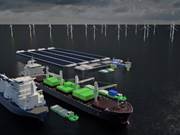
Maritime energy transition involves multiple forms of innovation: Implementation of new technologies, value chain development and new forms of collaboration, as well as policy and regulatory...

Extreme and Sustainable Graph Processing for Urgent Societal Challenges in Europe Objective The grand vision of the Graph-Massivizer project is a technological solution, coupled with field...

PILOTING is an EU-project with the main goal of increasing efficiency, safety, and quality of inspection and maintenance tasks for infrastructure with robotic solutions, which can be highly...

MetaHiLight aims to improve cancer diagnostics by using invisible properties of light combined with artificial intelligence. By including micro- and nanotechnology from SINTEF and the University...
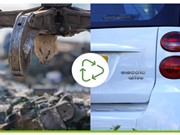
Achieving Europe’s climate-neutral objectives will fundamentally depend on our ability to develop clean energy and mobility solutions in the most sustainable way. But this green transition will...
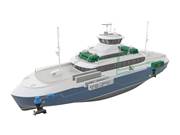
Electrification of the transport sector can be achieved with hydrogen and/or battery technologies. The modular nature of these components allows for individual tailored sizing of the power...

The CORE project aims at developing cost-efficient polymer-based conductive coatings that will prevent corrosion of metallic bipolar plates and increase the lifetime of PEM fuel cells and...
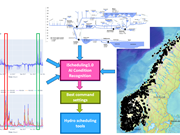
The intelligent decision-making process for hydro scheduling During the past half-century, numerous optimization models have been developed to help hydropower producers to determine the optimal...

The aim of the project is to contribute to the further development of a Virtual Reality (VR) system for virtual workshops that enhances collaboration, creativity, and ideation at work. The...
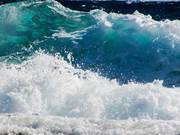
The exposure of slender marine structures, e.g., deep-water risers and power cables to floating wind turbines, to waves and currents causes excitation forces and leads to fast accumulation of...
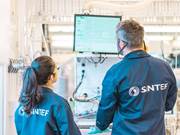
The LOCOMOTION project will develop new low-cost and durable components for PEM fuel cells to reach ambitious targets set out for maritime applications. The global maritime transport sector...
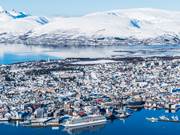
The primary objective of the project is to train future stakeholders of Smart and Sustainable Cities to work with urban socioenvironmental interactions in the era of climate change. The secondary...
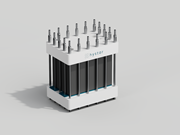
Hystar aims to reduce the cost of green hydrogen, and the Autostack project is investigating how such a cost reduction can be achieved through mass production of PEM (proton exchange membrane)...
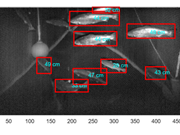
SINTEF has through advanced 3D imaging and analysis developed technology that can easily provide up-to-date information about fish biomass for the aquaculture industry. The aim was to develop...
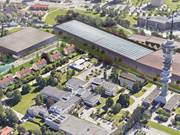
The centre will become the national knowledge centre for ocean space technology. The purpose of The Norwegian Ocean Technology Centre is to secure Norway’s position as a leading ocean nation and...

Is your IoT Solution Secure? Do you want it to be?...
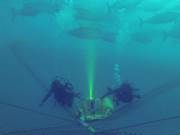
UTOFIA offers a compact and cost-effective underwater imaging system for turbid environments. Using range-gated imaging, the system extends the imaging range over conventional video systems and...

The project delivers a 5G cyber-range platform empowered with tools for risk assessment, attack simulation, evaluation, and demonstration of defensive solutions for NGCC. The project includes a...