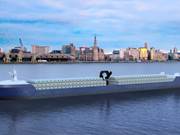
The 21st of January marked the start of the four-year project AUTOSHIP. This self-propelled vessel research project is supported by EU's Horizon 2020 research programme. The project has a frame...
The 21st of January marked the start of the four-year project AUTOSHIP. This self-propelled vessel research project is supported by EU's Horizon 2020 research programme. The project has a frame...
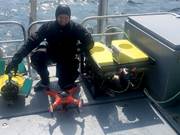
A new field of research is looking at the interaction between fish and robots. Results show that the fish are far more affected by their environment than we have been aware of. Photo: Maarja...

Working from home demands high levels of trust between teams and their managers. In that case, it can be just as productive as attending the office, according to scientists. Stock photo: iStock/...

On the 27 May the knowledge platform termed "The Norwegian Seaweed Biorefinery Platform (SBP-N)" had its kick-off at SINTEF Sealab. The main goal of this project is to be a platform for...
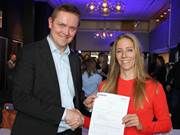
During the Ocean Week conference, SINTEF and REV Ocean signed a partnership agreement that aims to strengthen their cooperation to solve challenges for the oceans. - Through this partnership we...
The first and only international and scientific conference dedicated to autonomous ship technology and applications was held in Busan, Korea, in November 2018. In 2019 it will be held in...
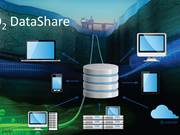
Equinor and its partners will disclose a dataset from the Sleipner field; the world's first offshore CCS plant, in a push to advance innovation and development on the field of CO2 storage....
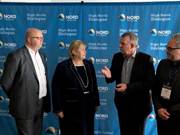
Freyr AS, a Norwegian incorporated company today announced its intention to build a 32 GWh battery cell facility in Mo I Rana, Norway. Freyr also announced that the company partners with SINTEF...
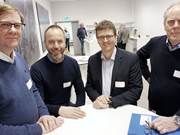
SINTEF Industri, NTNU and UiO, three partners in the new Gemini Centre HyProS “Hydrochemical process technology in the circular economy”, kicked off the new venture from Herøya Industrial Park...
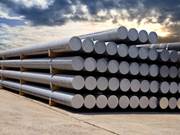
At present, the Hall-Héroult process is universally used in the production of aluminium. It is an electrolytic process in which aluminium oxide is dissolved in molten cryolite (Na3AlF6) and...
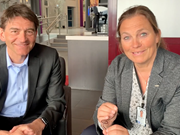
SINTEF can report healthy financial results for 2018. Its pre-tax profit was NOK 201 million. Net operating revenues were NOK 2.77 billion, an increase of 2.7 per cent on 2017. The ordinary...
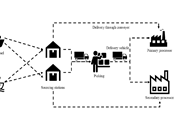
An Indian PhD student from IIT Kharagpur has been on a research exchange to SINTEF Ocean in the RE-food project working with the Norwegian whitefish supply chain in the iProcess project. In...

Four students at NTNU Department of Mechanical and Industrial Engineering have in 2017-2018 worked with production planning and how improved information flow can support critical decisions in the...
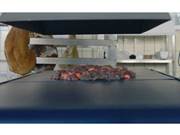
The food industry in Norway prioritizes flexible robotic automation as means to be able to cope with the high biological variation in food raw material and to maximize the raw material...
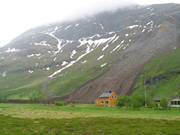
In the coming four years, the research project KlimaDigital aims to study the use of digital solutions to mitigate societal risks due to geohazards in a changing climate. The newly started...
The MTEC conferences alternates between Singapore and Trondheim and is arranged every second year. ICMASS is arranged yearly by the International Network for Autonomous Ships and have different...
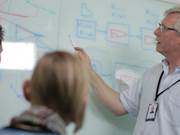
Artificial Eye, brain and hands: Research towards developing new solutions based on “artificial eye, brain and hand” is expected to be a next generation technology that will bring the Norwegian...

One of the greatest challenges in robotics today is the contact processing of a robot with an object and dexterous handling of compliant objects. This is particularly emphasized when it comes to...
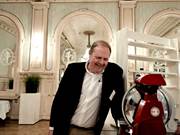
Dr. Odd Myklebust of SINTEF and NTNU, expert in innovation management, was hired to kick the Kickoff off with an outside perspective, from another industry. Norwegian food production can be among...

This creature is ready to be tested and trained in the Trondheim Fjord. Photo: Eelume Standard The Åsgard oil and gas field off the Norwegian coast is between 240 and 310 metres deep. The...