Data such as:
- Images (2D visual data).
- Videos (sequences of images over time).
- 3D Data (point clouds, meshes, volumetric scans, and depth information).
The goal is to automatically learn meaningful patterns and representations from visual data using deep neural networks without the need for manual, hand-crafted rules or feature engineering.
The computer vision group develops AI-based vision systems based on extensive understanding of the image formation process and cutting-edge machine learning algorithms. We specialize in developing robust and trustworthy deep learning models for industry, within r a wide range of vision applications (e.g. Subsea, Agri, Industry, Energy, Autonomy, Robot vision).
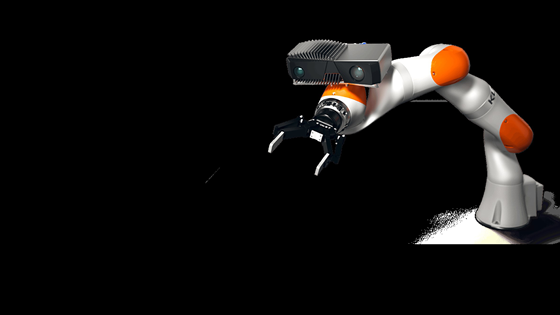
Our research focuses on designing, developing, and training networks for a wide range of 2D and 3D vision applications, such as inspection, defect and anomaly detection, infrastructure and environmental monitoring, surveillance, robot grasping and navigation. Our work spans multiple data modalities such as images, point clouds, text, and diagram understanding, and we develop multimodal approaches that combine these to solve problems that no single data source can address alone.
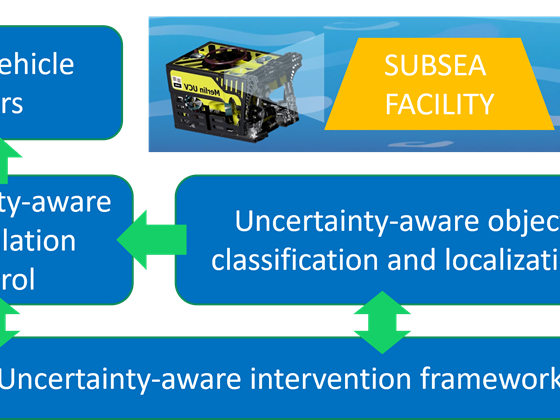
We also emphasize explainable deep learning models through the use of physics-aware deep learning models and uncertainty estimation, which ensures that these models can be safely deployed in autonomous systems and other high-risk applications.
We collaborate closely with our customers to integrate domain-specific knowledge into their deep learning models, which helps to produce robust solutions, reduce model size, enhance explainability, and improve AI performance.
A successful deep learning-based system relies on being trained on a large and representative dataset, which can be costly to acquire. Our group exploit data-efficient learning methods to lower the cost of acquiring labeled data needed to train deep learning models, including the use of simulated labeled datasets and semi- and self-supervised learning techniques to leverage unlabeled data.
Our expertise
- Deep learning on 3D data (points-clouds), 2D image, and video data for various applications.
- Multimodal 3D analysis
- Deep learning for inspection and situational awareness in autonomous systems such as robots and drones.
- Data efficient learning (techniques reducing the required amount of labelled data).
- Improve explainability of the deep learning models through physics aware modelling and uncertainty estimation.
- Efficient deep-learning models running on embedded processors.
- Multimodal foundation models (VLMs, Foundation stereo imaging)
- Generative AI
Typical applications include:
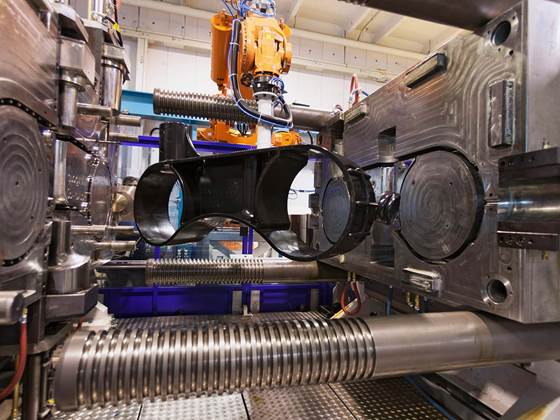
- Automated inspection and quality control
- Recycling and Remanufacturing
- Object detection and localization
- Robot guidance and manipulation
- Autonomous navigation
- Infrastructure inspection
- Precision agriculture
- Surveillance and tracking
- Movement analysis
- 3D modelling of buildings
- Visual robot guidance
- Robotic bin picking
- Object Pose Estimation
- Uncertainty Quantification