








3D Measurements and Analysis
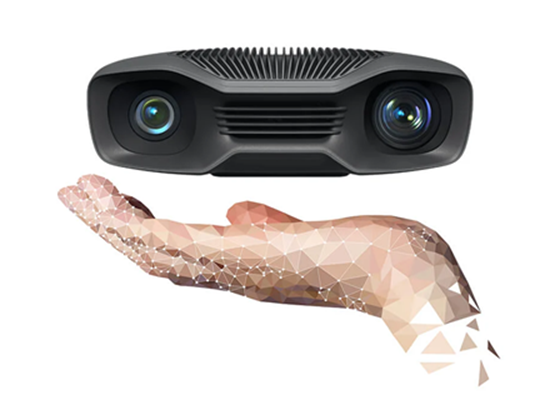
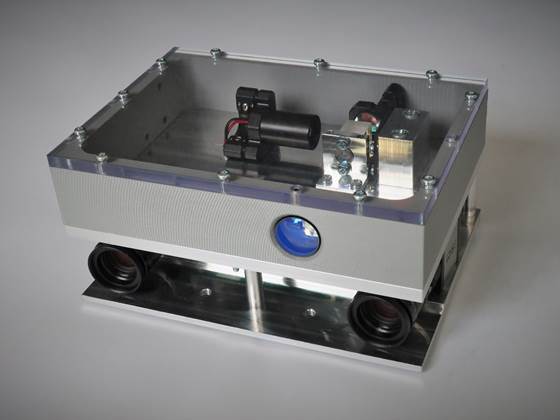
SINTEF develops advanced, optical systems for the acquisition of 3D data as well as sophisticated methods and algorithms for 3D analysis.

We develop new methods in artificial intelligence and combine these with sensor technology to build robust and efficient systems. Through close collaboration with our industry partners, we solve key challenges in automation and autonomy across sectors, including manufacturing, construction, transportation, aerospace, the energy and marine sector, aquaculture, and agriculture. We develop tomorrow's intelligent vision systems for robots and autonomous solutions.
We further develop methods and systems for automatic analysis and understanding of visual data. We work with image and video analysis, 3D analysis, deep learning, generative AI, and 3D measurement technology to interpret information from large amounts of sensor and image data.
We have extensive experience with a variety of sensor types, including cameras in the visible spectrum, UV, IR, X-ray, LiDAR, RGB-D, ultrasound, and specially developed optical sensors.
The research group has specialized expertise in:
We develop solutions that enable autonomy and automation for inspection, monitoring, localization, quality control, and decision-making processes in complex environments.
We combine research in artificial intelligence, mathematics, and sensor technology with practical application in industry. The work is closely linked to the specific needs of customers and partners, with a focus on solutions that function in real operational environments.
We cover the entire innovation process – from idea and method development to testing, prototyping, and implementation. The models we develop in machine learning and deep learning are integrated with knowledge of data from cameras, LiDAR, sonar, and other sensors.
Through laboratories and test facilities, we can evaluate technologies under realistic conditions, including in demanding underwater environments. This enables us to develop robust solutions for situations where standard methods are not sufficient.
Interdisciplinarity is central, and we work closely with other research environments in SINTEF, universities, and industry both nationally and internationally.
What sets the Computer Vision group apart from many other research environments is the combination of deep expertise in both deep learning and sensor technology, along with more than 20 years of experience in developing Computer Vision solutions for industry and startups.
We do not just develop models for artificial intelligence – we build comprehensive solutions where sensors, data capture, analysis, and decision support are seamlessly integrated into operational environments, in close collaboration with the research group Applied Optics. This gives us a particular strength in demanding application areas such as underwater operations, industrial inspections, and autonomous systems.
The research group has extensive experience in developing technology that works under challenging lighting conditions, limited visibility, or in environments with significant variations in data quality. Robustness and reliability are central to our research.
Some of our clients are: ZIVID, Stellaire, EXACT Geo, SCOTDI, TKS AGRI, Railway Robotics, KVS Technologies, SpinChip, Axtech, NORBIT, Kongsberg Discover, Jotun, Polyfemos, TOMRA, OceanTech, Mjøs, Mustad, Wingtech, Steinsvik, Maritime Robotics, IKM, Agnes.
The Computer Vision group participates in a number of international research projects and collaborates with leading research environments and industry partners in Europe and the rest of the world.
We contribute to projects funded by, among others, the EU and the Research Council, and our research is published in international journals and conferences within artificial intelligence, image analysis, and robotics.
The group collaborates with stakeholders in marine technology, industry, mobility, construction, logistics, and maritime, and several of our solutions are used in international operations and research collaborations.
Do you want to automate inspection or monitoring using cameras and artificial intelligence? Do you have large amounts of image or video data that are challenging to analyse manually? Do you need robust solutions for demanding environments at sea, in industry, or in autonomous systems?
We can help you with:
We tailor research and technology to your needs – whether you want a research collaboration, a prototype, or support for implementation and testing.
We are always open to new collaboration opportunities. Contact us to learn more about our research and how we can develop solutions together for the industrial and societal challenges of the future.
You can collaborate with us through research projects, piloting, technology development, strategic consulting, or competence building. We work with both industry, public sector, and academia, and we also welcome guest researchers and international partners.
SINTEF develops advanced, optical systems for the acquisition of 3D data as well as sophisticated methods and algorithms for 3D analysis.
Image analysis is the extraction of meaningful information from two-dimensional (2D) or three-dimensional (3D) digital images using digital image processing techniques.
Smart design of sensors and onboard AI enables safer, more capable, and more efficient autonomy for unmanned ground vehicles and drones.
Automatically analyzing video to detect and determine temporal and spatial events has a multitude of use cases in a wide range of domains such as entertainment, health-care, retail, automotive, transport, home automation, flame and smoke detection...
The aim of robot vision is to make a wide range of robot platforms able to interact with the world around them through visual inputs.
Deep Learning on Images, Videos, and 3D Data is one area of artificial intelligence and machine learning that focuses on teaching computers to understand, analyze, and generate visual information from different types of data.