






Change2Twin
Change2Twin is an EU-project which supports manufacturing SMEs in their digitalization process by providing Digital Twin solutions to manufacturing SMEs.

Our research enables seamless integration of geometric modelling, simulation, and manufacturing across digital value chains – from industrial design and additive manufacturing to applications in aerospace, digital twins, and geographic information systems.
The Geometry research group specialises in computational geometry, spline technology, geometric modelling, and algorithms for digital twins. We develop methods that enable accurate representation, analysis, and optimisation of complex shapes and products throughout digital engineering workflows, supporting high-precision modelling and efficient data exchange between design, simulation, and manufacturing systems.
Our core expertise includes:
Computational design
Geometric modelling for additive manufacturing (AM)
Locally refined spline representations for computer-aided design and isogeometric analysis
Interoperability between CAD, simulation, and manufacturing systems
Development of geometric algorithms and software libraries
We work closely with industry, software vendors, and research partners to develop solutions that can be integrated into practical engineering workflows and industrial value chains.
We combine applied mathematics, algorithm development, and software engineering to address key challenges in digital geometry, shape representation, simulation, and manufacturing. Our work ranges from fundamental mathematical research to the development and implementation of industrial software solutions.
The group develops models and methods for the robust and efficient representation of complex geometric objects. This includes spline-based representations, parameterisation, model simplification, and exact geometric descriptions that can be used consistently across design, analysis, and manufacturing tools.
Through collaborative research projects, we work closely with customers and partners to improve digital engineering workflows, reduce information loss between software systems, and facilitate the adoption of advanced manufacturing technologies such as additive manufacturing. We also develop software and tools that can be integrated directly into industrial processes.
Over several decades, we have established internationally recognised expertise in spline technology and geometric modelling. Our research combines strong mathematical foundations with a deep understanding of industrial requirements and software development.
One of our key strengths is our ability to bridge design, simulation, and manufacturing within a unified digital value chain. This enables more accurate digital twins, reduces the need for manual data preparation, and supports more efficient product development and manufacturing processes.
We are also recognised for developing both open-source and industrial software tools that are widely used by researchers, software developers, and companies around the world.
The Geometry research group participates in international research projects and collaborates with leading universities, research institutes, and industrial partners across Europe and beyond. Our work is funded through European research programmes as well as collaborations with Norwegian and international industry.
The group is the developer of several well-established software libraries for geometric modelling, including SISL (The SINTEF Spline Library) and GoTools. These libraries are widely used in both research and industry and have helped establish SINTEF as a leading international research environment in computational geometry and spline technology.
We also contribute to the development of new standards and methods for digital representation of geometry in industrial applications.
Development of geometric algorithms and digital workflows for additive manufacturing and simulation-driven design
Research on digital twins for aerospace and complex industrial systems
Development of SISL and GoTools, internationally used software for geometric modelling and CAD-related research
Long-term research on spline technology and exact geometric representations with impact on both industry and academia
Contributions to tighter integration of CAD, simulation, and manufacturing across digital value chains
Are you looking to improve the integration of design, simulation, and manufacturing? Do you need robust geometric models for digital twins or additive manufacturing? Or are you developing more efficient digital workflows for complex products and engineering systems?
We can assist with:
Geometric modelling and algorithm development
Simulation-driven and computational design
Digital twins for industry, geospatial applications, and aerospace
Additive manufacturing and digital manufacturing workflows
Integration of CAD, simulation, and manufacturing tools
Development and customisation of geometric software
We collaborate with industry, the public sector, and research organisations on projects ranging from targeted technology development to large-scale research and innovation initiatives.
We are always interested in new collaborations. Contact us to learn more about our research and explore how we can work together to solve complex challenges in digital design, geometric modelling, and industrial digital twins.
We collaborate through research and innovation projects, strategic consulting, software development, and long-term research partnerships. We welcome opportunities to work with organisations that are shaping the next generation of digital products, manufacturing processes, and industrial technologies.
Change2Twin is an EU-project which supports manufacturing SMEs in their digitalization process by providing Digital Twin solutions to manufacturing SMEs.

PULSATE will create a Pan-European DIH Network to boost the adoption of laser based and advanced additive manufacturing technologies in SMEs through the uptake of advanced digital tools.

GRAPES is a Marie Skłodowska-Curie ITN/ETN that aims at considerably advancing the state of the art in Mathematics, Computer-Aided Design, and Machine Learning in order to promote game changing approaches for generating, optimising, and learning 3D...
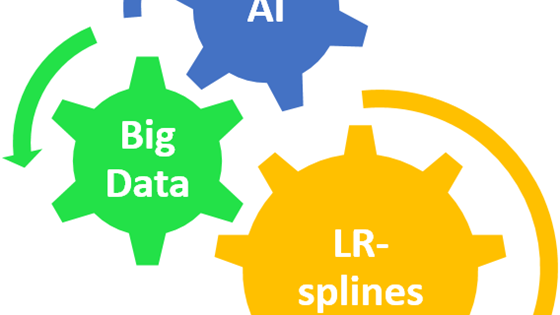
The focus of ANALYST is the combination of LR B-spline methods and AI addressing big data sets with a mathematical structure.

The objectives of Computer Aided Technologies for Additive Manufacturing (CAxMan) are to establish Cloud based Toolboxes, Workflows and a One Stop-Shop for CAx-technologies supporting the design, simulation and process planning for Additive...
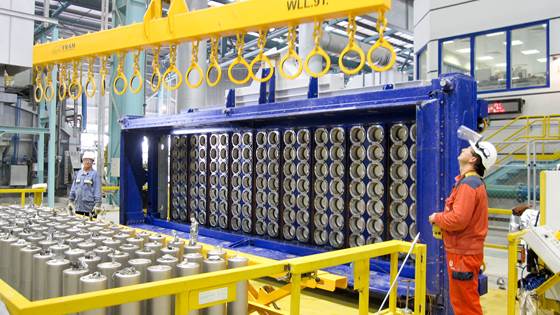
The research project CPS Plant will develop a framework for the Norwegian approach for the digital manufacturing industry. The consortium consists of 3 Norwegian industry partners, Norsk Hydro, Benteler Automotive and Hycast, and SINTEF Digital and...
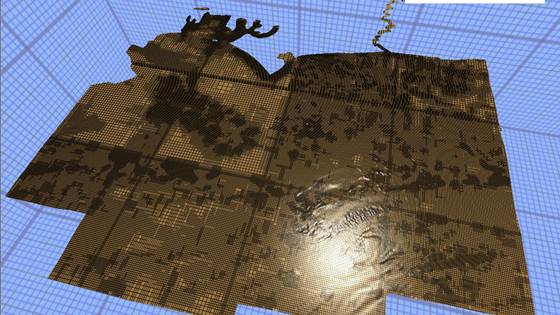
Qmulus integrates the latest research results in data processing and visualization into a Cloud-based platform for solving important real-life challenges in geospatial applications

The objective is to produce tangible evidence of the applicability of Isogeometric representation and analysis by addressing four industrial Use Cases

VELaSSCO is a EC funded Project dealing with end-user visualization of Big Data
SINTEF Digital is a full member through the NATMIG consortium together with 18 other partners/consortia, approximately 80 partners including third parties.

Terrain data can have a very compact representation using LR B-spline surfaces. Large point clouds are approximated using either least squares approximation of LR-MBA (multiresolution B-spline approximation applied to LR B-spline surface). New degrees of freedom are iteratively added to the surface description where the approximation error is too large until some accuracy criteria are met.

The theory of Locally Refined (LR) B-splines offers a framework for local refinements on spline meshes of dimension 2 or higher. LR B-splines have much to contribute for practical deployment of isogeometric analysis in science and industry. Locally Refinable Splines over Box-Partitions published in CAGD click here.

Isogeometric Analysis aims at an efficient integration of CAD and FEM and uses the spline basis both for geometry description and for finite element analysis. A trivariate block structured spline model is appropriate for representing the geometry corresponding to the analysis at hand.

With the need for high-quality representations for isogeometric analysis, there is a renewed interest in exact parametrization techniques. We apply results from Laguerre and Isotropic geometry to construct exact rational parametrizations of, in particular, blends between primitive surface elements in Computer Aided Design.
Our focus within the challenges of big data is to establish workflows for processing big point clouds into compact representations suited for advanced processing and visualization. Our approach is to provide hybrid representations that have compact representation of the smooth components of the information (e.g., by LR B-splines) combined with other representation for local features. See the IQmulus and VELaSSCo below for more details
Computational geometry is the research field that relates to the shape, description, and properties of physical objects. SINTEF Oslo has been a key player in this field for five decades.
Read more
Development of floating point based algorithms for algebraic geometry challenges facilitate industrial use.
Read more
We have extensive experience with Scientific Visualisation. Our focus is mainly on correct rendering of geometry from higher order representations, necessary for visualising results from scientific computations.
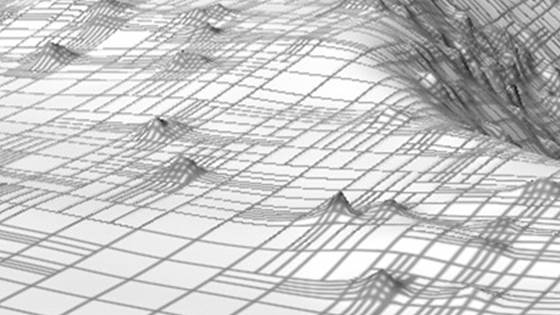
GoTools isa collection of C++ libraries related to geometry targeting Computer Aided Design (CAD), Isogeometric Analysis (IgA) and big data approximation and analysis.
Over many years, SINTEF has developed many software libraries for computational geometry as part of research and industrial projects. These libraries are available under the GPL license.
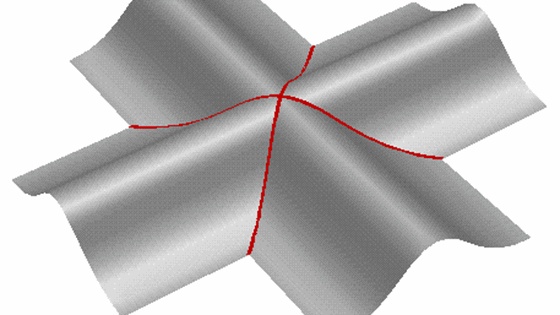
SISL is a comprehensive NURBS library for the modeling and interrogation of curves and surfaces. It is implemented in C and has been under continuous development over three decades.
Computational geometry is the research field that relates to the shape, description, and properties of physical objects. SINTEF Oslo has been a key player in this field for five decades.