DAT4.Zero - The Future of Zero-Defect Manufacturing
DAT4.Zero ("Data 4.0") will improve the European Manufacturing Industry. The project researches ways to achieve zero-defect manufacturing in smart factories.
Enabling the big data pipeline lifecycle on the computing continuum
DeepStruct will enable a significant increase of automation within logistics and automation through developing 3D cameras capable of imaging transparent and other challenging objects.
Medium-voltage (MV, 1-52 kV) gas-insulated switchgear (GIS) are key components in primary and secondary distribution networks.
The goal of DIGITAL TWIN is to develop modelling software necessary to design a digital twin for an offshore bottoming cycle with respect to optimizing its operational efficiency and reliability.
The Fakespeak project aims to enable fact-checking services to detect and flag potentially harmful fake news items in a more accurate, efficient and timely manner than offered by current state-of-the-art systems.
FRIENDSHIP plans to bring together research institutions, industrial designers, technologies & heat suppliers into the same consortium in order to unite skills towards the boost and control of the heat supply temperature according to processes needs.
The Gaia Vesterålen project aims to contribute to the sustainable development of local communities by combining existing and new content in museums with the help of groundbreaking technological solutions.
The sustainability transitions research field addresses the complex transformation processes needed for key societal services (energy, transport/mobility, food, housing, water/sanitation) to be provided more sustainably.
Hybrid solutions may be a key technology for the green energy transition.
Electrification of the transport sector, fish farming facilities, the petroleum industry, etc. will cause increased and more complex electrical loads on the grid.
This project will investigate if Norwegian hydropower can play a major role in climate change mitigation.
Emissions from petroleum production stand for over 25% of Norway's total CO2 emissions, and these must be significantly reduced for the country to reach its ambitions in the Paris Agreement.
The production of photovoltaic modules generates significant resource flows, much of which currently becomes waste, including silicon kerf, graphite, and silica from ingot production.
Process heating accounts for nearly 50% of the final energy consumption in the industry. A large portion of this is currently covered by fossil fuel, which leads to significant GHG emissions.
IMPACT (Innovative Methods for Wave Energy Pathways Acceleration through Novel Criteria and Test Rigs) was a European project for the development and demonstration of a next-generation testing approach for Wave Energy Converters (WECs).
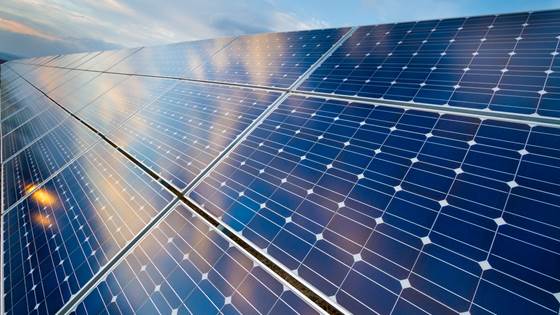
The GreenEST project aims to develop state-of-art charging stations for electric transportation (cars, busses) consisting of innovative light-weight PV panels coupled with grids and batteries.
The main goal of the IntoWell project is to develop cost-effective and robust CO2 injection wells for carbon capture and storage (CCS).