To main content

Applied Computational Science

The research group specializes in developing advanced computer-based methods and algorithms to model complex physical systems across various disciplines, including geoenergy, electrochemistry, surface water dynamics, and ocean modeling.

Contact person

Our expertise

We develop and apply advanced computational methods to solve challenging modelling and simulation problems. We specialise in creating new algorithms and turning them into efficient, flexible and reliable software of professional quality.

How we work

We are applied mathematicians and computer scientists with extensive experience in our application areas. We combine this knowledge with a strong commitment to developing methods and software that work across applications without compromising accuracy or performance.

Our work builds on a tradition of numerical methods, algorithms and high-quality software development at SINTEF Digital dating back to the early 1990s, including pioneering work in GPU computing. Understanding the interplay between mathematics, algorithms and hardware enables us to tackle computational challenges across disciplines.

What sets us apart?

We combine scientific rigour with a thorough understanding of industrial needs. For more than 20 years, we have developed open-source software used in research and industry worldwide. This software provides a shared foundation for advancing ideas from fundamental research, testing new methods and bringing the results into operational use.

However, we have also made substantial contributions to in-house and commercial simulation tools. 

An international research environment

Our group comprises 19 researchers, most with a PhD in mathematics or physics, alongside associated master's and PhD students. We work closely with leading universities internationally and maintain long-standing partnerships with industrial clients worldwide.

Strategic directions

We are expanding our expertise in differentiable simulators, optimisation under uncertainty, and methods that combine physics-based and data-driven modelling. We also investigate practical applications of quantum computing in scientific computation.

Since autumn 2024, we have systematically explored what agentic AI means for computational science. We use agents in our own software development and build workflows in which users can set up models, combine tools and analyse results in dialogue with agents acting as research assistants.

A central question is what simulators need to provide for agents to work effectively with them. Well-defined interfaces, informative error messages and documentation written for both people and machines are important parts of this work. We ground our research in hands-on experience with our own tools, including JutulAgent, and concrete problems. This work led to SINTEF AgentLab, which brings together agent-related activities across SINTEF Digital.

How we can help

  • Developing and improving simulation tools. We develop new models and algorithms, extend existing software and help resolve difficulties with demanding simulation models and numerical methods. Our experience spans the development of open-source frameworks such as MRST, OPM and JutulDarcy, as well as substantial contributions to in-house and commercial tools for industrial partners and software vendors. 
  • Building flexible multiphysics simulators. We combine physical models with data-driven methods and develop differentiable simulators with sensitivity calculations for model calibration and optimisation.
  • Making effective use of modern hardware. We adapt algorithms and software for GPUs and compute clusters and assess the potential performance gains. We also explore quantum computing for selected problems.
  • Making advanced simulation more accessible. We develop interfaces and agent-assisted workflows that help users build models, connect tools and investigate results. See also our open-access textbooks with worked examples.

Work with us

Bring us your challenge, and we will explore how our expertise can help, involving other SINTEF research groups where appropriate. We collaborate through research and development projects and also offer courses and technical consultancy.


Employees

Application areas

Flow in porous media

Flow in porous media

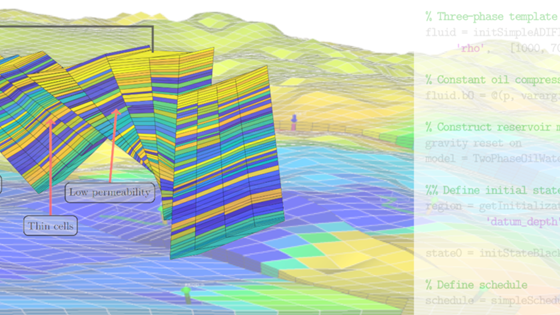
We develop mathematical models, numerical methods and simulation tools for flow in porous media. Our work spans fundamental numerical research and industrial reservoir simulation, with applications in oil and gas recovery, CO₂ and hydrogen storage...

Reservoir simulation

Reservoir simulation

We develop and advance technology for reservoir simulation, history matching and production optimisation. Long-standing collaboration with energy companies and software vendors has given us a deep understanding of simulator internals and extensive...

Computational geomechanics

Computational geomechanics

We develop numerical methods and simulation tools for deformation and stress in geological formations. Our expertise covers mechanical modelling on complex geometries, calibration against observations and coupling with multiphase flow, with...

CO₂ storage modelling and simulation

CO₂ storage modelling and simulation

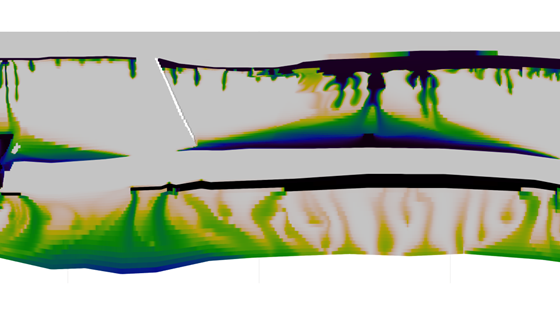
We develop models and simulation tools to understand how CO₂ moves and is retained in the subsurface. From rapid screening of storage sites to detailed flow simulations, our methods support assessments of storage capacity, pressure development and...

Geothermal and thermal storage modelling

Geothermal and thermal storage modelling

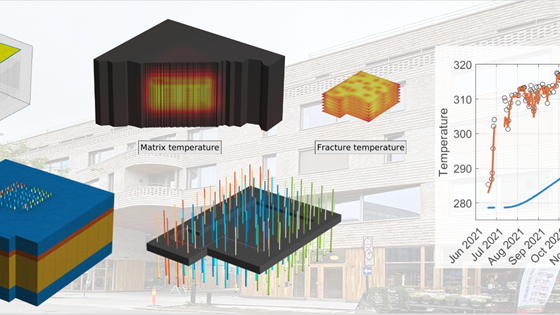
We develop models and simulation tools for geothermal heat production and underground thermal energy storage. By combining flow and heat transport simulation with optimisation, we support the design and operation of geothermal installations and...

Underground gas storage modelling

Underground gas storage modelling

We develop models and simulation tools for underground gas storage, with particular emphasis on hydrogen in porous geological formations. Our work combines multiphase flow, thermodynamics and biochemical processes to investigate storage performance...

Computational electrochemistry

Computational electrochemistry

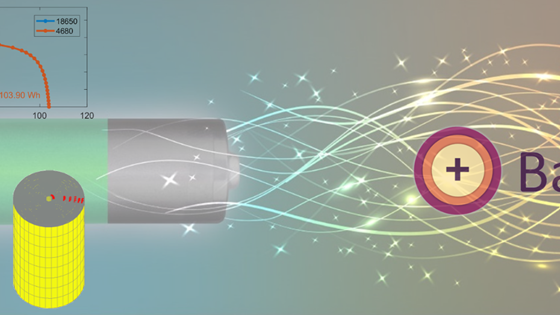
We develop numerical methods and simulation tools for electrochemical systems, with particular emphasis on lithium-ion batteries. Our expertise combines physics-based modelling, efficient multiphysics simulation and gradient-based optimisation to...

Surface water and urban flood modelling

Surface water and urban flood modelling

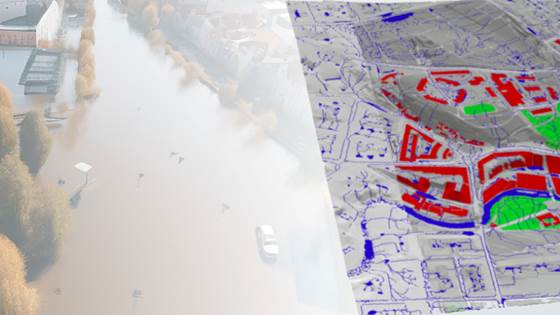
We develop numerical methods and software to investigate where surface water accumulates, how it moves through the landscape and how flooding develops. Fast terrain analysis and dynamic flow models support the comparison of development alternatives...

Coastal circulation and storm surge modelling

Coastal circulation and storm surge modelling

Accurate predictions of coastal currents, storm surges and ocean drift are important for maritime safety, environmental protection and coastal planning. Together with estimates of uncertainty, they support search and rescue operations, pollution...

Enabling simulation technologies

Agentic AI for scientific computing and simulation

Agentic AI for scientific computing and simulation

We help research and industry connect AI agents to simulation software and develop workflows for modelling, analysis and decision support. Our work combines agent technology with expertise in numerical methods, simulator development and scientific...

Differentiable simulation and sensitivity analysis

Differentiable simulation and sensitivity analysis

How do simulation results change when model parameters, input data or control variables are adjusted? We develop differentiable simulators and efficient methods for sensitivity analysis. By combining automatic differentiation, adjoint methods and...

Open-source simulator development and rapid prototyping

Open-source simulator development and rapid prototyping

To research innovative computational methods and mature them to a stage suitable for commercial implementation or deployment it is imperative to develop and maintain efficient and flexible ecosystems that facilitate effective experimental programming...

Agentic development of scientific software

Agentic development of scientific software

AI agents create new opportunities for developing and extending scientific software. We combine hands-on experience with agentic tools and in-depth knowledge of numerical methods, simulators and software architecture. We help you explore new...

GPU-accelerated simulation and numerical methods

GPU-accelerated simulation and numerical methods

We develop numerical methods and simulation software that make effective use of GPUs and modern computing hardware. By combining mathematical insight with parallel programming, we help you reduce computation time, handle larger models and run more...

Grid generation and discretisation

Grid generation and discretisation

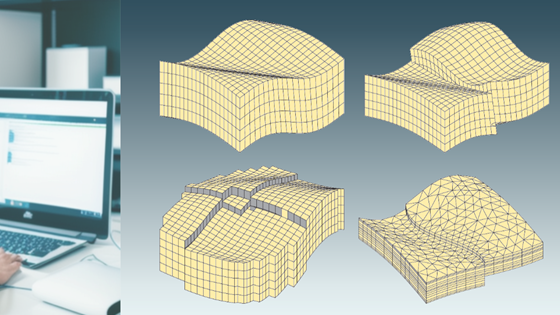
We develop computational grids and numerical discretisations for complex geometries and physical processes. Our expertise spans structured and unstructured grids, from Voronoi grids and general polyhedral cells to locally refined, cut-cell and...

Numerical linear algebra

Numerical linear algebra

Efficient solution of large linear systems is essential to many scientific and industrial computations. We develop numerical methods and software that exploit the mathematical structure of the problem and the capabilities of modern hardware. Our...

Nonlinear solvers and time integration

Nonlinear solvers and time integration

Robust numerical methods are essential for obtaining reliable results from complex models within practical computing times. We develop algorithms for nonlinear systems and time-dependent problems, focusing on convergence, accuracy and computational...

Continuous optimisation

Continuous optimisation

We develop methods and software for optimising systems described by mathematical models and numerical simulators. By combining efficient gradient computations with expertise in modelling and numerical methods, we help improve design, control and...

Hybrid modelling with physics and machine learning

Hybrid modelling with physics and machine learning

We combine physics-based simulation and machine learning to develop fast, trainable models of complex systems. Drawing on physical relationships and available data, we build models for prediction, calibration and optimisation. Our expertise spans...

Model reduction and multiscale methods

Model reduction and multiscale methods

We develop methods that make large simulation models faster to solve and easier to use in analysis, calibration and optimisation. Through upscaling, multiscale methods and reduced models, we exploit problem structure to lower computational cost while...

Quantum computing

Quantum computing

Quantum computing is an impending technology that offers a huge potential for societal and business disruption. However, quantum computers work in a fundamentally different way than classical computers, and utilizing them requires a deep...

Open-source software

BattMo

BattMo

BattMo is an open source simulation code for continuum modelling of electrochemical devices written in Matlab and Julia

GPU Ocean

GPU Ocean

A GPU-accelerated simulation framework for running large ensembles of simplified ocean models for real-world domains.

Fimbul

Fimbul

Fimbul is a modern open-source software package developed in Julia for the simulation and analysis of geothermal reservoirs and thermal energy storage systems. The tool makes it easy to explore, compare, and optimize a wide range of geo-energy...

Jutul

Jutul

Experimental Julia framework for fully differentiable multiphysics simulators based on implicit finite-volume methods with automatic differentiation.

MRST - MATLAB Reservoir Simulation Toolbox

MRST - MATLAB Reservoir Simulation Toolbox

A free open-source community code for rapid prototyping of new methods for modelling and simulation of flow in porous media. Has a large user community from all over the world.

MRST-co2lab

MRST-co2lab

MRST-co2lab offers a set of open-source simulators and workflow tools that have been specially designed for the study of long-term, large-scale storage of CO2.

Open Porous Media (OPM)

Open Porous Media (OPM)

The Open Porous Media (OPM) initiative provides open-source software for simulation, upscaling and visualization of porous media processes, in particular subsurface reservoirs.

Open Quantum Computing

Open Quantum Computing

Open Quantum Computing is an open-source framework for conducting research on algorithms on noisy intermediate-scale quantum (NISQ) computers.

SWIM

SWIM

Software for static modeling and prediction of surface water and urban flooding based on analysis of topography/terrain.

Caption header image: ChatGPT