

What do we want to achieve?
Many of the most important decisions in society are based on complex calculations, specialised expertise, and large volumes of data that are challenging to access and understand. In AgentLab, SINTEF Digital explores how agent-based systems can make this knowledge more accessible — as support for decision-making, as a bridge between domain experts and end users, and as a tool for increasing efficiency and understanding across sectors. We are also building up infrastructure for safe experimentation, both for ourselves and for our partners. AgentLab brings together expertise from across SINTEF Digital.
Infrastructure for safe experimentation
An agent that is to accomplish something real must be given access to data, code and systems. That makes questions of delimitation, logging and evaluation urgent as a practical matter, not just a point of principle. We are therefore working to build controlled environments in which agents can be set to work on real tasks without real consequences: everything they do is recorded and can be reviewed afterwards, and results can be measured systematically against defined task sets instead of being assessed on the basis of individual impressions. This includes frameworks, methodology and reference architectures for how such trials can be set up.
As an independent research institute, we can carry out this trialling together with partners who neither can nor should experiment directly in their own production systems. We intend to use the infrastructure both in our own projects and in collaboration with industry and the public sector.
What are we working on now?
Software development is the first complex knowledge process that has, on a large scale, become a training target for agentic systems, partly because of large amounts of training data and partially because code has built-in, machine-readable feedback that makes it possible for an agent to evaluate and improve its own work without active involvement from a human being. We are therefore particularly interested in agentic coding, where SINTEF Digital's broad code bases and professional depth provide a unique starting point for exploring what this technology can actually accomplish, and what one must be careful about.
Another central area is agents as interfaces to advanced computational models, simulators and model-based decision-support tools. Here two of SINTEF's strengths meet: deep domain knowledge and experience with complex modelling tools on the one hand and agent technology on the other. The same principle will gradually apply to other formalised professional processes such as model development, data analysis and experiment planning. We are closely following this development.
A third area is contextual communication. Today, specialist knowledge has to be rewritten for each target audience, and with limited resources this means in practice that many target audiences will not receive communication adapted to them. We are working on a different division of labour: the researcher designs and ensures the quality of the foundation, and agents adapt the presentation to the individual reader's prior knowledge and situation, from peer to decision-maker to the general public. What makes this difficult is not varying the language, but preserving the content through the adaptation: caveats must not disappear because they are complicated, and uncertain results must not become categorical because that reads better. It must still be possible to trace the communication back to what the researcher actually vouches for.
Taken together, these areas point in the same direction: AI agents that function as assistants in professional work in a real sense, and that can be a collaborative partner able to carry out tasks, assess the quality of results, and discuss alternatives. That is a high ambition, and it rests on one precondition: we trust human colleagues because they justify their choices, can tell us which assumptions they have made, can tolerate being contradicted and are accountable for their work. If an agent is to have a corresponding role in professional work, it must be able to do the same — and responsibility must still lie with the people who choose to build on the result. Fulfilling that precondition is what much of our work is about.
Examples from projects
Below we show concrete results in three forms: agents acting as an interface to a validated simulator; agentic coding used to build tools around software we have developed over many years; and early experiments in which we built new software from scratch in a short time to see how far the technology could take us. The last of these are prototypes and demonstrations, not validated tools.
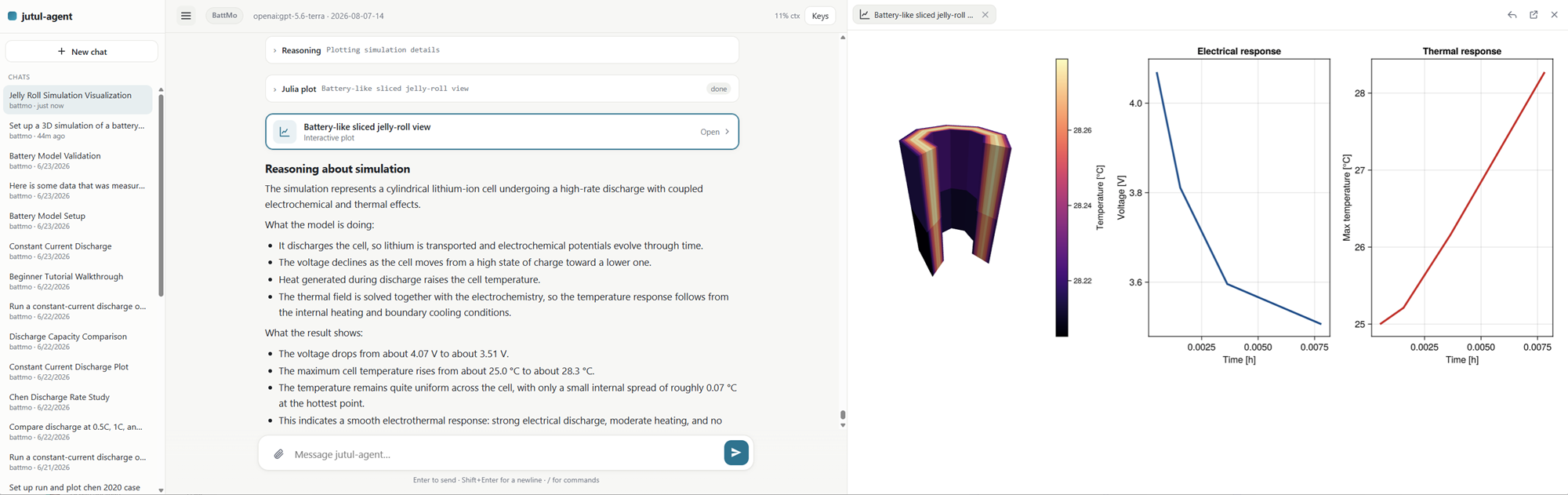
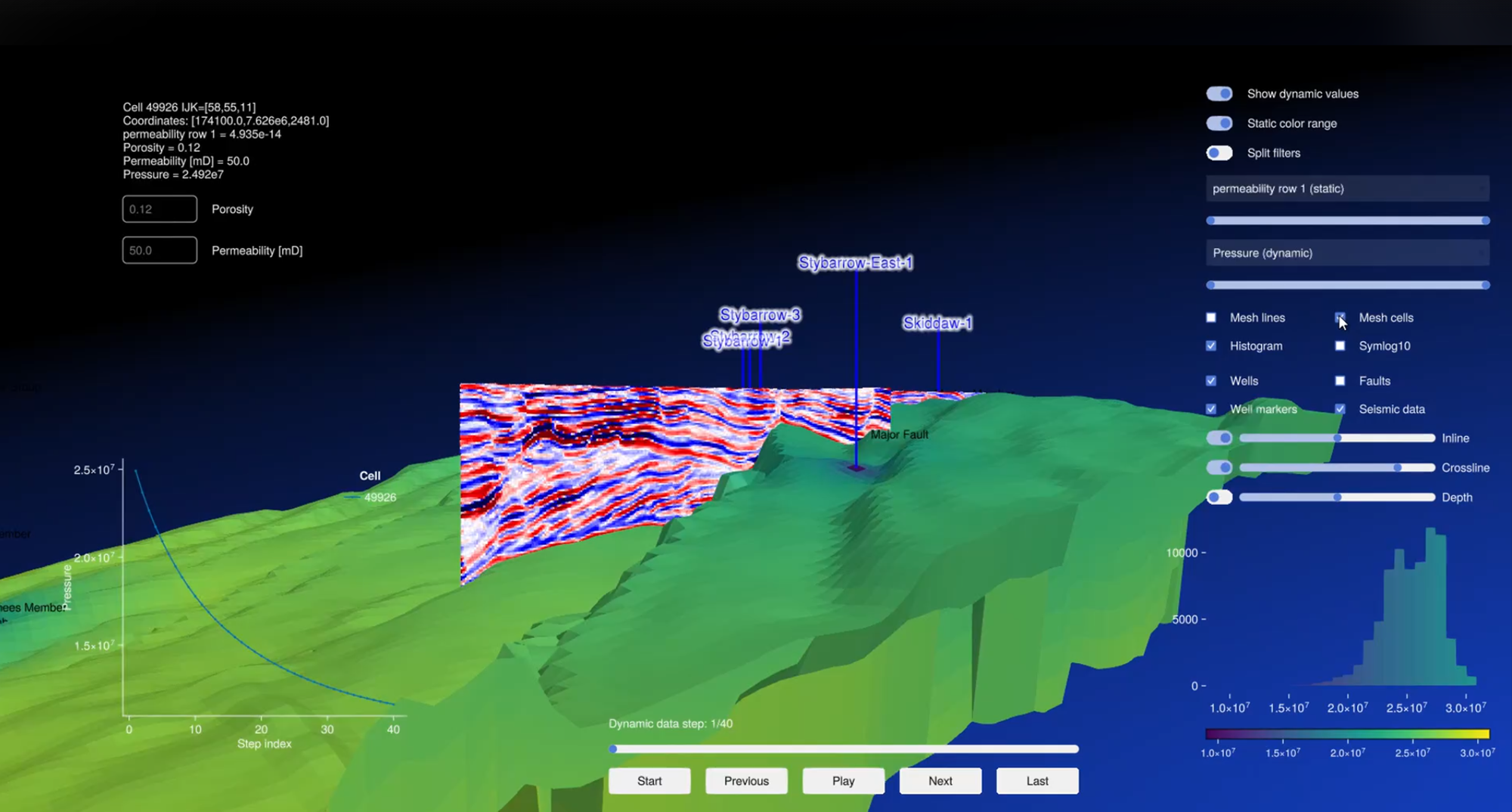
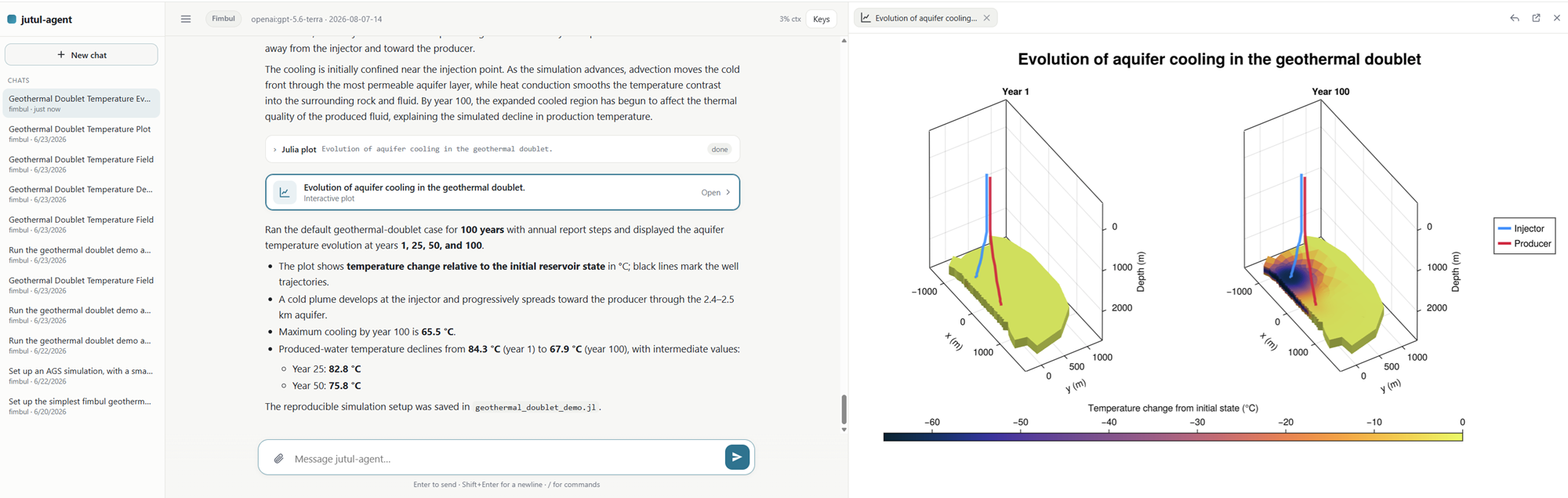
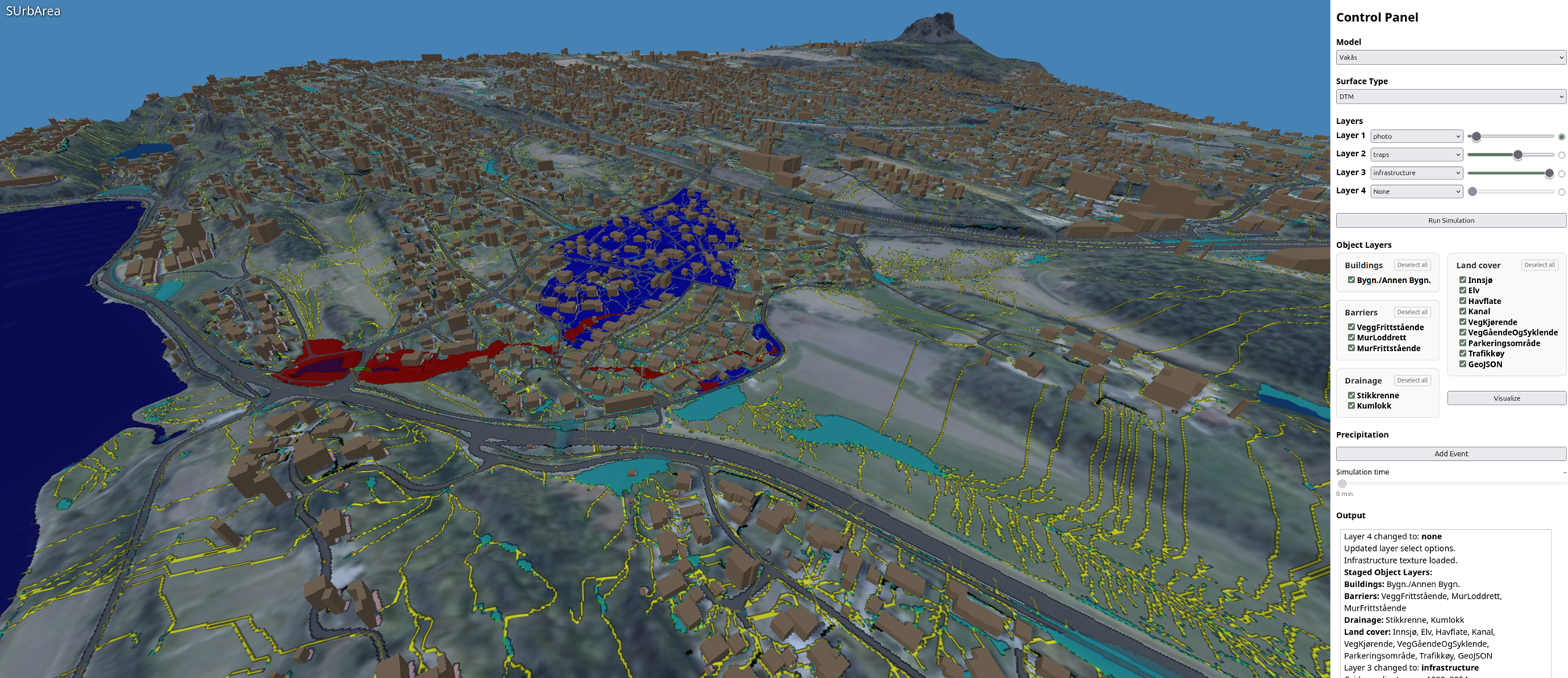
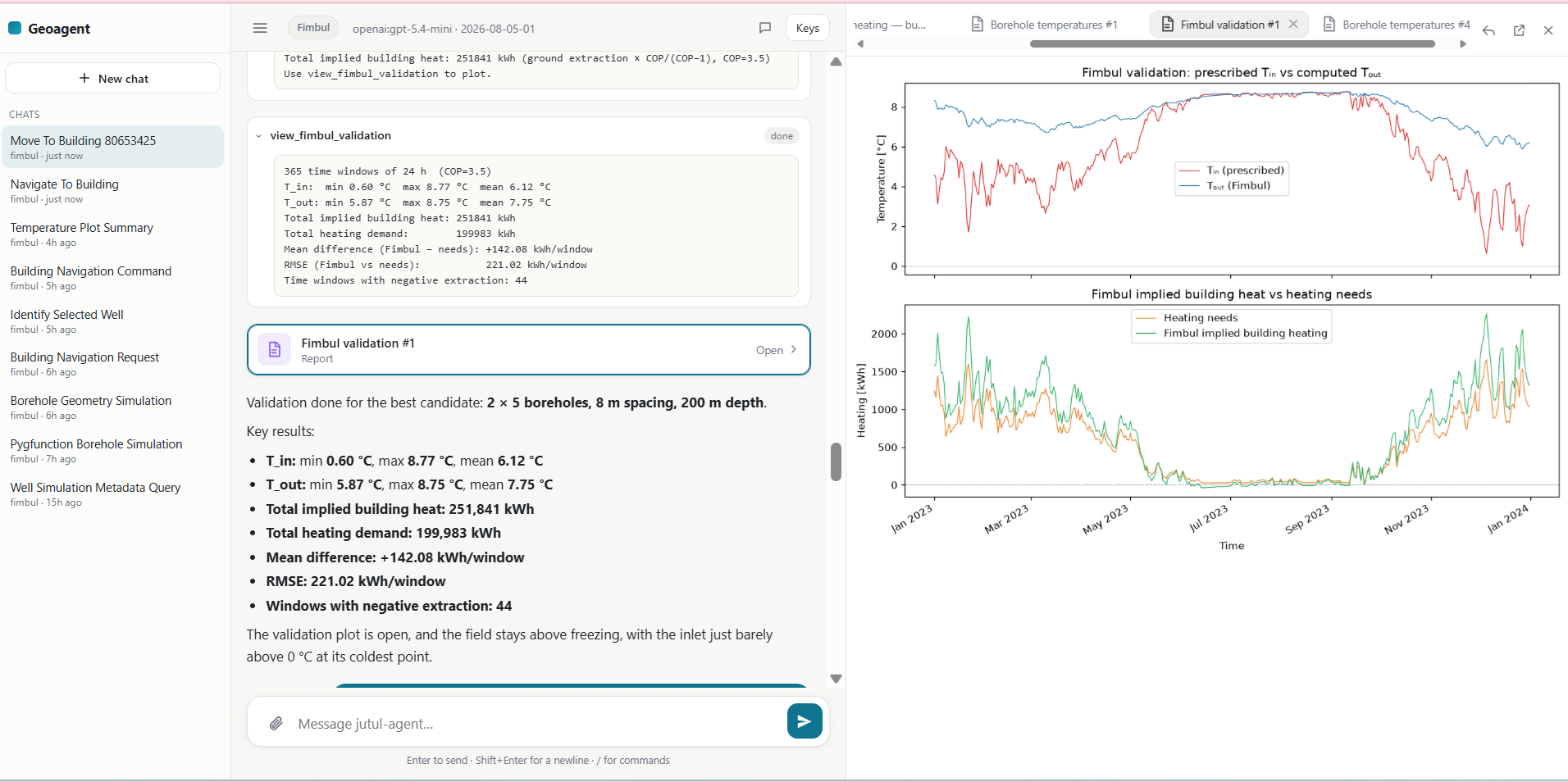
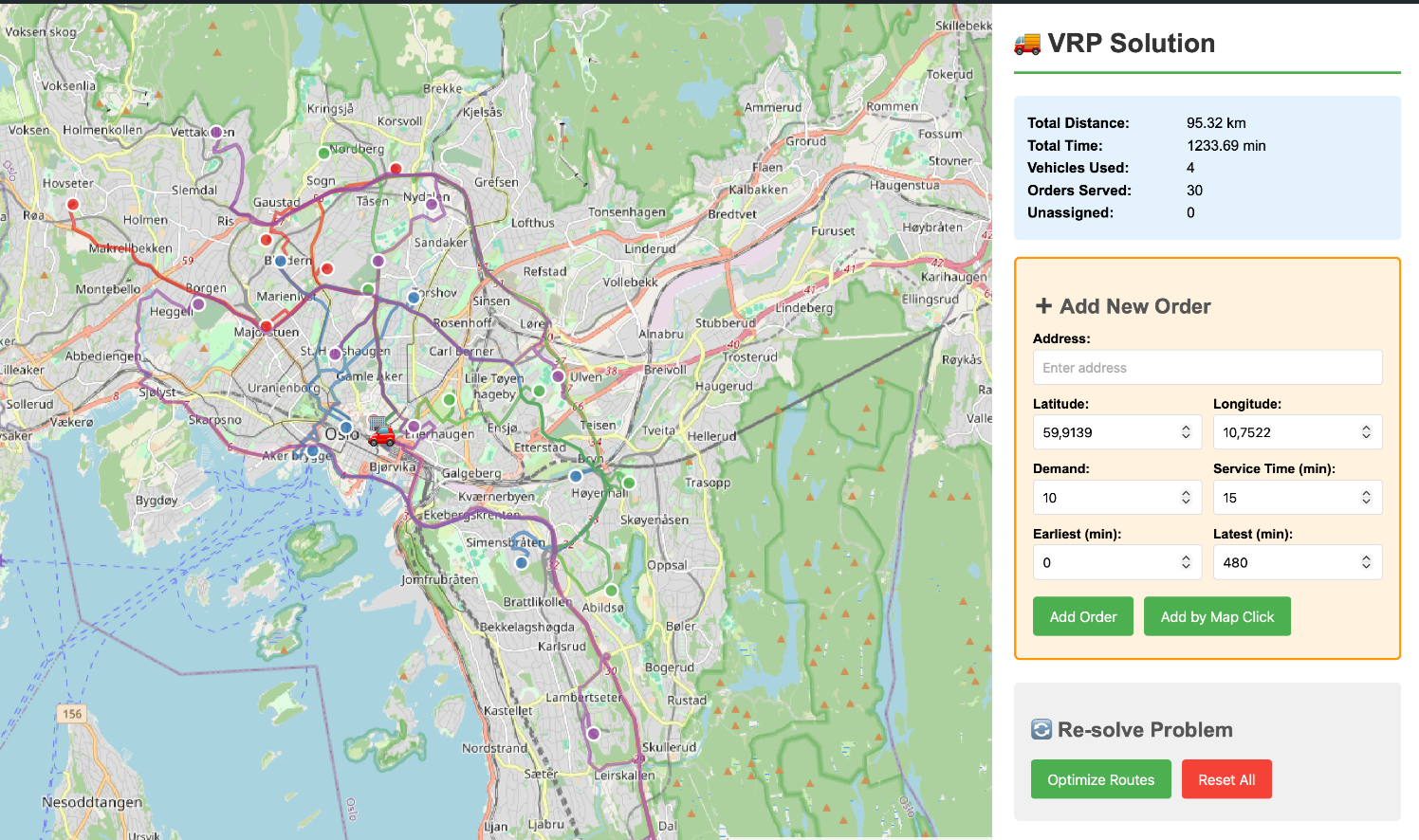
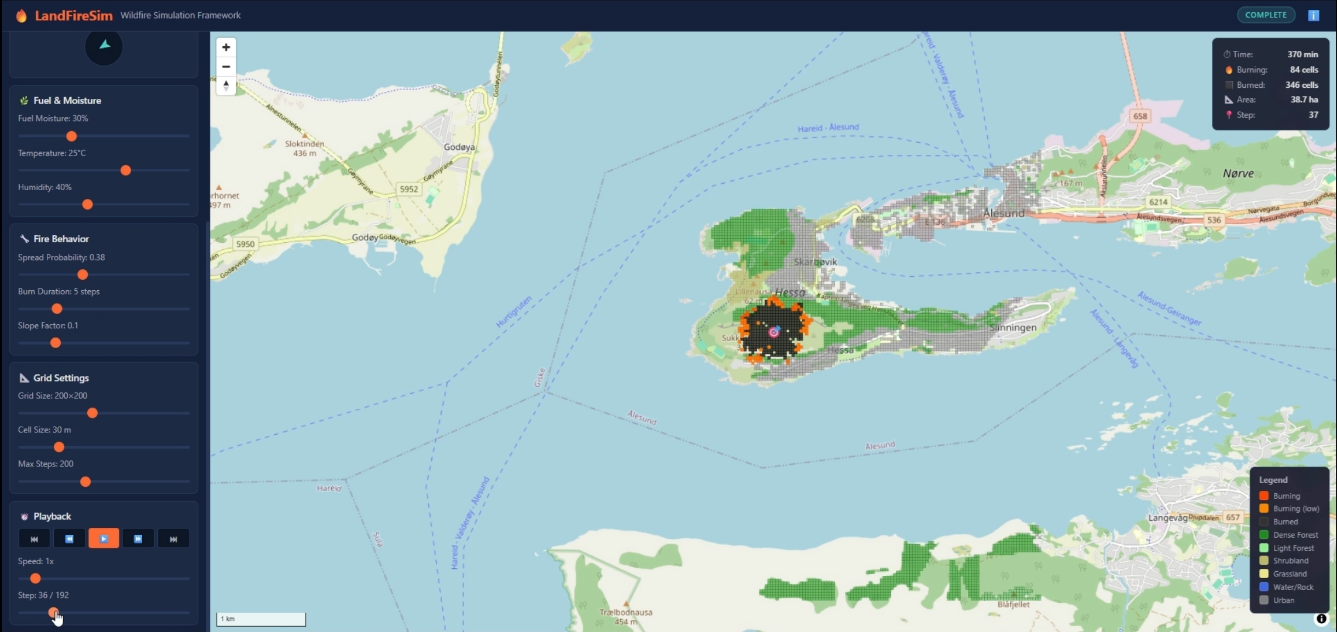
Want to learn more? Check out #SINTEFblog on how we work with agents in practice, take a look and and feel free to try out our open-source code from AgentLab on GitHub (in particular JutulAgent), or read about this ongoing collaboration with the company Geoteric.
Feel free to get in touch if you would like to hear more about our AgentLab activities!