
Mapping of marine rest raw materials 2026-2028
Marine rest raw materials represent an important value-creating resource for the Norwegian fisheries and aquaculture industry. Mapping has shown that the vast majority is utilised today.
Marine rest raw materials represent an important value-creating resource for the Norwegian fisheries and aquaculture industry. Mapping has shown that the vast majority is utilised today.

Helping energy-intensive industries replace fossil process heat with a plug-and-play package of high-temperature heat pumps, latent thermal storage and AI-based energy management, co-developed with users.

Can Norwegian farmed seaweed be used to create healthy food ingredients?

Generative AI and surrogate digital twins for human-centric coastal and Earth-system resilience and impact assessment

AQUALICIOUS is a Horizon Europe Innovation Action designed to demonstrate the potential of low-trophic aquaculture (LTA) and integrated multi-trophic aquaculture (IMTA) solutions across Europe.

Continual, explainable and embodied artificial intelligence

The project will make aquatic litter monitoring across Europe more comparable and reliable, providing better evidence for environmental assessment, management and policy.

Open, transparent modelling for the transition to natural refrigerants.

HARMONI is a Horizon Europe project developing a systemic solution to integrate renewable energy sources and ammonia-hydrogen fuel blends into cement manufacturing, enabling cement plants to operate as intelligent energy hubs for industrial...

The project aims to develop novel frameworks and methods to facilitate the large-scale reuse of timber in construction.

Enables secure, ethical and legally compliant use of sensitive data in AI, strengthening trust, collaboration and responsible innovation across healthcare, industry and technology.

The project will estimate contributions from SESAR Solutions, streamline evaluations, provide guidance in diverse performance domains in European air traffic management.

RAPIDO aims to develop new processing strategies for materials used in solar hydrogen production. By introducing rapid thermal processing (RTP), the project seeks to improve the efficiency and durability of photoelectrochemical (PEC) devices that...
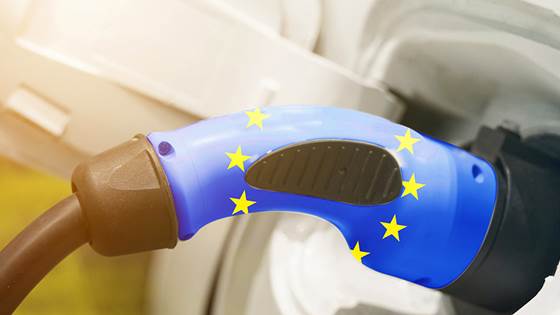
The Horizon Europe project OLiMPUS will develop new lithium-ion LMFP||graphite battery cells that are cost-effective, safe, and sustainable, and that can be efficiently produced using European materials.

LOOP converts agri-food waste into biopolymers for sustainable packaging, coatings and biofertilizers, reducing food waste, fossil materials and emissions through circular biotechnology.

KnoWare will develop the first scientific methodology to detect and forecast emerging capabilities in General Purpose AI systems, before they fully materialize, helping AI providers, regulators, and organizations stay ahead of AI risks.

The project enhances resilience, safety, and security of Automated Air Traffic Management under rare high impact events.

ReSiLient develops sustainable ways to produce silicon (Si) and silicon carbide (SiC), helping strengthen Europe’s supply of critical materials for semiconductor production.