In 2025, Norway’s seafood exports reached a record high, with wild-caught seafood accounting for NOK 48.1 billion. If we and future generations are to continue benefiting from the resources in our seas, fisheries must be managed and developed sustainably, with a long-term perspective.
At SINTEF, we develop solutions for both traditional fisheries and shellfish harvesting, as well as the harvesting of new biomarine resources. Our research focuses on developing more efficient, selective and environmentally responsible fishing methods. We also develop solutions that enable the full utilisation of wild-caught resources.
Sustainable fisheries and marine spatial management
Sustainable fisheries depend on striking the right balance between generating economic value and protecting marine ecosystems and biodiversity.
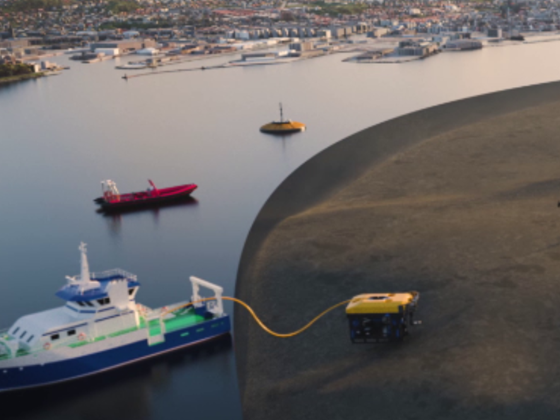
How best to achieve this balance is widely debated, and robust testing is essential to identify solutions that work in practice. We test fishing gear and harvesting methods through simulations, model-scale experiments and full-scale trials during research cruises at sea. Full-scale trials allow us to evaluate both the performance of fishing gear and its impact on fishing grounds under conditions that closely reflect commercial fishing operations.
Technological advances have made fishing increasingly efficient. At the same time, this has increased the need for effective fisheries management to prevent overexploitation and ensure that marine resources remain available for future generations.
Sustainable fisheries management must take biological, social and economic considerations into account.
Marine spatial management and coexistence with other ocean industries are also becoming increasingly important, both in coastal waters and internationally. We develop technologies to improve the management of fisheries resources and work on broader governance issues that affect fisheries. Our research also addresses plastic pollution from the fishing industry, marine spatial planning and coexistence with emerging ocean industries such as offshore wind.
This work is carried out in close collaboration with the fishing industry and public authorities, as well as through participation in international treaty negotiations.
Risk and safety
Fishing remains a relatively high-risk occupation. We therefore work to identify and reduce the risks associated with working on board fishing vessels, with the aim of making fishing a safer profession.
What we offer
We have broad expertise across the field of fisheries research and work closely across disciplines within SINTEF and with the fishing industry to ensure high-quality, relevant results.
Our researchers also have extensive experience in developing and managing research and innovation projects, supported by a broad network spanning industry, research and education.