When fishers are out working their boats, they are typically targeting a specific type of fish. However, other species often end up in their nets or trawls as well. This is known as “by-catch”— seafood for which the fishers receive no payment. Although it is illegal to discard by-catch back into the sea, it still happens.
“Fishers often find themselves caught between the need to operate sustainably and the desire for economic gain. Many fishing vessels have limited space on board, as well as limited resources to handle by-catch in the best possible way,” says Line Skontorp Meidell.
Meidell is a researcher at SINTEF Ocean. She has participated in the Bifangst (By-catch) project, which has explored ways to utilize by-catch more sustainably.
Also a matter of food security
In a world that is more unstable than it has been for a long time, food security and self-sufficiency are high on the agenda to tackle. Making use of by-catch could amount to around eight million meals every year, or about 1.4 meals per inhabitant in Norway.
Researchers are currently working to increase children’s understanding of by-catch through the Luring dissemination project. To this end, they participated in an “Ocean Day” (Havdagen), hosted by the Trondheim Science Centre. Many adults and children were surprised by the high by-catch numbers—a fact they learned while peering into boxes containing by-catch that one of the city’s local fishers provided.
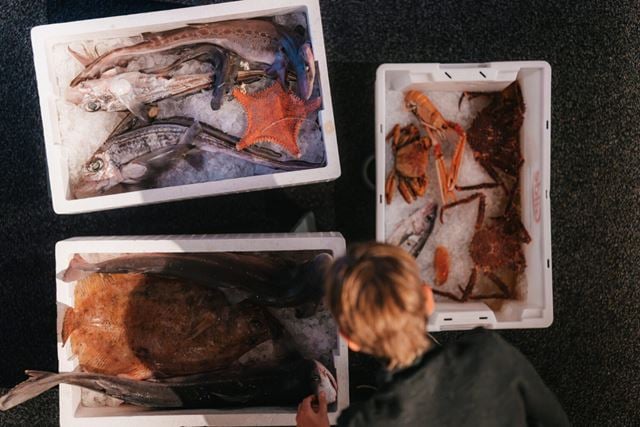
Children and adults found plenty to explore. Much of the by-catch on display is actually good to eat. Photo: Pernille Holsvik Ingebrigtsen/ Trondheim Science Centre
On display were rabbitfish (chimaera), spiny dogfish, and long rough dab—all of which many folks consider quite tasty. While most people agreed that we shouldn’t be discarding so much fish, they hesitated when asked if they would personally eat the specific types of fish they were looking at.
What many people don’t realize is that fish fillets from the vast majority of species look a lot alike.
“When we showed them pictures of fillets from long rough dab and hagfish, several people changed their minds and said they would actually be willing to eat those specific species,” says Meidell.
Nine-year-old Kaja Vilhelmsen was attending Ocean Day with her family. She was stroking a long spiny dogfish that she thought looked “pretty cool”. But only when she sees the fillets does she say that she would dare eat it.
“I don’t really feel like eating the fish when I see it just lying there, but if it’s part of dinner, that’s fine. Well, as long as long as there’s something else to go with it,” says Kaja.
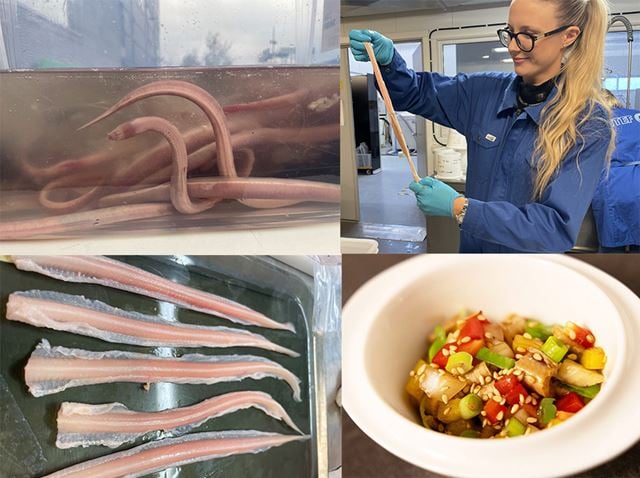
Researcher Line Skontorp Meidell is accustomed to handling hagfish. They might not look particularly appetizing as they writhe around in the tank, but once they’re skinned, the fillet looks quite similar to other white fish. Photo: SINTEF
This isn’t just about what the fishers can do with the by-catch fish. Shoppers also need to be more adventurous at the fish counter.
“If we start eating by-catch, more of what’s currently thrown overboard could be put to good use. And the residual raw materials from these same fish could also be utilized for animal feed, cosmetics, and nutritional products,” says Meidell.
A tasty “dinosaur” of a fish
One type of by-catch that fishers are less fond of is the hagfish. It resembles an ordinary eel, but it is actually one of the oldest types of fish on Earth—having inhabited the oceans long before the time of the dinosaurs.
They produce slime as a defence mechanism against other fish; in fact, they can turn the volume of water found in 20 milk cartons into slime in just a few seconds.
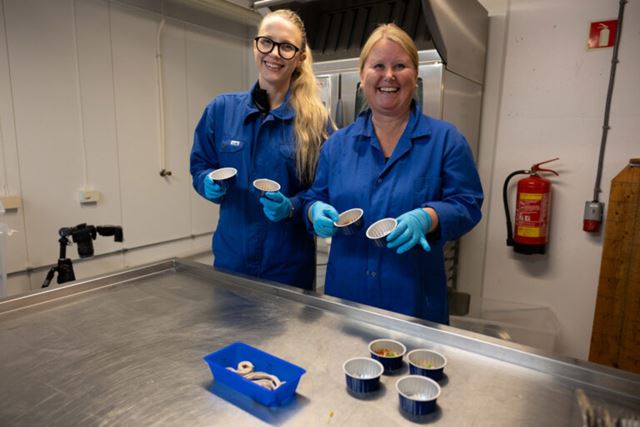
SINTEF Ocean researchers Line Skontorp Meidell and Solveig Uglem prepare for a sensory test of pan-fried hagfish in the laboratory. The verdict from the 16 taste testers was surprisingly positive. Photo: SINTEF
Is your mouth watering yet? Perhaps not—but the hagfish got a high score when researchers sampled the fish in fillet form earlier this year.
In the By-catch project, SINTEF researchers investigated how to make greater use of the hagfish as a food resource. Sixteen participants were served the Asian-inspired dish and asked to evaluate its taste, texture, smell, and overall appeal.
The results showed a surprisingly positive response. On average, the tasters gave the hagfish 4 out of 5 points for the overall experience. Participants described the fish as neutral in both taste and smell, and felt it worked well as an ingredient in a dish.
The researchers also noted that the hagfish differed from other edible fish in that it produced very little odour during preparation. They described the texture as unusual and quite chewy. Perhaps unfamiliar species like the hagfish require a fresh approach in the kitchen to become an attractive option for the Norwegian dinner table.
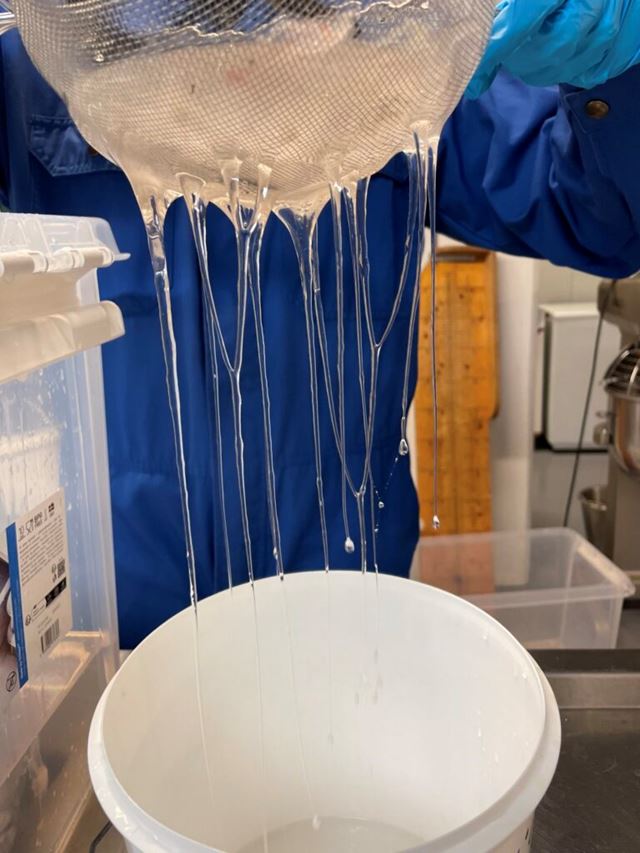
The hagfish produces large quantities of slime, which contains proteins. Fortunately, the slime isn’t all that sticky. Photo: SINTEF
The fillet accounts for about 45 percent of the hagfish’s total weight. The remaining 55 percent consists of skin, internal organs, and the head. These parts can be used for other purposes. The researchers discovered that hagfish skin is well-suited for extracting collagen—a valuable ingredient used in everything from cosmetics to medical products.
“Even the slime contains proteins that might have interesting applications, but we’ll need to do more research on that,” Meidell says.