The race for a net-zero future is a race for critical minerals. As the global energy transition accelerates, the deep sea has emerged as a vital yet complex resource frontier. The Marine Minerals Webinar Series is a premier, open-access platform designed to be knowledge driven. Our mission is to foster an informed, neutral dialogue connecting researchers, engineers, policy experts, and industry professionals.
By integrating cutting-edge research with operational experience, we map the "knowns and unknowns", providing the fundamental knowledge required to navigate the future of deep-sea exploration and exploitation. Attendees can expect a 360-degree perspective that bridges the gap between the technicalities of deep-sea deposits and the intricacies of international law and finance.
The webinar series is splitted into different core topics, with dedicated speakers, and will be promoted on this site. Recordings of each webinar session will be accesible under the menu tab.
Session 4: Mineral Assessments at the Seafloor
Resource assessments are the cornerstone for the evaluation of any potential mining project, whether on land or the seafloor. These assessments follow a regulated procedure for disclosing information on the quality and quantity of a mining prospect to determine whether it has the potential to become a viable mine. Globally, such public assessments have only been completed for one seafloor massive sulfide deposit and a few polymetallic nodule projects.
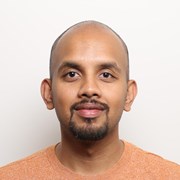
In this webinar Professor John Jamieson at University of Ottawa will discuss how resource assessments are generated, their importance for determining whether a seafloor mineral prospect has the potential to be developed into a mine and how close (or not) we are to actual mining operations on the seafloor.

Featured speaker
Dr. Jamieson is the Canada Research Chair in Marine Geology. His research advances our understanding of seafloor hydrothermal systems (black smokers) and the processes that form deep-sea mineral deposits. His research is multi-disciplinary, integrating ocean exploration, mineralogy and petrography, geochemistry, geochronology, stable isotopes, and cutting-edge seafloor mapping technologies. He earned a B.Sc. in Geology from the University of Alberta (2002), an M.Sc. in Geochemistry from the University of Maryland (2005), and a Ph.D. in Marine Geology from the University of Ottawa (2013).
Organizing team: Verena Hagspiel-Janssen (NTNU), Sabine Gollner (NIOZ), Pierre Josso (BGS), Bramley Murton (NOCS) and Bhargav Boddupalli (SINTEF).