

SINTEF’s fermentation laboratories provide a comprehensive R&D&I environment integrating different cultivation units: miniaturized autonomous systems (1-150 mL), bench-top bioreactors (0.2-3 L), gas‑fermentation systems (0.15-5 L), single‑use rocking‑bed bioreactor (1-20 L), and pilot reactors (50-500 L). All reactors are connected to a Thermo PrimaPro MS allowing for real-time offgas-analysis.
Advanced miniaturized systems
Our BioLector, BioLector PRO and RoboLector platforms enable high throughput strain development and process optimization using 32- or 48-well plates with continuous online monitoring of biomass, fluorescence, pH, and dissolved oxygen. Each BioLector is suited for specialized applications in aerobic and anaerobic microfermentations (1-2 mL) using 32 or 48-well plates, covering a temperature range from 10 to 50°C. The BioLector Pro enables pH control and feeding through microfluidic capillaries from integrated reservoirs.

The 16‑reactor automated H.E.L./Hamilton system (50-150 mL) supports independent control of temperature, agitation, pH, DO, multi‑line feeding, off‑gas analysis and full workflow automation via robotic handling.

Bench‑top multipurpose bioreactors
The Eppendorf/DASGIP and Applikon systems (0.2-3 L) offer advanced control of temperature, agitation, pH, DO and gas composition for a broad range of microorganisms and cell cultures, and support batch, fed-batch and continuous processes. Specialized systems enable cultivation of photosynthetic organisms with customizable LED spectra.

Gas‑fermentation systems
The H.E.L. BioXplorer 100 (50-150 mL) provides parallel, development of gas‑based processes with precise mass‑flow control and multi‑line feeding. The KBiotech high‑pressure setup (3-5 L, up to 15 bar) supports CO₂, syngas and biogas fermentations with ATEX‑rated equipment, integrated analytics, advanced SCADA control and direct CCU process translation.

Single‑use rocking‑bed bioreactor
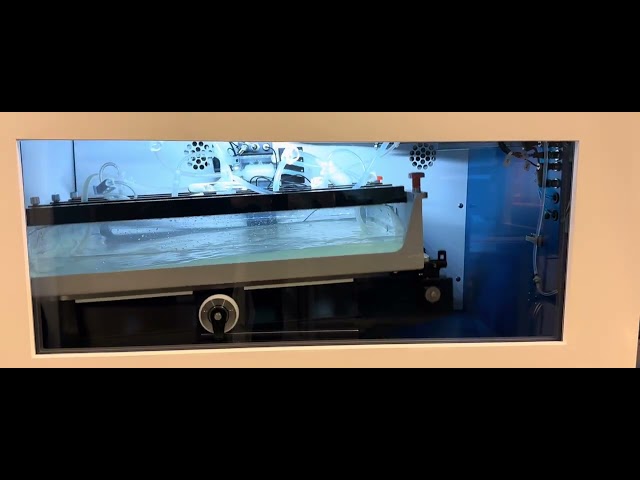
The CELL‑tainer (1-20 L) delivers low‑shear, high‑oxygen‑transfer cultivation suitable for microbial and mammalian cells, with integrated sensors, automated control and rapid turnaround for process development and scale‑up.
Pilot bioreactors
Our 50 L and 500 L SIP stainless‑steel reactors support microbial, yeast and cell culture fermentations under controlled temperature, agitation, pH, DO and pressure, with multiple impellers, mass‑flow controllers, in‑line analytics and PLC‑based automation (BIOFLEX™). These systems enable robust validation and scale‑up of laboratory‑developed bioprocesses.

Downstream processing
Fermentation equipment at bench and pilot scale is adapted for DSP processing and covers all steps from fermentation medium to finished product. Centrifugation using a swinging-bucket rotor or continuous decanter centrifugation is employed to separate cell biomass from the medium. Our ultrafiltration systems range from high-throughput screening and method optimization at small scale (15 mL and 5 cm²), using the Sartorius Ambr system, to pilot scale. Our chromatography systems cover everything from bench scale (ÄKTA systems from Cytiva) to preparative and pilot scale. Purified and formulated products can be freeze-dried (Christ Delta 2-24 LCSplus system) or spray-dried (Procept 4M8-Trix).

Relevant projects
- SFI Industrial Biotechnology (all the key areas)
- KSP CO2Value (CCU and feed)
- PYROCO2 (CCU and chemicals production)
- BIONEER (Biopolymer/Materials)
- Nordicoats (Biopolymers/Materials)
- Valorish
- MARBLES