

The project was started in response to the growing use of automatic milking systems (AMS), or milking robots, in Norwegian dairy farming. Over the past two decades, AMS has become an important part of milk production in Norway. The technology offers new opportunities for farmers, but it also creates new challenges for managing cow health, reproduction, energy status, and farm production.
Norwegian dairy farming has specific conditions linked to climate, geography, and the widespread use of grass-based feeding and grass silage. At the same time, AMS generates large amounts of data about individual cows, including information on milk production, milking activity, and other indicators. Making effective use of these data is challenging because they are complex and need to be interpreted in a meaningful way.
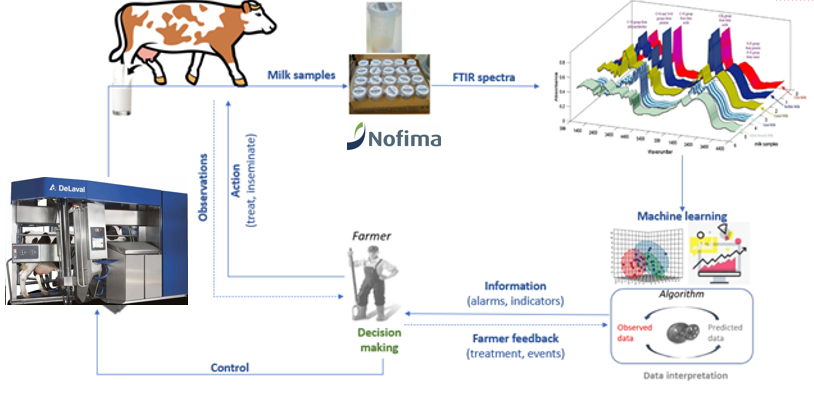
The project aimed to develop new methods for using AMS data to improve the monitoring of dairy cows. The work focused on identifying indicators of cow health, reproductive status, and energy balance, as well as improving the understanding of factors that influence farmers' decisions to invest in AMS. The project also sought to provide knowledge that could support better herd management and more sustainable milk production.
SINTEFs contribution in the project
SINTEF contributed by developing and applying mathematical modelling, statistical methods, and machine learning to analyse large and complex AMS datasets. These methods were used to identify important patterns and potential biomarkers in sensor and production data and to develop predictive models for monitoring individual cows. The results can support earlier detection of changes in cow health and production and help farmers make more informed, data-driven decisions.

Read the blog
The use of technologies, including machine learning in measuring milk components of individual cows may ensure early detection of diseases and maximization of individual cow and herd potential.