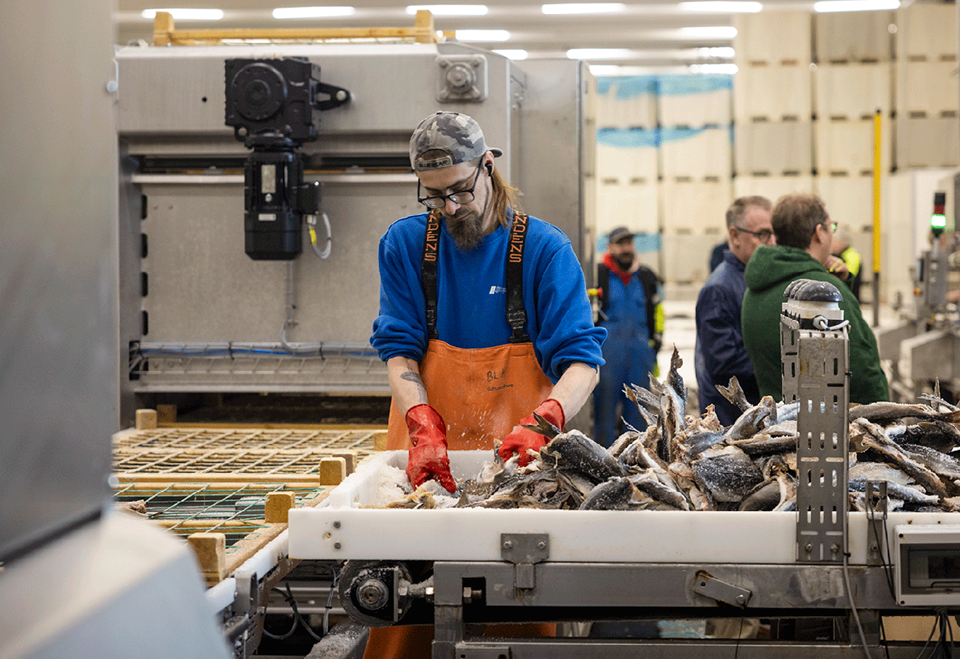
Traditionally, workaday life has not been easy for the average clipfish operator. The wear and tear on the body is hard in this occupation.
“If you look at the production facilities of a clipfish company, you’ll see that the people working there are lifting fish by hand all day. And the fish are heavy. In fact, it’s estimated that one worker lifts 20 tonnes every working day – with some variation depending on the fish being processed,” says Jannicke Fugledal Remme, a senior research scientist at SINTEF Nordvest.
In fact, it is estimated that one worker lifts 20 tonnes every working day.
Remme has led three FHF-funded projects that have now lifted tonnes of fish off the shoulders of hardworking operators. These processing upgrades were marked by an open day at Scanprod, owned and chaired by Arild Giske. He is not afraid to share his knowledge and experience.
“There are not that many clipfish producers, so we have to cooperate,” he says.
A small blast of cold air greeted us when Giske opened the doors to Scanprod’s production facilities on Valderøya north of Ålesund on a spring day in March. Scanprod specializes in the production of clipfish. The new mechanical processing solutions have significantly increased production capacity and provided better ergonomic design.
“It is high time for the clipfish industry to streamline its work processes,” he says.
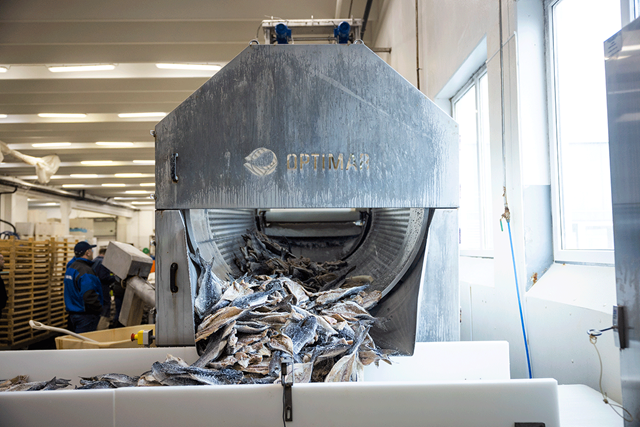
This drum separates the fish and shakes off the salt, saving the workers time and sore fingers and muscles. Photo: Herman Lersveen, Screen Story, FHF
From manual to mechanical
Traditionally, clipfish processing has consisted of arduous manual labour. This creates a challenging work environment that includes many fragmented work processes. Often two operators work together, and until now, most tasks have been done by hand.
A 700-kilogram pallet of fish is driven in, and operators start by separating the fish and removing excess salt. Much of the salt used to preserve the fish then ends up on the floor, which becomes wet and slippery.
Trays of fish are then stacked onto tall drying trolleys and moved into the drying room. When the fish finish drying, they will be sorted, packed and exported.
Other forms of fish processing have long had automated operations, saving workers time and effort. Now the time has finally come to adopt modern production methods in what is a traditional industry, says Giske.
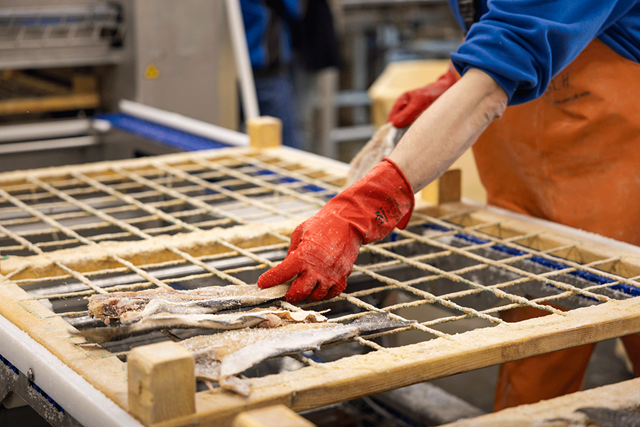
When the fish has been separated and the salt brushed off, the fillets are placed on a drying tray. Photo: Herman Lersveen, Screen Story, FHF
In Scanprod’s 6000 square metre premises, the modernized processing has brought significant gains. Among those who have played important roles in the development of the innovations are Scanprod and Optimar, which supplies automated fish handling systems.
Hpack, which supplies automation solutions for both land-based and maritime industries and specializes in palletizing systems, is also part of the team. Together, they have done ground-breaking work in three important areas for the clipfish industry:
- Developed an automatic feeding system in the form of a pallet elevator that feeds the production line with pallets of salted fish. This frees up both time and the need for an extra truck. It is estimated that this reduces labour costs by 60-70 percent.
- Developed a repositioning system in the form of a perforated rotating drum that separates the fish and rinses off the salt. This alone has resulted in a 40 percent increase in efficiency because operators no longer have to split and shake the fish. Now it arrives ready to be placed on the drying tray.
- Developed mechanical stacking of drying trays on drying trolleys in the form of a stacking system called Stack4U. Significant efficiency gains and reduced physical strain for operators have also been achieved here.
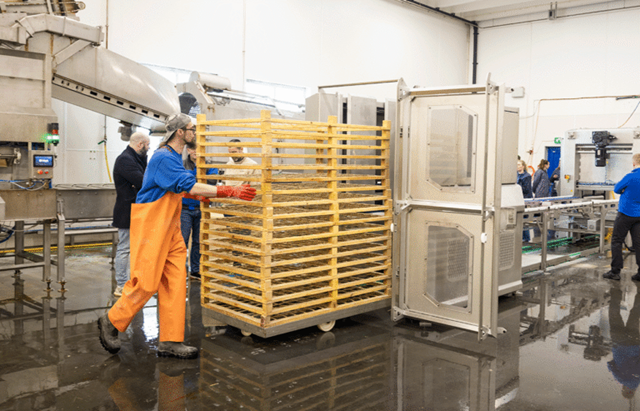
Mechanical stacking of drying trays with new Stack4U. Photo: Herman Lersveen, Screen Story, FHF
Tough times require smart solutions
Norway has produced and exported clipfish since the 17th century. Nordmøre and Sunnmøre were the traditional epicentres for clipfish production. The industry, which consists of approximately eight to ten producers, sells just over 80 000 tonnes of clipfish a year. And most of it is shipped abroad.
Portugal consumes as much clipfish in a day as we do in Norway in a year, Giske says.
These are tough times for the industry due to limited access to fish, especially to cod. Quotas are at a historical low. This means that it becomes necessary to utilize more types of whitefish, such as saithe, tusk and ling.
Smaller species often mean more work per kilo, but Remme believes that streamlining will help Scanprod stand stronger in these challenging times.
Help with burdensome bureaucracy
Researchers at SINTEF Nordvest have led the process and have been involved in testing, improving and modifying the solutions along the way.
“Without SINTEF Nordvest, this would not have been possible. SINTEF has helped us with a huge amount of bureaucracy. They have also made many good, professional suggestions along the way,” says Giske.
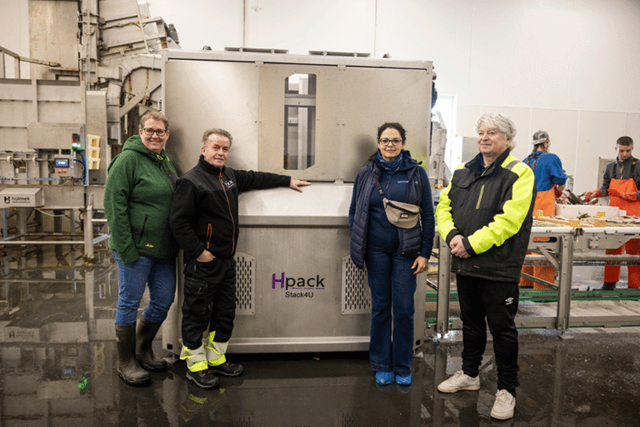
Key players in the project work include Jannicke Fugledal Remme, SINTEF-Ocean; Helge Eiken, Hpack; Lorena Gallart Jornet, FHF; Arild Giske, ScanProd. Photo: Herman Lersveen, Screen Story, FHF
Reduced resource use and an easier working day for people working in production are good news for both employer and employee. So far, over three million kilos of fish have had an easier path to drying.
“Modifying clipfish production methods has long been a time-consuming and difficult process. This is finally changing.”
Helge Eiken, the managing director of Hpack in Ålesund, thinks it has been great fun to be involved in taking the clipfish industry into the future.
“Everything that has to do with innovation and development is what drives us forward. We have used Arild Giske’s ideas and worked on how to get the ideas into the market.”
Several clipfish producers have shown interest in what has now been developed and put into operation.
Win-win for all parties
The innovations have not only increased the efficiency and capacity of production, they have altered the entire working day of the operators for the better. Development of the pallet elevator, drum with salt collector, assembly line, and automatic input and output of drying trays have helped to halve the time for turning around one pallet to five or six minutes.
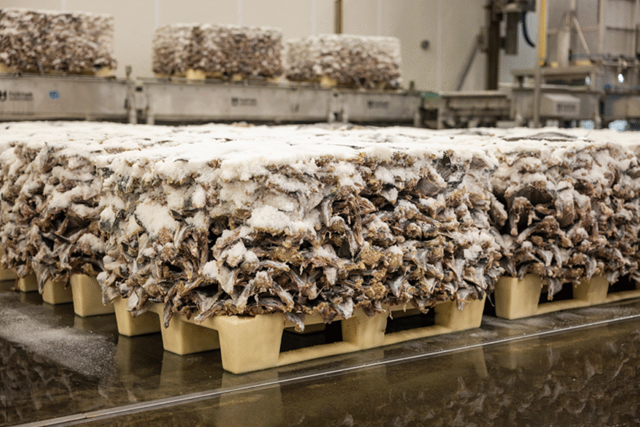
It is good to be spared having to separate the fish manually. Photo: Herman Lersveen, Screen Story, FHF
“Modifying clipfish production methods has long been a time-consuming and difficult process. This is finally changing,” says Remme.
“We’ve made a lot of changes and adjustments along the way. But no one has given up and that is probably one of the main ingredients for the success of the projects,” she says.
Now all the machines are in place at Scanprod, and even though they are still in a trial operation phase, returning to past fully manual work methods is now inconceivable.
Giske smiles and says, “You can imagine it like a wine grower in France going back to stomping the grapes with his feet.”