

What is CFD — and why is it useful?
Computational Fluid Dynamics (CFD) uses numerical methods to solve discretised forms of the Navier–Stokes equations, including variants such as the Reynolds‑Averaged Navier–Stokes (RANS) equations and connected models, over a defined fluid domain. These simulations predict key flow variables—velocity, pressure, density, and viscosity —producing a detailed 3D dataset well suited for analysing flow physics and visualizing complex phenomena.
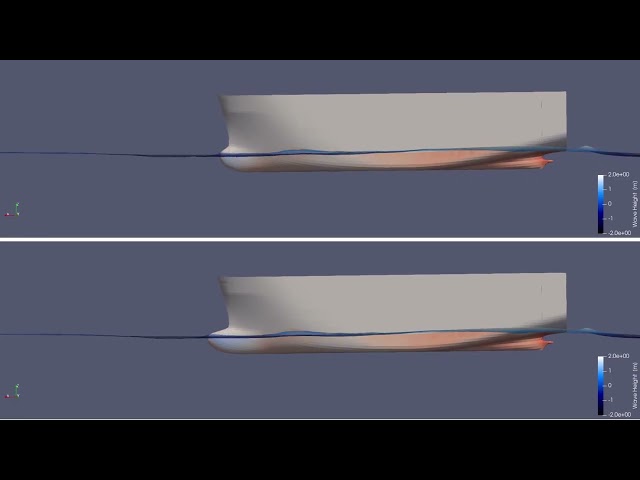
CFD analyses of a vessel with varying bulb lengths in waves.
CFD serves three core roles in our work:
- Research tool: full field 3D insights reveal why concepts succeed or fail and guide robust design improvements.
- Design/performance tool: for selected applications, our validated models benchmarked against trusted experiments enable efficient performance evaluation.
- Data generator: where fast empirical methods/artificial intelligence (AI) models are preferred by designers, validated CFD simulations can produce large, accurate datasets to calibrate/train those models.
Examples of marine CFD applications
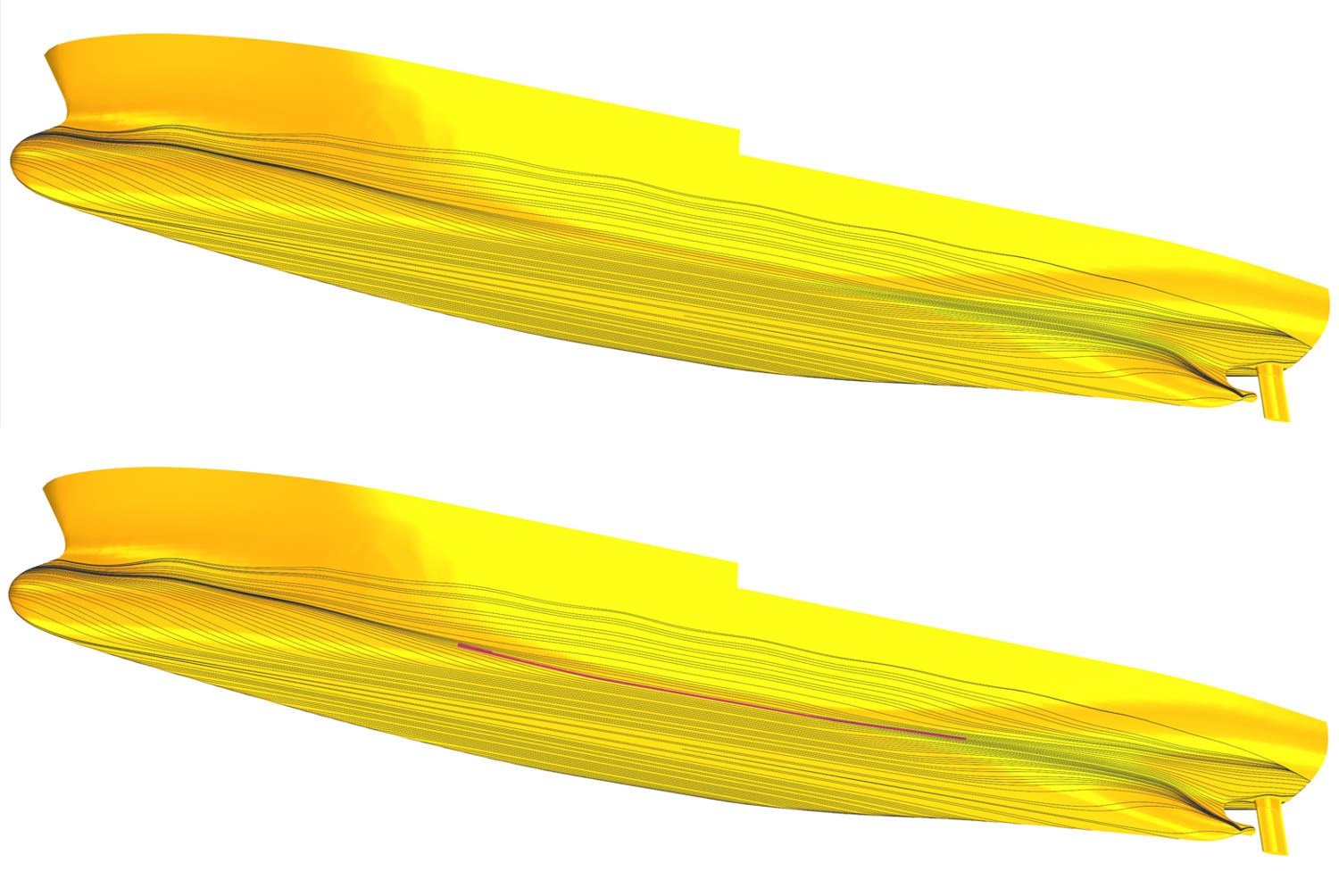
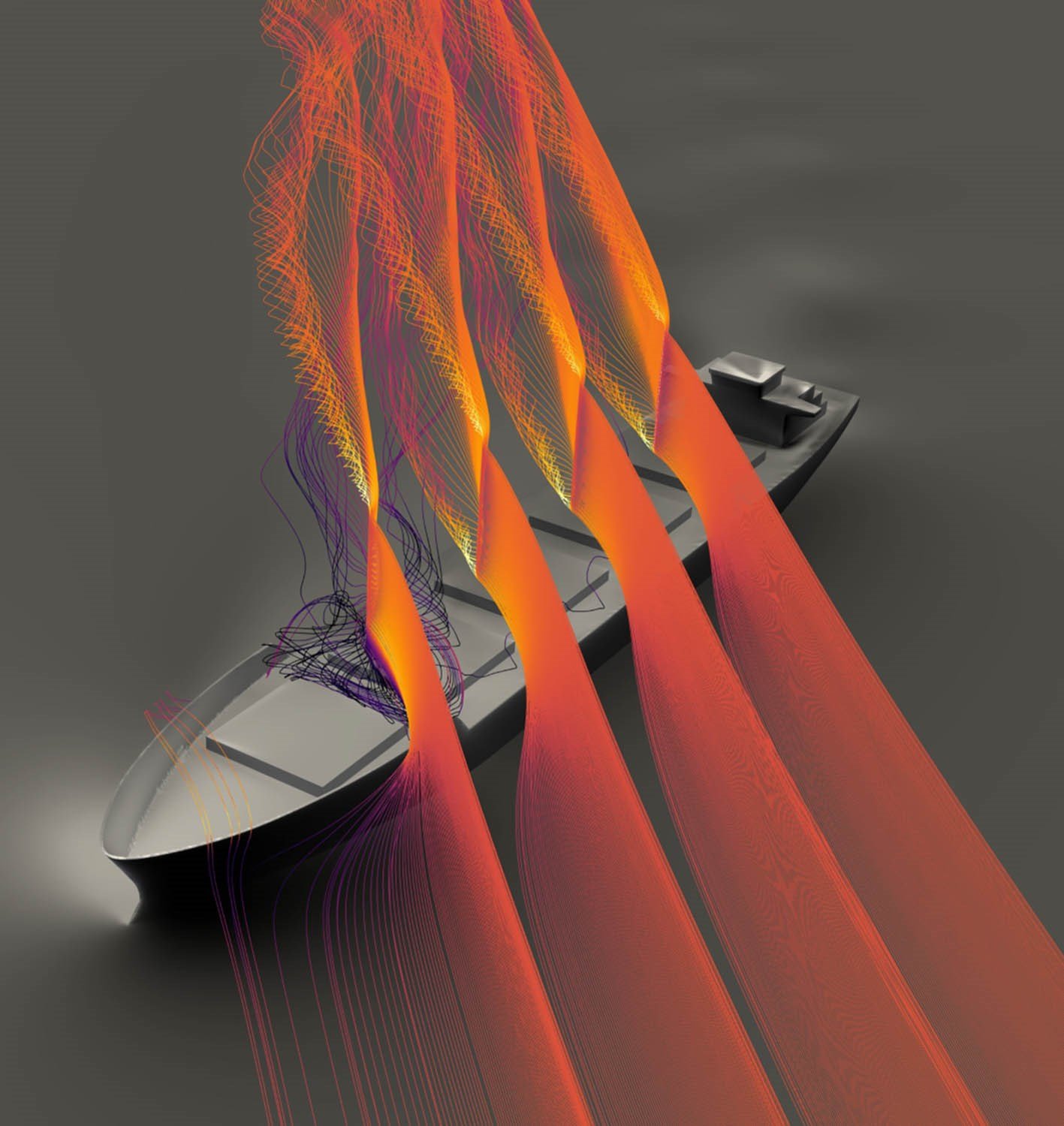
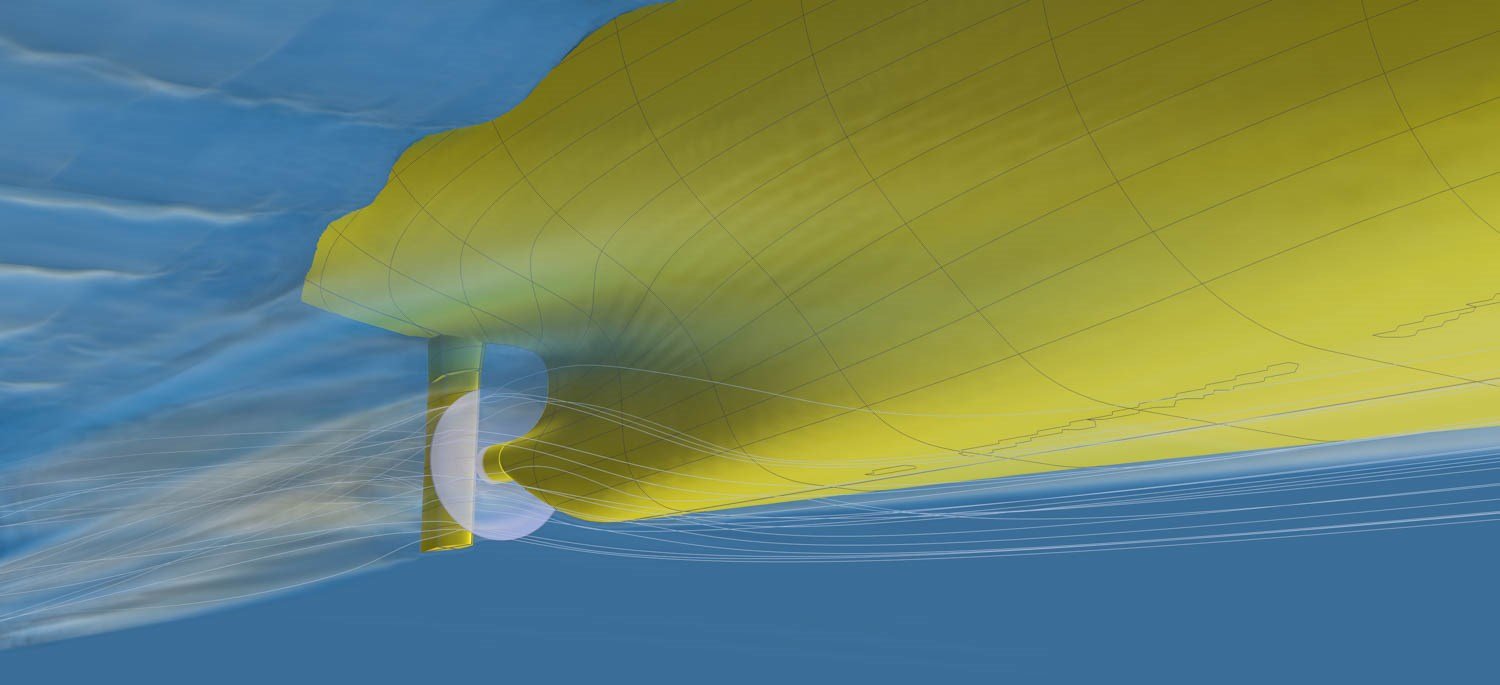
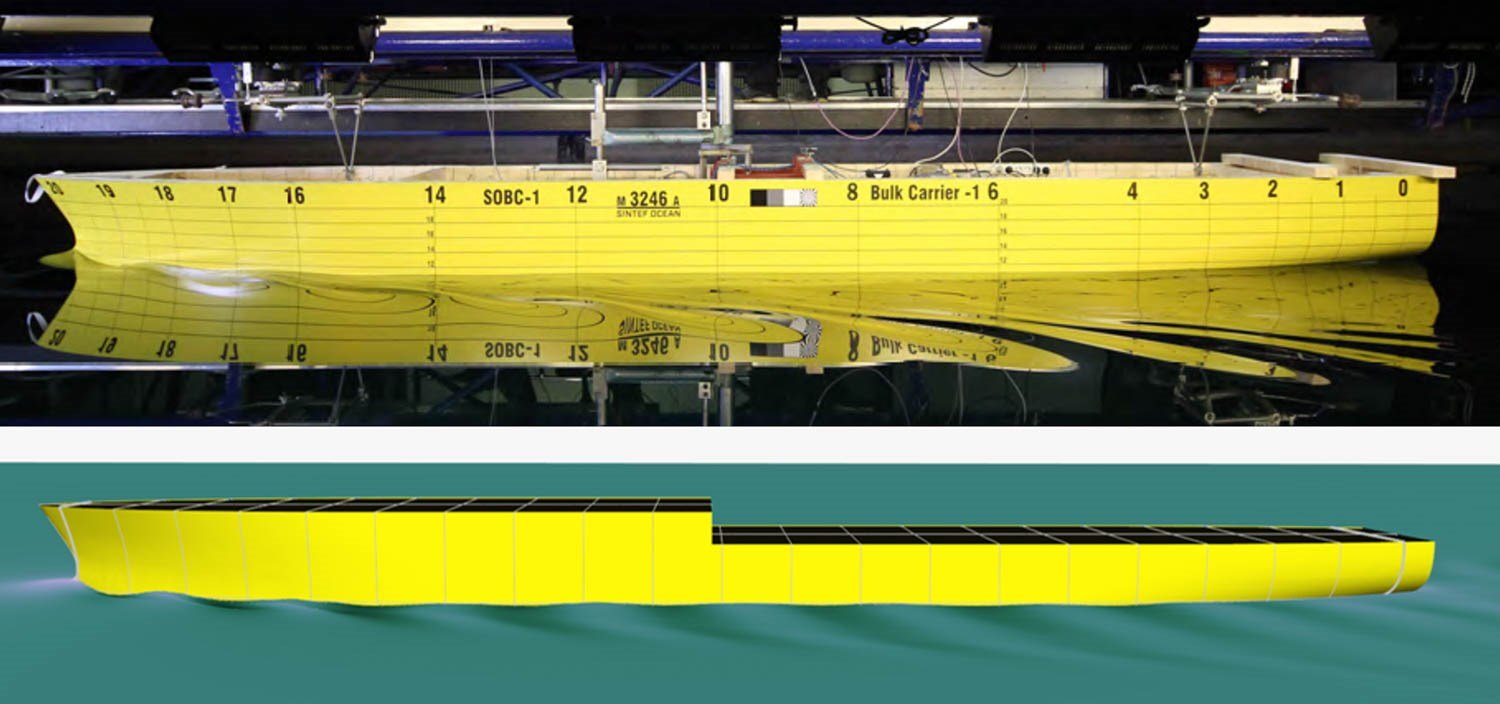

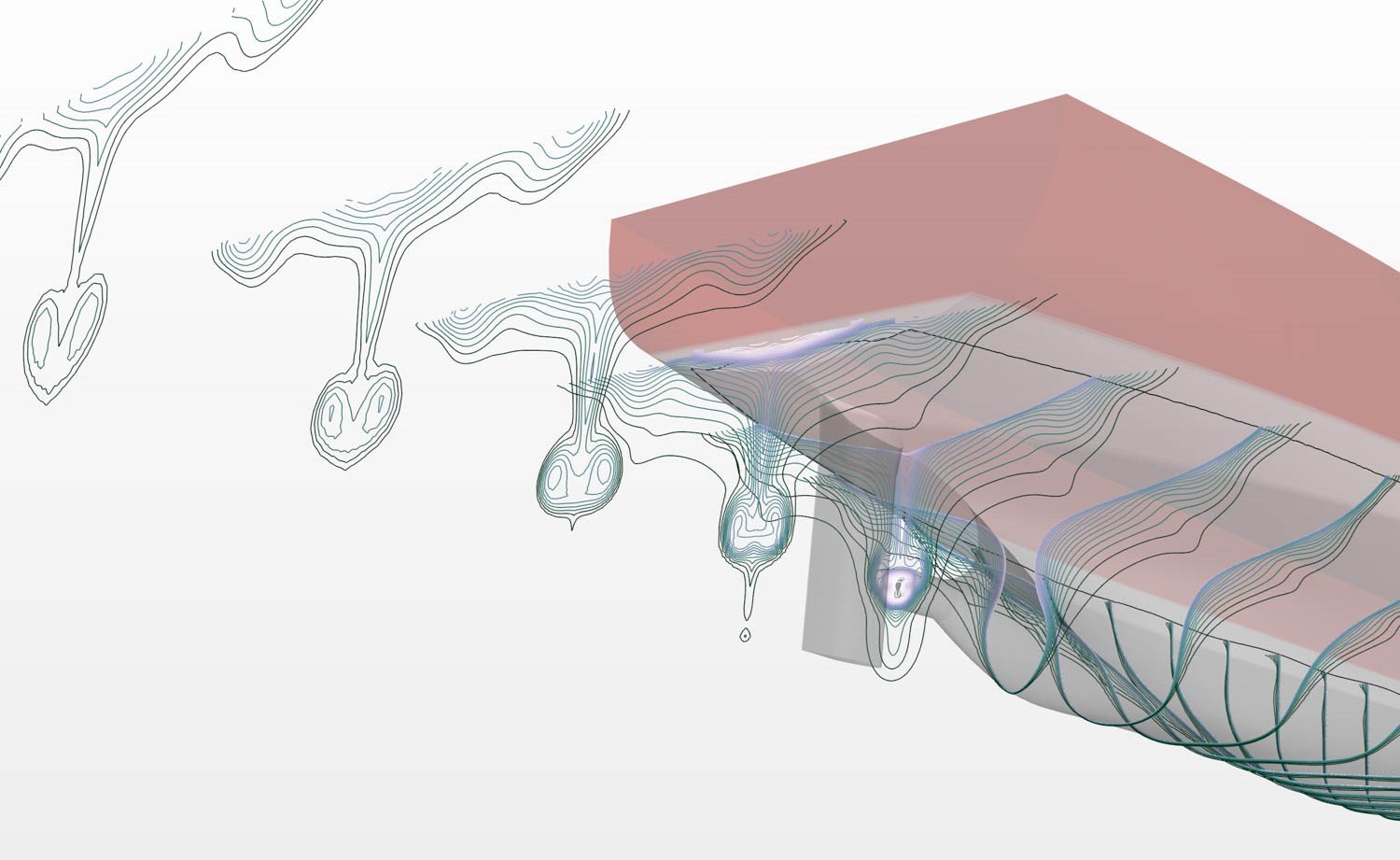
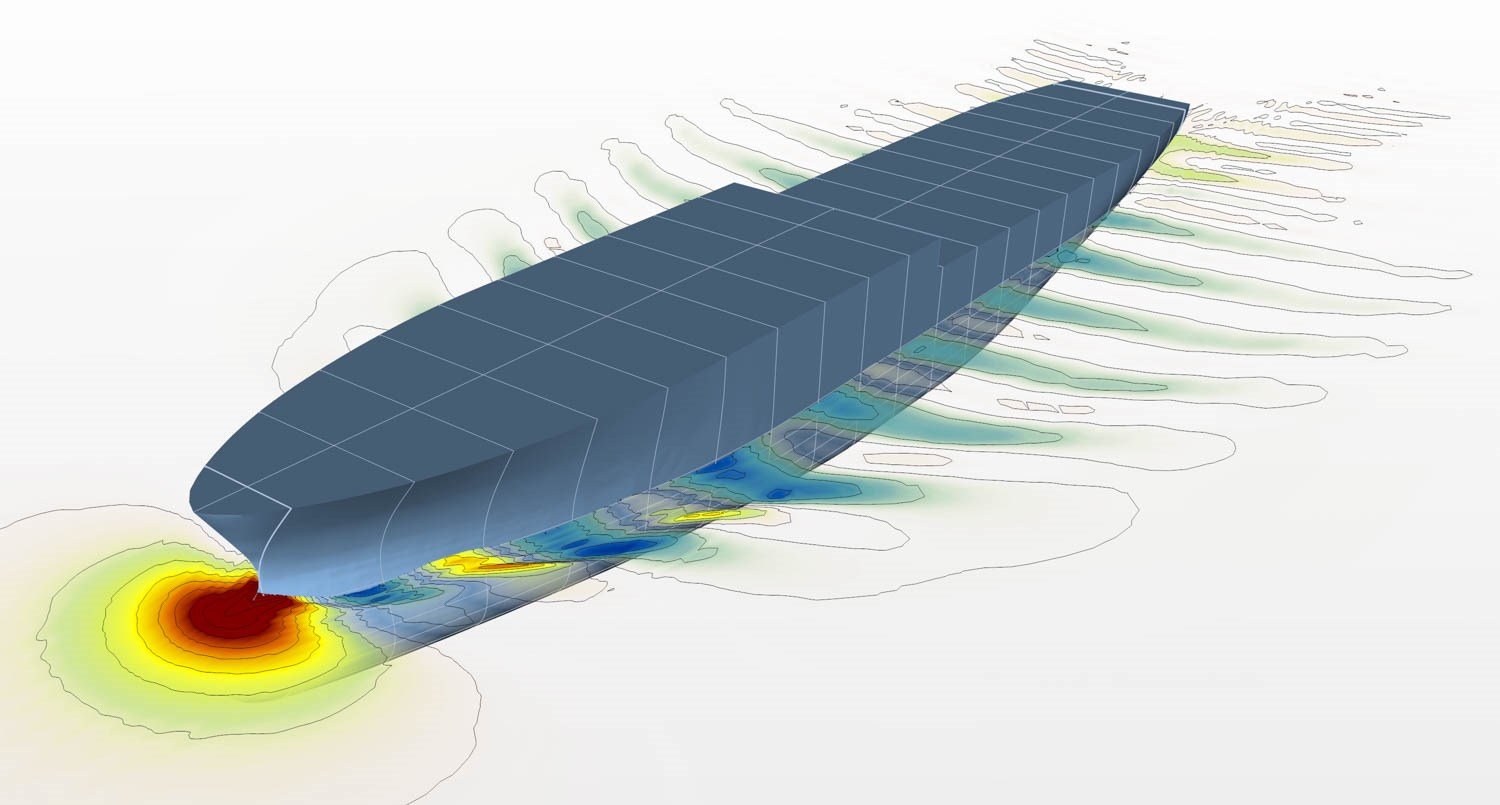
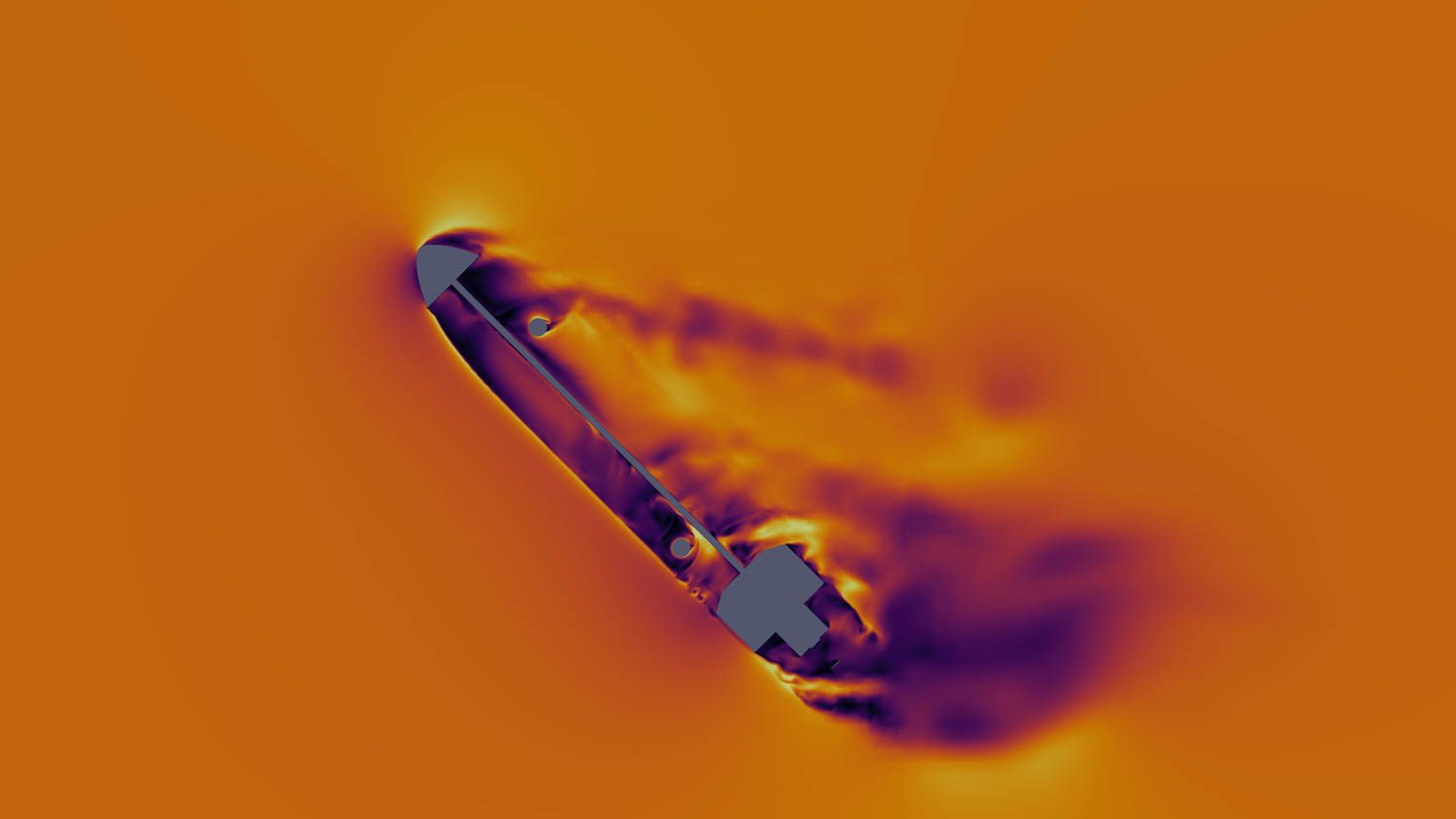
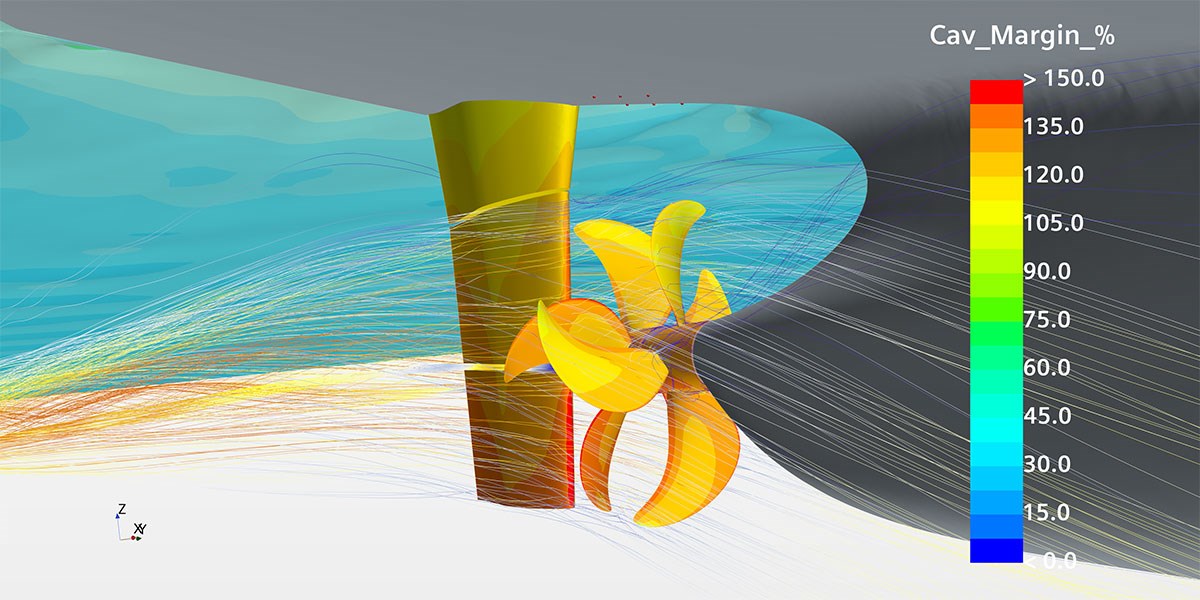
Applications in ocean, marine, energy, offshore, and environmental domains
Our CFD expertise spans the full ocean industry landscape:
- Marine & shipping: Ship resistance and propulsion, hull form optimisation and appendage assessment, propulsor design and performance assessment, manoeuvring in waves, wind assisted propulsion, route simulation and optimisation, wind and current coefficients, energy saving devices and more.
- Offshore structures & energy: Fixed and floating platforms, wind induced aerodynamics, wave, current and wind interactions, splash zone/multiphase effects, offshore wind turbine analysis and flow induced loads. induced aerodynamics, wave current wind interactions, splash zone/multiphase effects, induced loads.
- Ocean & environmental: Dispersion, mixing and exchange processes, thermal plumes, environmental working conditions and operability.
We routinely combine CFD with model testing (see our Towing Tank, Ocean Laboratory and Cavitation Tunnel facilities) to maximise confidence: Experiments provide essential ground truth for complex phenomena, while CFD unlocks full-scale analyses and extensive design spaces.
Why choose SINTEF?
- Integrated numerical–experimental workflow: We design scopes of work that blend CFD and physical testing, leveraging the strengths of each to de risk decisions and accelerate development.
- Validated models for targeted use cases: For selected marine/offshore problems, our time/space discretisation choices and numerical schemes are thoroughly validated on large, trusted datasets and deployed for efficient design studies.
- Scalable computing on HPC infrastructure: Reliable, high-performance compute ensures fast turnaround and minimal queue times for demanding simulations. Performance compute ensures fast turnaround and minimal queue times for demanding simulations.
- Multi tool expertise: We select the most suitable commercial or open source solvers per project and frequently couple CFD with optimisation engines (for design exploration), structural solvers (for FSI and deformation), and potential flow solvers (to accelerate parts of the physics where appropriate).
Tools and techniques
We tailor solver selection and numerics to the physics and project goals:
- Turbulence modelling: RANS (with e.g., Realizable k ε, k ω SST) for quasi-steady performance studies; partially resolved turbulence (DES/LES) and transient simulation where appropriate for unsteady wake dynamics, vortex-induced effects and noise.
- Free surface & multiphase flows: Volume of Fluid (VOF) and related numerical schemes for wave, spray, ventilation, cavitation and other air–water interactions, such as ship air-lubrication.
- Mesh & numerics: Problem specific spatial/temporal discretisation and solver settings validated for marine/offshore cases based on prior mesh convergence and uncertainty assessment.
- Coupled analyses: Potential flow coupling for rapid screening; optimisation loops for automated performance improvement; FSI via coupling with structural solvers for deformation/response.
- Computing infrastructure: Execution on SINTEF funded HPC clusters and/or National HPC Systems for consistent throughput on large parametric studies and transient runs.
- Software landscape: A mix of commercial and open source CFD tools, selected per project to ensure robustness, accuracy, and efficiency. We also couple CFD results to analyses conducted in our in-house ship analysis workbench, ShipX and propulsor design and assessment workbench AKPA.