






Offshore wind
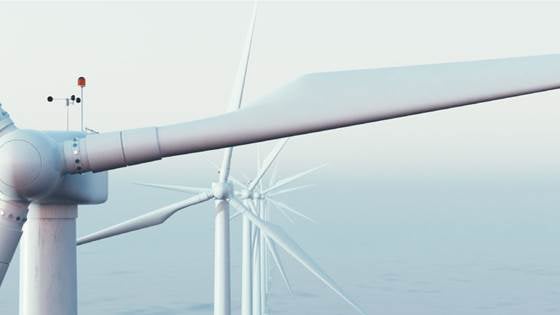
Norway has just left the starting line in a race to become the nation that conquers the sea with deep-water wind turbines.

We combine mathematics, physics, computer science, and engineering to create digital representations of real-world systems. By developing advanced models and simulation tools, we enable faster innovation, reduced risk, and better decision-making in areas such as energy, maritime operations, manufacturing, mobility, and environmental technology.
Our research spans the entire modelling and simulation pipeline – from mathematical theory and numerical methods to scalable software and industrial applications. We work with high-fidelity simulations, reduced-order models, digital twins, and AI-enhanced computational methods that make complex analyses faster and more accessible.
We combine deep expertise in applied mathematics, scientific computing, and engineering with a strong understanding of industrial challenges. Our researchers develop new algorithms and computational methods while ensuring that they can be deployed in practical, real-world settings.
A key part of our work is bridging the gap between advanced numerical simulations and operational decision support. We integrate physics-based models, data-driven approaches, and high-performance computing to create reliable tools for design, optimisation, monitoring, and prediction.
Our research includes:
Our strength lies in combining world-class expertise in computational mathematics and scientific computing with decades of experience solving industrial problems.
We develop methods that are both scientifically rigorous and practically relevant. By integrating mathematical modelling, simulation, AI, and digital twin technologies, we create solutions that enable organisations to test, analyse, and optimise systems digitally before acting in the real world.
The group has a strong track record of developing widely used software, contributing to international research collaborations, and transferring advanced computational methods into operational use across multiple sectors.
Computational challenges are global, and so is our research. We collaborate closely with leading universities, research institutes, and industrial partners across Europe and beyond.
Our researchers participate in international projects and scientific networks spanning computational science, digital twins, scientific machine learning, high-performance computing, and engineering simulation. Through these collaborations, we contribute to advancing the state of the art while ensuring that new knowledge creates value for industry and society.
Norway has just left the starting line in a race to become the nation that conquers the sea with deep-water wind turbines.
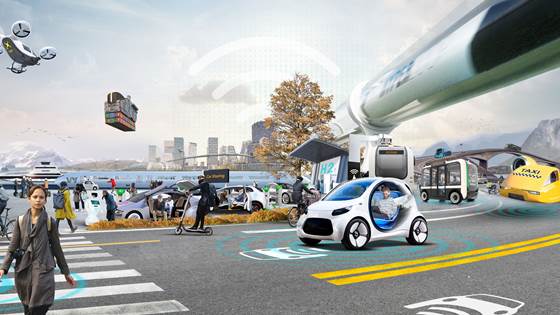
In 2030, green mobility will be one of the most important business areas in the world.
Behind almost every modern technology sits a mathematical model, and an algorithm that makes it useful. We build both.
Digital twins and mixed reality are reshaping the future of employment.
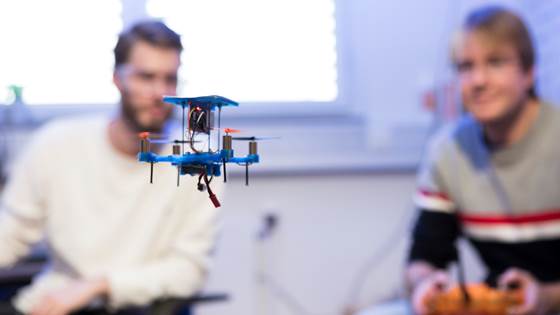
SINTEF pushes the boundaries of autonomous drones and robot capabilities. Mobile and autonomous sensor systems constitute a priority area at SINTEF.
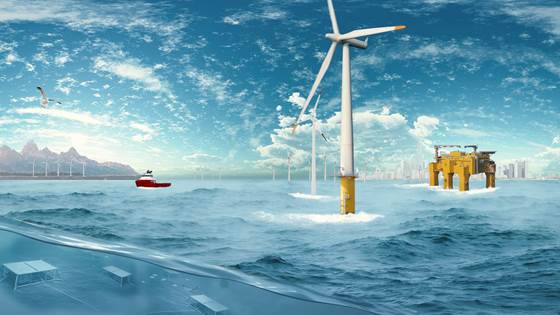
FME NorthWind (Norwegian Research Centre on Wind Energy) brings forward outstanding research and innovation to reduce the cost of wind energy, facilitate its sustainable development, create jobs and grow exports.
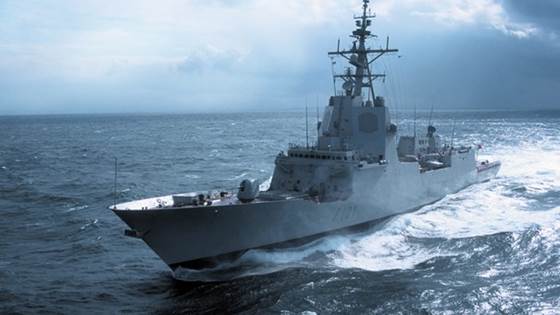
EDF2021-Funded project European digital naval foundation (EDINAF) will develop the foundations of a digital ship and a ship digital architecture, implement a demonstrator infrastructure to deploy relevant Use Cases, embedding a digital ship platform...
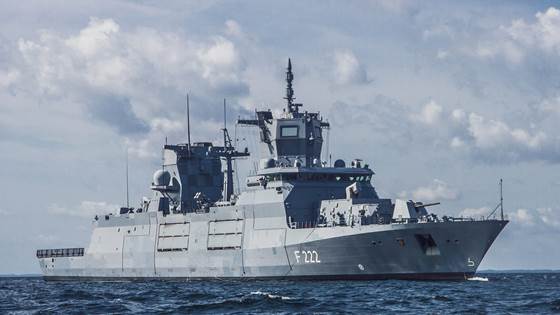
The project “Digital Ship Structural Health Monitoring” (dTHOR) will develop a system based on innovative utilization of large amounts of load and response measurements from robust and advanced sensors, a digital framework complying with recognised...
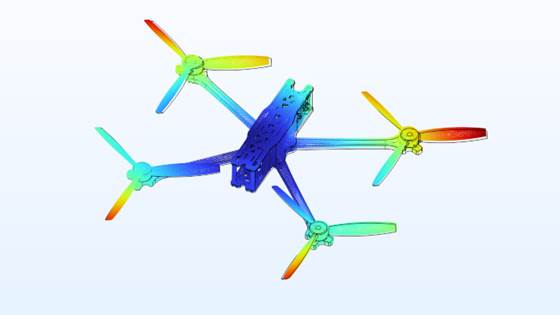
An AI-based Holistic Dynamic Framework for a safe Drone’s Operations in restricted and urban areas.
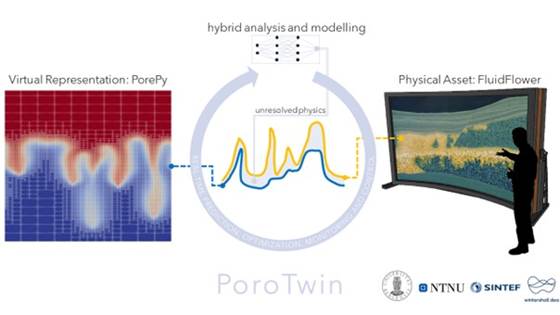
The FluidFlower concept is rooted in the vibrant carbon sequestration environment at the Faculty of Mathematics and Natural Sciences at the University of Bergen to link natural sciences and boost public outreach efforts.
Caption header image: Shutterstock