
AETHERIA: AI-powered digital twins for coastal resilience
Generative AI and surrogate digital twins for human-centric coastal and Earth-system resilience and impact assessment
Generative AI and surrogate digital twins for human-centric coastal and Earth-system resilience and impact assessment

Continual, explainable and embodied artificial intelligence

LOOP converts agri-food waste into biopolymers for sustainable packaging, coatings and biofertilizers, reducing food waste, fossil materials and emissions through circular biotechnology.

Co-gasification of plastic waste with biomass residues, combined with CCS, presents an innovative bioCCS pathway for managing waste, contributing to negative emissions and supporting the transition to a circular economy.

FIT-HORIZONS aims to develop a holistic, intelligent and flexible design tool environment that will accelerate the adoption of multiple decarbonising retrofit technologies for various vessel types.

REACT is a Horizon Europe project developing an innovative tandem electrochemical process to directly convert industrial CO₂ streams into valuable olefines mixtures for sustainable polymers, chemicals, and fuels.

The project explores whether drones can speed up transport of blood samples and hospital supplies in rural areas, enabling faster diagnostics and more resilient healthcare.

The project aims to transform industrial waste streams, biological rest materials and surplus energy into valuable feed ingredients to reduce Norwayʼs dependence on imported feed raw materials.

SFI Seaweed unites academia, industry and the public sector to develop knowledge and technology for a sustainable macroalgae industry.

A CETP research project aiming to make carbon capture more efficient, safer, and environmentally friendly. It focuses on improving how to manage the chemical solvents that are used to capture CO¬2 from industrial emissions.

Pre-project for the establishment of a greenhouse for tomato production using surplus heat from a datacenter

The EU project eREGENERATE is working to develop a new generation of Direct Air Capture (DAC) technology that can remove CO₂ directly from the air in a more efficient, affordable, and sustainable way.

To improve the understanding of wind turbine noise generation, propagation and impact on humans, under all Norwegian atmospheric and topographic conditions.

The main goal of the project is to create collaborations between research environments, industry and society in Trøndelag and Västernorrland in sustainable materials and chemicals production.

The AQUAbubble project focuses on nanobubble technology to boost sustainability and productivity in land-based fish and microalgae production.

The Data Space for a Sustainable Green Europe
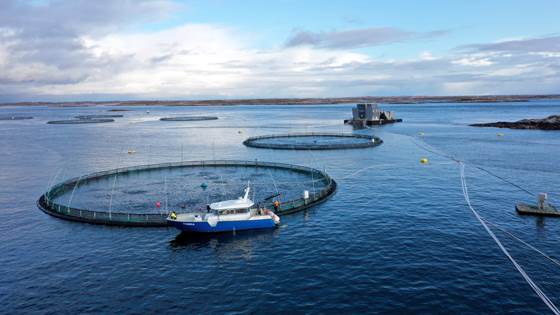
The green transition of the aquaculture fleet requires increased use and better utilisation of batteries. To succeed, we need to rethink how battery-hybrid vessels are enabled and operated.
FME ZeMe developes the fundamental knowledge and technologies needed by the Norwegian metallurgical industry to become climate neutral by 2050.