GasBio - Gasification for Biofuels
Future production of Second Generation Biofuels in Norway requires building of long term competence in thermochemical biomass conversion (i.e. gasification). GasBio aims to fulfil this national need.
In post-combustion CO2 capture, a main bottleneck causing significant reduction in power plant efficiency and preventing cost effectiveness is the low flue gas CO2 partial pressure, limiting membrane flux, solvent selection and capacity. In pre...
Small scale stationary Combined Heat and Power (µ-CHP) generation is foreseen as a significant future market for fuel cells. Among the fuel cell types, the Proton Exchange Membrane Fuel Cell (PEMFC) technology is by far dominating the small scale...
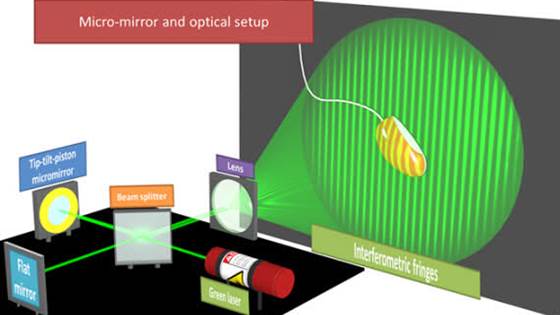
Micro-optical microphones have many advantages over conventional condenser or capacitive microphones. They offer immunity toward electromagnetic interference and need only a small membrane, which gives a more compact and robust sensor. Theoretically...
The main objective of the NEXPEL project, a successful demonstration of an efficient PEM electrolyser integrated with Renewable Energy Sources, supports the overall vision to establish hydrogen as an energy carrier in a large range of applications in...
The main concept of piezoVolume is to develop a platform of integrated processes for production of piezoelectric microsystems.
The objective of the project is to review former previous DEMO-projects and collects views on cross cutting issues from experienced staff, thereby utilizing valuable insights and help future hydrogen lighthouse- projects consider the pros and cons of...
SINTEF has since 2003 conducted annual national ripple effect analyzes in the fisheries and aquaculture sector on behalf of various clients.
The ThinSi project will develop a solar cell processing chain for high throughput, cost-effective manufacturing of thin film silicon based solar cells on low-cost silicon substrates. The substrates will be made on the basis of an innovative powder-to...
The goal of the HyPilot project was to investigate the need for new research infrastructure (RI) and evaluate concepts for access to and organization of national pilot test infrastructures for hydrogen technologies based on a thorough gap analysis...
The project addresses from one site the most critical and costly step to produce liquid fuel from natural gas using conventional routes, e.g. the stage of syngas production, and from the other side explores alternative routes to convert natural gas...
The OffshoreGrid project is the first in-depth analysis of how to build a cost-efficient grid in the North and Baltic Seas.
The approach of AFORE project is to develop novel, industrially adaptable and techno-economically viable bio-based solutions for the separation, fractionation, and primary upgrading of green chemicals from forest residues, wood chips, and chemical...
The main objective of the CO2 Field Lab project is to assure and increase carbon storage safety by obtaining valuable knowledge about monitoring of CO2 migration in geological formations. This will enable detection of possible CO2 leakage at the...
The Norwegian ferroalloy industry (with a significant international ownership) cooperates in the field of environmental challenges, and is internationally renowned for sustainable production. The innovation is therefore on a national and...
The resistance at the metal contact-semiconductor interface and recombination at the passivating layer-semiconductor interface are two important bottlenecks for improving the performance of current solar cells. These processes are quantum mechanical...
The OCMOL project aims at developing an innovative chemical route adapted to the exploitation of small gas reservoirs from both a technical and an economic point of view. The corresponding process is, among others, based on oxidative coupling of...
The TACO EU Project will develop a new type of laser based time-of-flight 3D camera, that will give robots a more “human view of the world”.