

Hydrogen is expected to play a key role in future energy systems, but much of today's hydrogen is produced from fossil resources and is associated with significant CO₂ emissions.
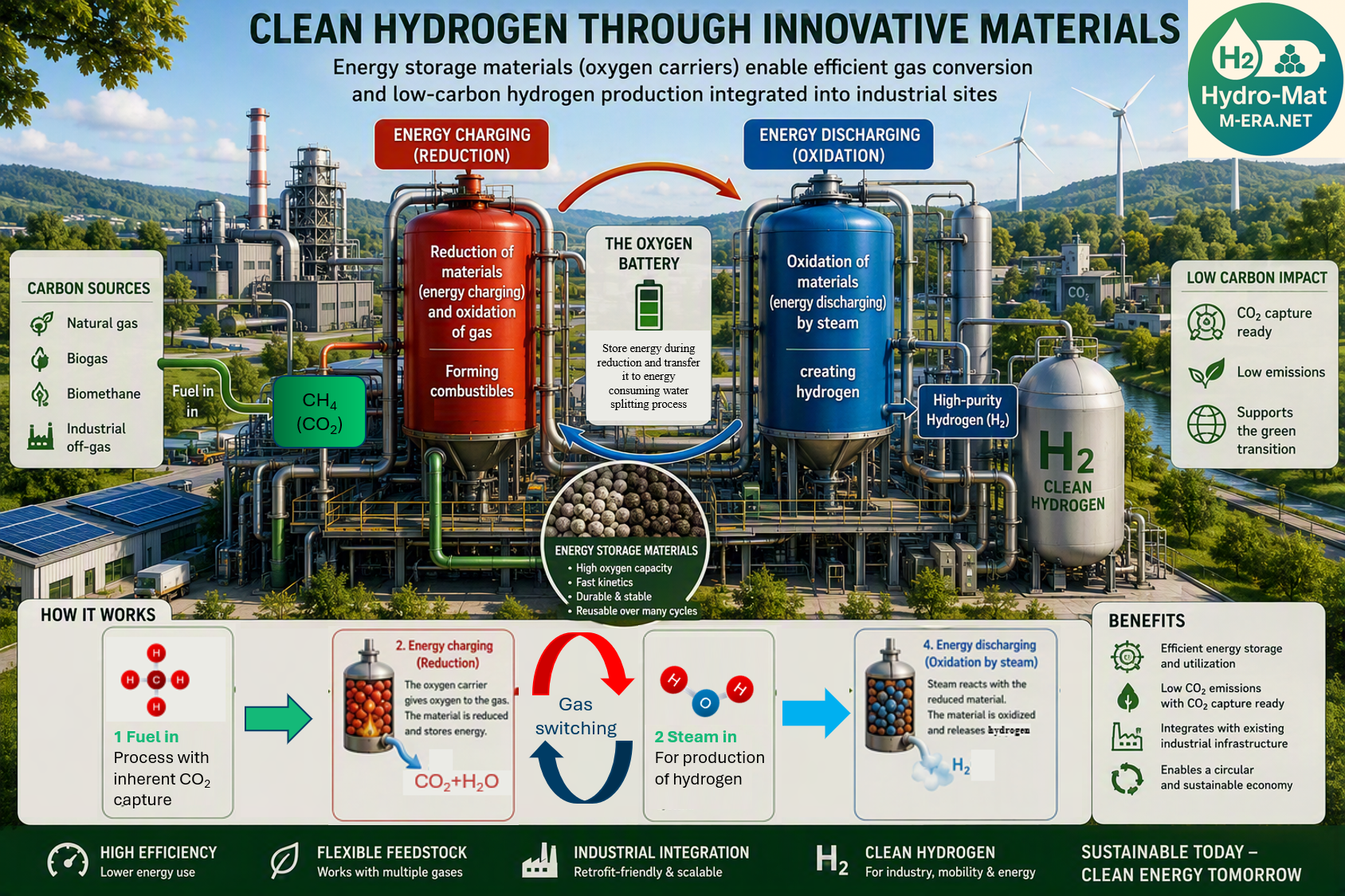
Hydro-Mat was initiated to develop new solutions for producing hydrogen with very low or zero emissions. The goal is to make hydrogen production more sustainable while supporting the green transition of industry and transportation.
The project aims to address several key challenges related to hydrogen production:
• How to produce hydrogen with a lower climate impact than current technologies.
• How to develop materials that can withstand high temperatures and repeated operating cycles without losing performance.
• How to prevent soot formation and minimize energy losses during operation.
• How to make the technology efficient and robust enough for large-scale industrial deployment.
Project background
The world will require large quantities of low-carbon hydrogen to reduce greenhouse gas emissions from sectors such as steel production, the chemical industry, and fuel manufacturing. Hydro-Mat is developing technology that can make hydrogen production both cleaner and more cost-effective. The process can use natural gas, biogas, or biomethane as feedstocks while enabling integrated carbon capture. This has the potential to lower emissions, improve energy security, and create new green jobs in Europe and Norway.

Increased competitiveness in future energy technology
SINTEF coordinates the project and is primarily responsible for developing the novel oxide materials that act as an “oxygen battery.” Researchers use advanced computational modelling and machine learning techniques to identify materials capable of efficiently storing and releasing oxygen. These materials are synthesized and tested in the laboratory before being integrated into innovative reactor concepts.
SINTEF works closely with international research organizations and industrial partners to ensure that the technology can be scaled up and implemented in real-world applications.
The project can provide cleaner hydrogen for industry and transportation, reduce CO₂ emissions, improve the utilization of biogas and industrial waste heat, and strengthen Norwegian and European competitiveness in next-generation energy technologies.
