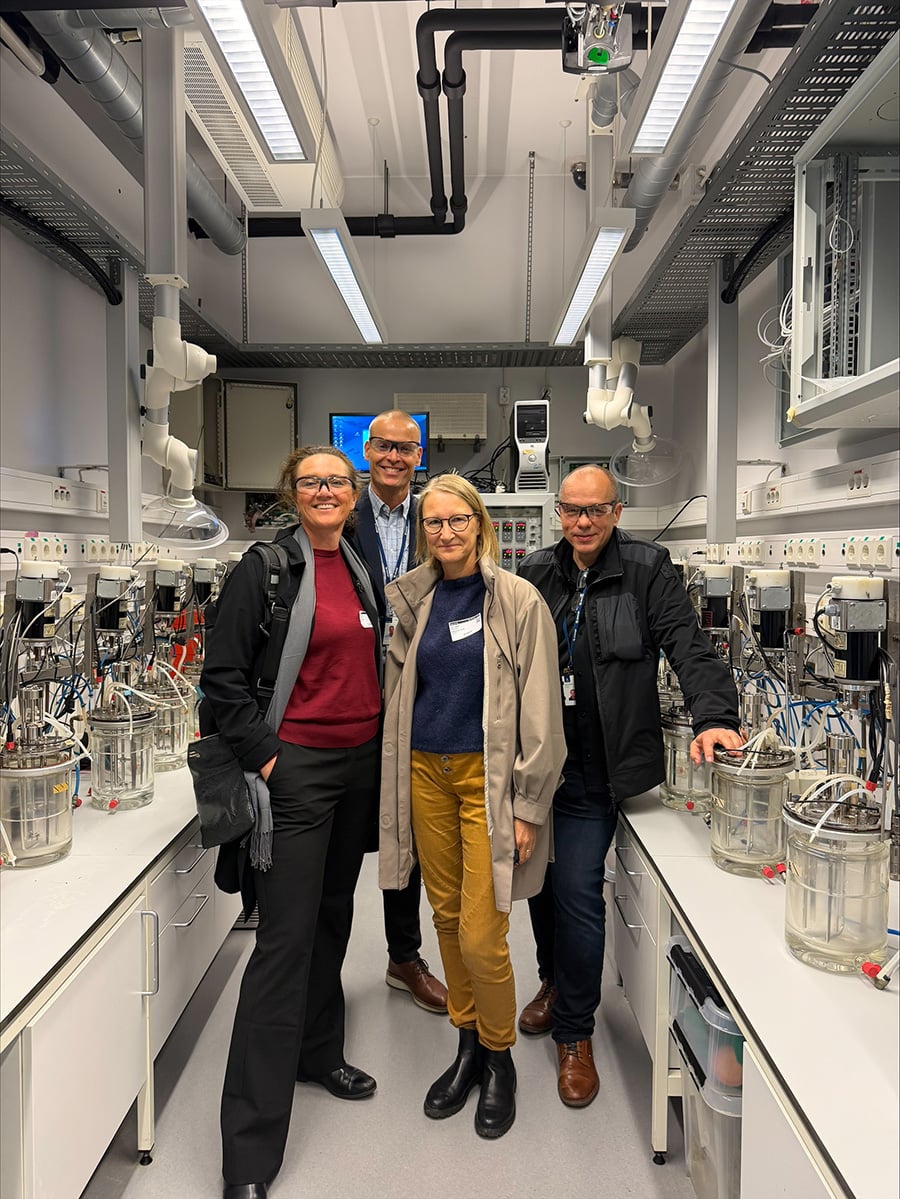
As industry transitions towards more circular and sustainable production systems, carbon capture and utilisation (CCU) offers new opportunities for value creation and competitiveness. Through biotechnological fermentation processes, living microorganisms such as bacteria and yeast can convert carbon into a wide range of products needed by society.
However, for such processes to become commercially viable, they must be demonstrated at industrially relevant scales. SINTEF's research environment at Tiller now has facilities that make it possible to test these processes under conditions similar to those found in industry, making it one of the largest and most advanced facilities of its kind in Europe.
For four decades, SINTEF's research teams at Tiller have worked closely with industry to develop, test and improve technologies before investment decisions and commercial deployment. With the new Bioprocess Piloting Lab, SINTEF gains a dedicated arena for developing, testing and scaling up biotechnological solutions under conditions that closely resemble those used by industry itself.
"All too often, promising ideas fail because the gap between theory and large-scale production is simply too great. This is exactly where you come in. For more than 40 years, the research environment at Tiller has served as a bridge between vision and reality. Here, you put on the hard hat, as we have done today, roll up your sleeves, and test technologies at a scale that industry can truly understand and, most importantly, trust," said Kent Ranum, Mayor of Trondheim.
"This is an important new milestone for us. Tiller is a vital part of our laboratory infrastructure and contributes to strengthening the competitiveness of both Norwegian and European industry, which is exactly what we need right now. We therefore have high expectations for what we can achieve in this new pilot hall that we are taking over today," said Eli Aamot, Executive Vice President at SINTEF.
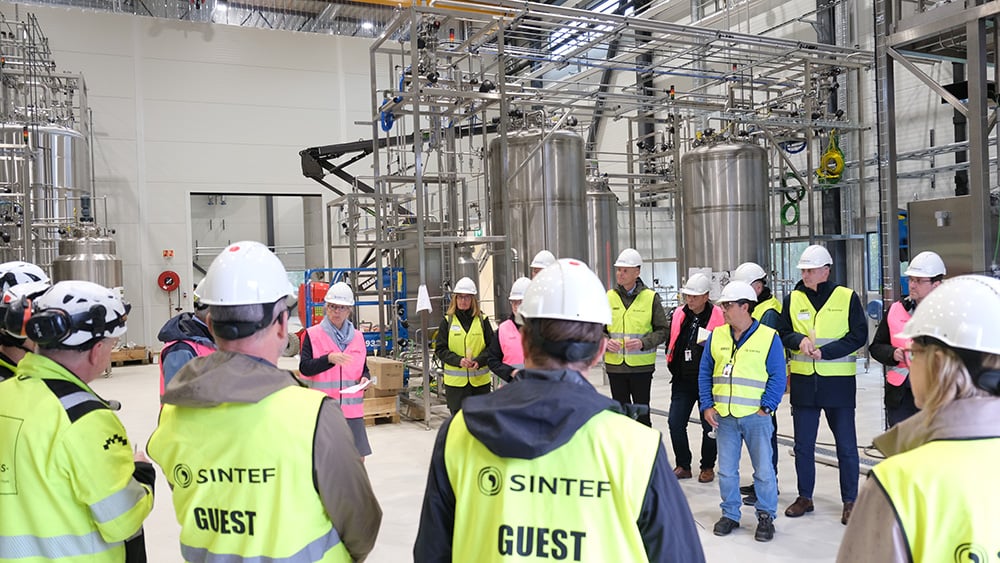
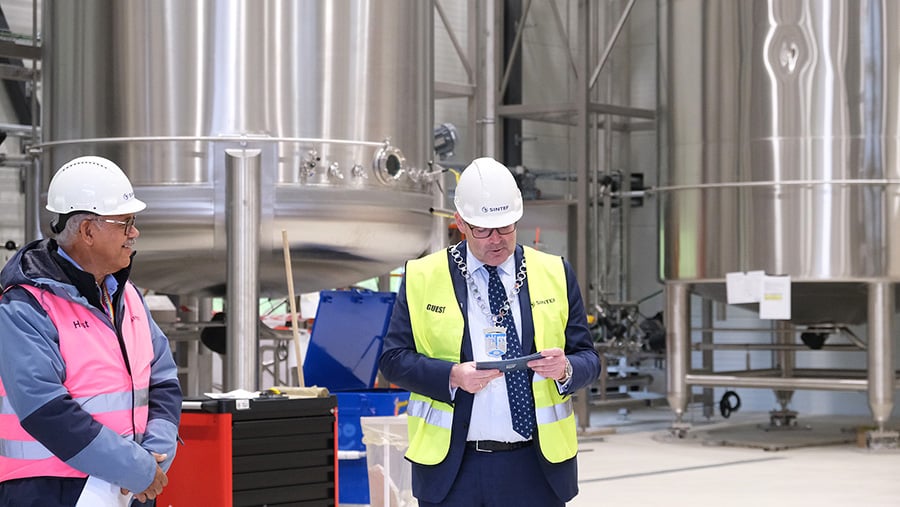
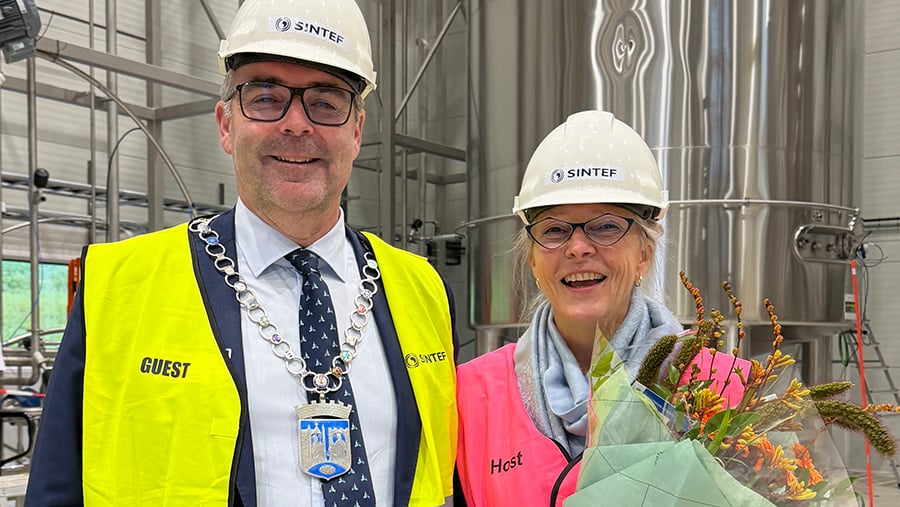
In the new facility, processes can be tested at scales of up to 20,000 litres under conditions highly relevant to industry before commercial implementation. SINTEF's researchers can analyse and document everything from product quality and stability to resource consumption and production costs.
"It has been more than 15 years since we last opened a new building here. That makes it particularly inspiring to see that the facility is already filled with equipment and pilot plants that will help test, scale up and realise solutions for the green transition," said Duncan Akporiaye, Vice President Research at SINTEF.
The first project to use the facility will be the EU-funded and SINTEF-coordinated PYROCO₂, project, which aims to convert CO₂ and green hydrogen into the industrial chemical acetone. Acetone can in turn be used in the production of products such as plastics and aviation fuel. In the new facility, the project will be able to produce up to 300 tonnes of acetone annually from 700 tonnes of industrial CO₂ and renewable hydrogen, generating valuable research data for the further scale-up of the PYROCO₂ technology.
Over the coming years, the laboratory will support a broad range of research and industrial projects related to carbon utilisation, bio-based products and sustainable feed production.
"Norway, and particularly Central Norway, is well positioned to succeed in this area. We have industrial CO₂ streams that could become a resource rather than an emission in the future. We have access to biomass and side streams that can be used as feedstocks, and we have a very large domestic market for feed through both agriculture and aquaculture," said Håvard Sletta, Research Director at SINTEF.