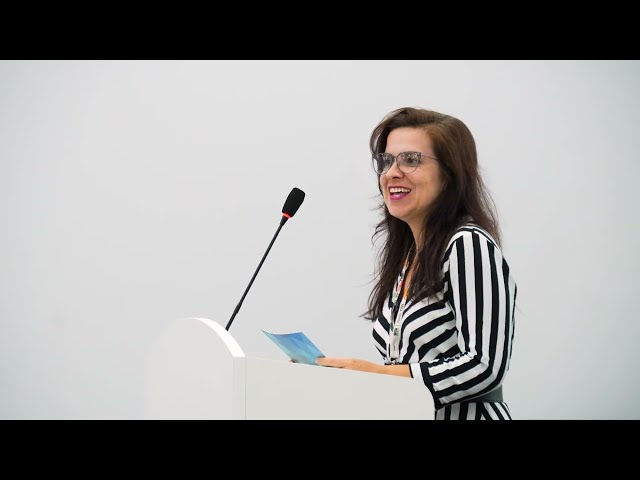
On 18 November 2025, SINTEF and NTNU hosted a side event at the 30th UN Climate Change Conference (COP30), the world’s most important arena for international climate action. The event focused on sectors where emissions are particularly difficult to reduce, commonly referred to as “hard-to-abate industries”, such as cement, steel, aluminium and chemicals.
Industry as a whole accounts for around 25% of global CO2 emissions, with hard-to-abate industries comprising a significant share. At the same time, the revised Nationally Determined Contributions (NDCs) currently point to an increase of 2.5°C in global temperatures, which is far above the Paris Agreement’s goal of limiting warming to a 1.5°C increase.
Reducing emissions from these industries is therefore essential for meeting the global climate targets. However, the challenge is complex. Hard-to-abate industries are characterised by energy-intensive processes and deep integration into global supply chains. They are also major contributors to the global economy. The key question is how to cut these emissions without undermining competitiveness or operational efficiency.
In his opening remarks, Executive Vice President of Sustainability Nils Røkke emphasised that meeting this challenge will require a dual approach: deploying new technologies, such as electrification, carbon capture and storage (CCS) and hydrogen, while also optimising resource use to achieve the same outcomes with less.
“Doing both, decarbonisation and energy efficiency, is the challenge at hand,” he said.

The event was divided into two main sections. The first featured representatives from three hard-to-abate industries: Bjørn Mauritzen (Hydro Aluminium), Andrew Minson (Global Cement and Concrete Association) and Bernard Stormyr (YARA), who shared ongoing decarbonisation efforts within their companies.
The second section focused on the role of R&D in enabling the transition of hard-to-abate industries, featuring Espen Moe (NTNU) and Micheil Schaeffer (Climate Analytics) and SINTEF Chief Scientist Petter Nekså.
Petter presented an overview of selected past and ongoing projects from SINTEF on this topic, and referred to SINTEF and NTNU’s joint guidance on accelerating a just and science-based transition: COP30 as a turning point.
SINTEF-led projects highlighted during the presentation were:
- Centre for Environment-friendly Energy Research (FME) HighEFF, which focused on improving energy efficiency in industrial core processes, and utilising surplus heat for other applications,
- EU project Flex4Fact, which demonstrated how industrial flexibility can be achieved by integrating renewables and hydrogen into multiple industrial applications,
- FME HYDROGENi and EU project H2Glass, which explore how clean hydrogen and ammonia can decarbonise hard-to-abate sectors such as maritime transport and process industries, and
- EU project COREu, which aims to establish new CCS demonstration projects linking CO2 emitters with potential storage sites across Europe.
Petter Nekså also noted that collaboration with the Global South will be critical to the successful decarbonisation of hard-to-abate industries, and expressed a desire to see SINTEF’s project portfolio grow in this area.

The event concluded with a Q&A involving all speakers. Key discussion topics included:
- The role of public procurement in enabling the production and implementation of low-carbon products and solutions,
- The possibility of reducing the cost of CCS technologies, to enable their uptake in the Global South
- The question of who will bear the cost of decarbonising hard-to-abate industries, particularly in countries outside of the EU’s Emission Trading System (ETS).
Watch the event in full on YouTube