Expertise
SmartSeas
We develop ICT solutions that can improve efficiency, accuracy, safety of maritime operations, and at the same time support a sustainable utilization of renewable natural resources. Solutions are...
We develop ICT solutions that can improve efficiency, accuracy, safety of maritime operations, and at the same time support a sustainable utilization of renewable natural resources. Solutions are...
SINTEFs CO2 capture research span a wide range, including the development of materials and processes in post-combustion, pre-combustion and oxyfuel processes, natural gas processing and...
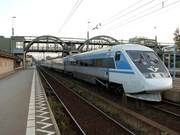
Transport is crucial to the society. Freight transport provides citizens and businesses with the goods, and free mobility for persons is a human right in most countries. However, transport has...
SINTEF works closely with the industry to develop methods that provide high-quality silicon material for the fabrication of high-efficiency solar cells. The most commonly used methods are...
Big data consists of advanced techniques that harness independent resources for building scalable data systems when the characteristics of the datasets require new architectures for efficient...

The research field of intelligent transport systems, ITS, addresses how information and communication technology can be deployed in the transport and traffic management sector. The deployment of...
The emerging Physical Internet concept suggests changes to improve the sustainability of freight transport. Cargo owners and forwarders will not book transport services for the whole transport...
Scalability is the ability to increase the capacity of software service by consuming more hardware resources. The capacity is the maximum workload this software service can handle as bound by its...
Semantic technologies enable an explicit representation of the semantics (meaning) of data. These technologies allow for defining the meaning of entities residing in a domain (e.g. by means of...

Information and communication technology (ICT) solutions for smart cities are typically large and long-lived systems-of-systems, which will emerge through evolutionary incremental growth and...
The green shift poses challenges to the power grid. Decentralized small scale renewable energy production have a fluctuating and uncontrollable nature, and battery powered electric vehicles...
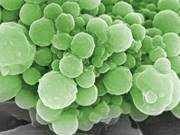
Nanomedicine is the medical application of nanotechnology. Nanomedicine is a fast-growing field in SINTEF, ranging from diagnosis to treatment....
Automatically analyzing video to detect and determine temporal and spatial events has a multitude of use cases in a wide range of domains such as entertainment, health-care, retail, automotive,...
The computer vision group develop AI-based vision systems based on extensive understanding of the image generation process and cutting-edge machine learning algorithms. We specializes in...
SINTEF's applies in its daily work as Independent Safety Assessor (ISA), Notified Body (NoBo), Assessment Body (AsBo) and Designated Body (DeBo) a number of international standards, rules and...
Forty percent of the System Safety group holds a PhD degree within telecommunications. Due to the educational background and long-time experience with safety assessment services within the...
The knows the importance of developing knowledge about impact of plastic on the environment is and technology to create sustainable solutions for the future. Our fundamental and applied research...
Combining machine learning with physical models may give the best from both worlds. Machine learning methods often work as black boxes and do not provide insight of the physics underlying the...
Machine learning and artificial intelligence are very flexible and powerful methods for modelling and prediction, but they rarely provide any human understandable explanation or justification for...
Reinforcement learning is a method that allows an agent to learn how to perform complicated tasks through trial and error. The method The method is particularly suited for when the system and the...