Expertise
Multiphase flow
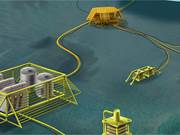
At the SINTEF Multiphase Flow Laboratory, more than two decades of operational and scientific experience are united in working with multiphase flow phenomena. The group at SINTEF has operated the...
At the SINTEF Multiphase Flow Laboratory, more than two decades of operational and scientific experience are united in working with multiphase flow phenomena. The group at SINTEF has operated the...
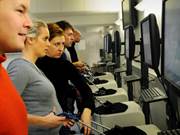
Simulation and use of simulators in training of different professions has many advantages. Some of them are training in a risk free environments: the surgeon can work without risk to the patient...
Work is the basis of production and wealth creation in all societies and is a fundamental arena of human expression. Most people have a basic desire to work. A significant part of our identity is...
A safe and secure society is capable of maintaining its vital functions also when put under stress. It is a society where critical societal functions are rarely put out of play, and where...
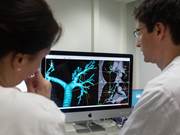
By using simulators in training and education of health professionals, we can achieve greater safety for the patient, as well as a more efficient training. We investigate how surgeons can...
The application of cooperative intelligent transport systems (C-ITS) is one of the most significant tools to enable a more secure, efficient, and accessible transportation system. At SINTEF, we...
While a set of development principles can be identified in standards and manuals, analysis of alternative solutions to transportation challenges must be performed. Our experts at SINTEF are...
CO2 has gone through a renaissance as refrigerant due to the need to replace the chemical refrigerants with highly negative environmental impact. The main applications where CO2 systems has been...
We stimulate the development of new, improved Norwegian health products – based on requirements in the health sector. A large proportion of our activities is concerned with stimulating ideas. We...
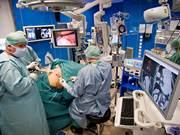
With our medical technology, surgeons can see and operate within the body. This surgical technique is possible because the surgeon navigates by advanced three-dimensional maps that show him the...
Hydropower has electrified Norway more than any other country. Both the industry and the households have had access to electrical energy. In Norway it is common to use electrical energy for space...
We have successfully combined theoretical understanding of power semiconductor and knowledge of the operating principles of power electronic converters. Considerable expertise has been generated...
Power supply interruptions cost Norwegian end-users around NOK 800 million per year in the form of KILE costs. KILE stands for “costs of energy not supplied” (CENS) and represents the total...
Review of operations at different stages of the value chain with focus on increased profitability within established species and new species. Due diligence Third party review Improvement...
Process and technology knowledge for automation in the fisheries industry Sensor and measurement techniques Robotisation and intelligent control systems Machine vision Mechanical engineering...
Feedstock and fish physiology Analytical methods for verification of end Product quality Oil separation Protein hydrolysis...
Development and application of mathematical models for marine and coastal currents and operational models for notification and monitoring. Development of ecological models for lower trophic...
The research group is working with new technology in marine plankton and juvenile production. In addition, there is a strong focus on marine biotechnology in microalgae. Production and sale of...
Our key competence: Gear design Onboard catch handling New vessel concepts Machinery and equipment Energy efficiency and environmental measures Information - and communication technology Fishing...
Information - and communication technology Fishing gear design Simulation...