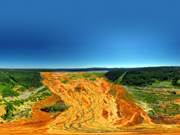
Bauxite residues (red mud) represent a major environmental problem resulting from the smelting of aluminium, which is a very important metal. Our research at SINTEF has shown that this red...
Bauxite residues (red mud) represent a major environmental problem resulting from the smelting of aluminium, which is a very important metal. Our research at SINTEF has shown that this red...
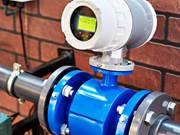
The author of this article reports that data quality increased when building caretakers found out who was getting the results and what the readings were to be used for. Photo: Sergey Ryzhov/...
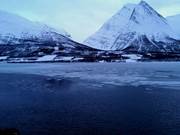
The breakup of ice in Nordkjosbotn, March 2020. Photo: Megan O’Sadnick Standard After a significant avalanche closed the road to Beisfjord in Nordland, Norway in February 2022, the community of...

Mina Elise Øieren Holter is working on SINTEF’s new Alfa Centauri solar panel laboratory, which rises high above the city of Trondheim. Photo: Edvin Wiggen Dahl/SINTEF Notes Fourteen floors...
Rising amounts of renewable energy coupled with an increase in decentralised power generation call for the modernisation and significant expansion of the European grids. The EU project SCARLET (“...

Standard Data-driven heating reduces energy consumption in buildings. As prices shoot through the roof, business property managers are having to get smarter at controlling energy consumption –...

The authors of this article, together with colleagues in Finland and Denmark, are attempting to improve cancer diagnostics by exploiting the invisible properties of light, supported by artificial...
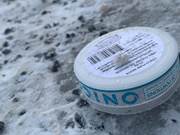
Each year more than 100 million boxes of snuff are sold in Norway, and many of them end up discarded as rubbish. Photo: Christina Benjaminsen Standard The plastic used to make snuff boxes is...
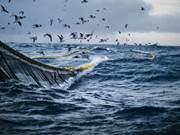
Notes So says a recently published report from SINTEF Ocean commissioned by Fiskebåt (a sector and employer organisation affiliated to the Norwegian Fishermen’s Association and representing...

Elinor Batteries and SINTEF have entered into a Memorandum of understanding on strategic cooperation, aiming to establish a giga-scale factory for production of sustainable batteries in Central...
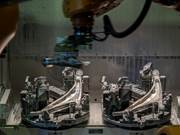
Researchers have discovered that aluminium suspension components can be manufactured using forged instead of extruded bolts. This will save time, energy, money and large volumes of waste...

Using natural gas for heating is a bad idea if we want to achieve our climate change mitigation targets, writes Nils A. Røkke. Photo: Roy Hardy/Samfoto/NTB Viewpoints Gas shortages resulting...

Digitalisation is playing a central role in the development of Industry 4.0, which refers to the current trend of automation and data exchange in the manufacturing sector. This digitalisation is...
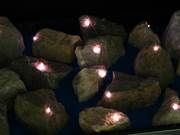
In the Horizon Europe project ReSoURCE, SINTEF and Norsk Elektro Optikk scientists, together with partners from five countries, develop a sensor-based system for the recycling of refractory...
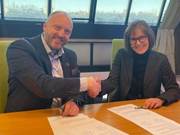
Trondheim, 8 December 2022: a letter of intent has been signed between SINTEF and Sustainable Energy that will guarantee Norwegian industry access to relevant research and testing infrastructure....
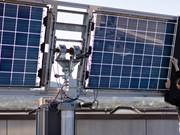
SINTEF is committed to solar cell panel research and is looking to address the issue of wastage of the raw material silicon. The photo shows work being carried out at the new Alpha Centauri solar...
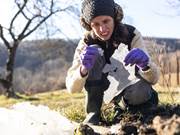
The agricultural sector generates a lot of plastic waste, much of which finds its way into the landscape. Researchers are now looking into whether this plastic can be recycled and turned into new...

Offshore wind power will be a key solution for Europe’s ability to reach its climate targets, and the best and latest research and innovation in the field are being showcased at the EERA DeepWind...

Flexible ways of working benefit everyone, but opportunities offered to employees must be seen in the context of other key factors. The authors of this article argue that we must move on from...
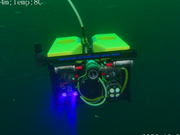
Looking for damage or holes in sea cage nets is one of the most important routine operations carried out in the aquaculture sector. Major breakthroughs in both machine learning and so-called deep...