Aluminium is a key material for the energy transition and is widely used in electrification, transport, construction and renewable energy systems. As the demand continues to grow, it becomes increasingly important to make the best possible use of raw materials and minimise losses of valuable resources.
Aluminium dross is an inevitable by-product of aluminium production. It contains both metallic aluminium and non-metals like oxides and sometimes salts. Most of these are already recovered today, but there is potential for improvements, both in the practice and hence in the material yields.
At the same time as more aluminium is produced and recycled, the amount of dross generated is also increasing. Estimates show that total annual global production of dross increased from 2.66 million tonnes in 2019 to 3.27 million tonnes in 2024. This makes efficient dross management more important than ever.
Meeting the challenge of increasing dross volumes
Commissioned by the International Aluminium Institute (IAI), SINTEF, in collaboration with industry partners and trade associations, has developed a guide for the sustainable management of aluminium dross.
“In 2024, global primary aluminium production reached 71.4 million tonnes. At the same time, 42.8 million tonnes of aluminium were recycled, of which 25.3 million tonnes came from old scrap and 17.5 million tonnes from new scrap,” says project manager and senior researcher Anne Kvithyld.

The new guide compiles international best practice and provides practical knowledge on how stakeholders across the aluminium value chain, from aluminium producers, recyclers and dross processors to industry organisations and policymakers, can manage aluminium dross more sustainably.
“Although dross cannot be eliminated entirely, proper management can help reduce metal losses, increase aluminium recycling rates and lower environmental impacts,” says Kvithyld.
Anne Kvithyld has led the work on the guide together with her SINTEF colleagues Derya Dispinar, Martin Syvertsen and Sarina Bao from the Department of Metal Production and Processing at SINTEF Industry. The team also included Dr Ray Peterson, who contributed with 40 years of industrial experience in dross processing from Real Alloy's operations in the United States.
“For several decades, SINTEF has built substantial expertise in aluminium production, recycling and circular resource utilisation. SINTEF was awarded the assignment through an application to the IAI because our technical expertise and long-standing experience strongly aligned with the project's objectives,” says Kvithyld.
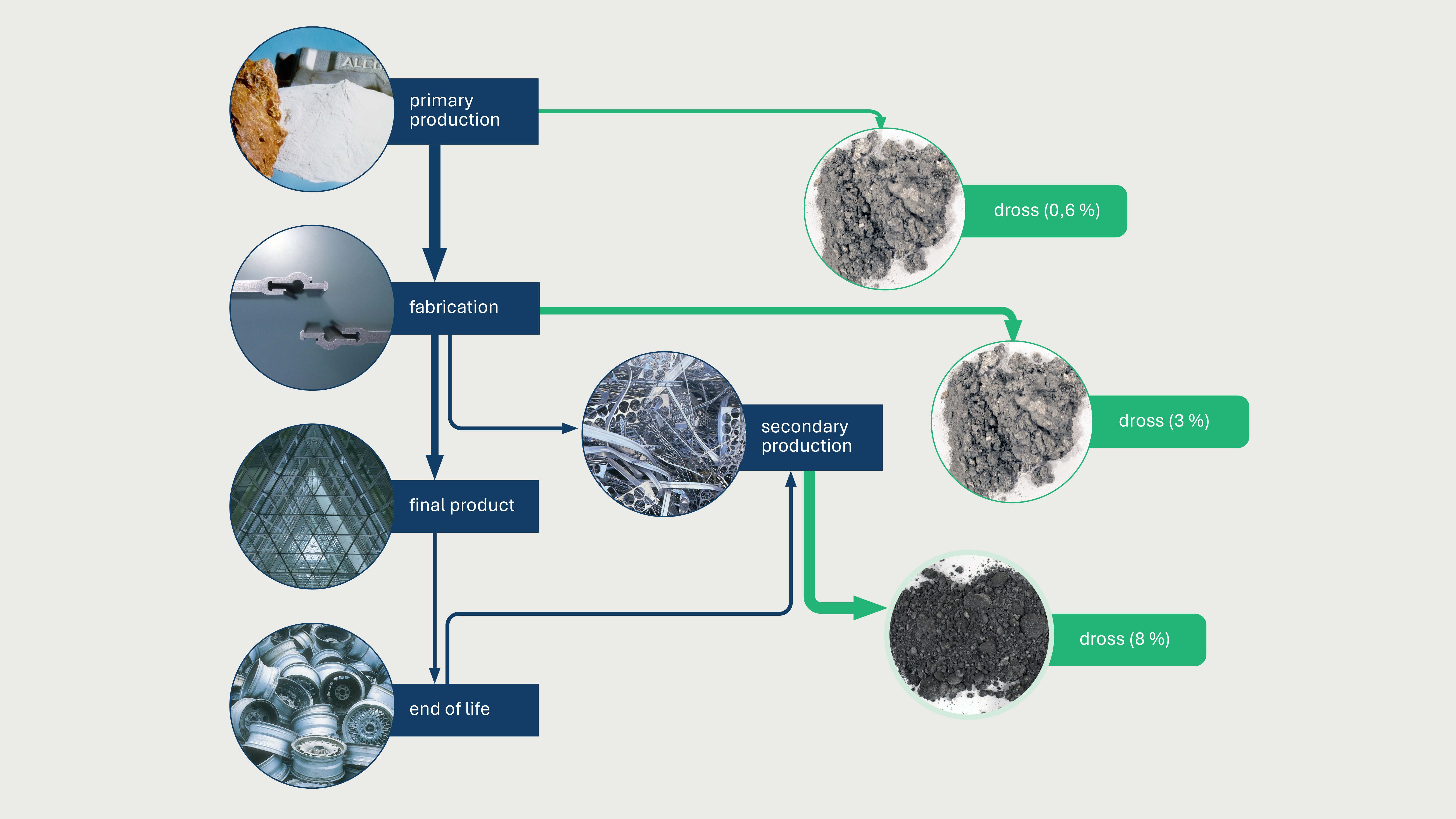
More value from aluminium dross
The guide provides a comprehensive overview of how different types of dross are generated, handled, cooled, processed and recycled. It also addresses safety, transportation and regulatory aspects, as well as how aluminium recovery and the utilisation of residual materials can contribute to a more circular and resource-efficient aluminium industry.
“Because dross removed from furnaces can contain more than 90 per cent metal, the highest priority is to maximise the recovery of metallic aluminium during processing. Modern recovery technologies make it possible to extract more aluminium while also creating new opportunities for the beneficial use of the non-metallic residues, including use in cement production, refractory materials, metallurgical additives and other industrial products,” says Kvithyld.
The guide recommends an integrated approach to dross management, from reducing dross generation at the source and preserving metal value through efficient handling and cooling, to selecting appropriate recovery technologies and developing new applications for residual materials.
“The guide demonstrates significant potential to reduce metal losses, improve resource efficiency and create new value from materials that are often treated as waste today. Achieving this requires good operational practices, efficient processing technologies and robust management systems,” Kvithyld concludes.
Read the full report and a presentation on the IAI website.