Wilhelm Glomm is one of the researchers at the Department of Biotechnology and Nanomedicine at SINTEF. He is interested in how the content of ultra-processed food can affect the intestinal flora.
There is no shortage of studies on ultra-processed food. The problem is that most of the studies simplify the problems or methods for investigating its effects, the researcher says.
He gives an example: A common method for investigating additives such as emulsifiers has been to replace the drinking water of laboratory animals with a 1% emulsifier solution.
“If we use this method, it would be like concluding that the salt in eyewash, which only consists of salt and water, is harmful to the eyes,” says Glomm.
What is considered ultra-processed food?
Processed foods or refined products are foods produced using one or more refining processes. Additives are often mentioned in connection with ultra-processed food. These substances are used when there is a need to change the consistency, increase shelf life or restore colour in the production of food, for example.
However, to date there is no universal and unifying definition of ultra-processed food. Several systems classify food based on the degree of processing, and in all of these systems, ultra-processed food is defined in different ways. There is also no scientific or international agreement on what is the most suitable classification system. This also makes it difficult to define a distinction between ultra-processed and other less refined foods.
The best-known system is called NOVA, which describes ultra-processed food according to the following criteria:
- ingredients that are mostly used by industry
- raw materials that have been broken down and then reconstituted
- added sugar, fat and salt, often in combination
Source: Norwegian Food Safety Authority
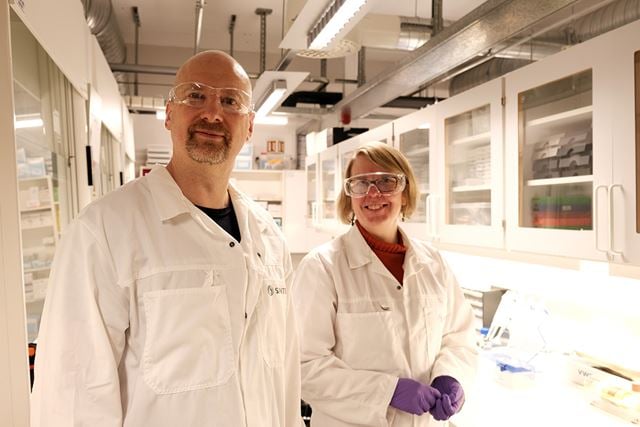
Senior researcher Wilhelm Glomm and research manager Anna Nordborg in the laboratory. Photo: SINTEF
Hunting for a new research method
Glomm believes we can gain more knowledge about how ultra-processed food affects us by studying the digestive system and the gut.
“What happens in the gut is really important. In this complex system you will find more than two-thirds of the body’s immune system, and what we eat has a major impact on our gut microbiota. This includes all the microorganisms found in the gut, such as bacteria, viruses and fungi. The gut microbiota change over time and age and reflect the state of the body.”
Now Glomm and his research team have conducted a clinical study of gut health in the search for “ultra-processed culprits.”
“What happens in the gut is really important. In this complex system you will find more than two-thirds of the body’s immune system, and what we eat has a major impact on our gut microbiota.
“We took stool samples from a selection of volunteer women, men and one infant. Then we analysed the composition of the gut bacteria and looked at what metabolites they generated. We examined the relationship between gut bacteria and differences in age, gender and diet,” says Glomm.
The method made it possible to see the relationship between what people eat and what metabolites the gut flora produces.
The skinny on metabolites
Metabolites are small molecules/breakdown products that are produced when living organisms like gut bacteria digest and convert nutrients, drugs or other compounds through a series of biochemical reactions. Metabolites are essential for life processes, and can be health-promoting (maintaining balance) or harmful (being linked to various diseases).
The researchers found a big difference in bacterial diversity between adults and infants, and that diet affects the composition of the bacteria in the gut. This in itself was not surprising.
But the research team also found a clear connection between specific gut bacteria and the metabolites they produce, and these can relate to the diet of the test subjects.
“We saw that some gut bacteria caused the metabolites to produce tryptamine. This is a “good” metabolite that helps the body regulate weight, and which is also anti-inflammatory,” says Glomm.
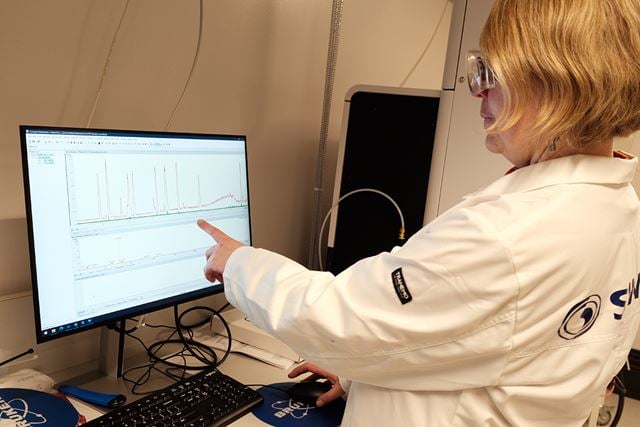
Research manager Anna Nordborg analyses samples of metabolites at the mass spectrometry laboratory. Photo: SINTEF
The data showed large differences in how much tryptamine is produced in the intestines of the different individuals.
Tryptamine can again be traced back to ruminococcus, a type of bacteria that converts the amino acid tryptophan – which we find a lot of in protein sources, such as meat, eggs, fish and dairy products – into tryptamine.
People who ate these protein sources were found to have enough of this good tryptamine, while those who were vegetarian had less. In other words, the type of diet you have can affect the bacteria in the intestines, which will thus affect our intestinal health.
Emulsifiers – a scapegoat?
Additives, or E-substances, are also used extensively in ultra-processed foods. Emulsifiers in particular have been linked to a number of health challenges, such as obesity and inflammation of the intestines.
The SINTEF researcher explains:
“An emulsifier is something that is used to provide better miscibility between oil and water, which will usually separate quickly if you try to mix them. Adding an emulsifier ensures a fine distribution of the oil droplets in the mixture,” says Glomm.
“An example is béarnaise sauce, where the egg yolk acts as an emulsifier to finely distribute the oil and the rest of the ingredients,” he says.
The researchers therefore looked at a selection of widely used emulsifiers in different concentrations, both with and without oil, and how the intestinal cells reacted to the different concentrations.
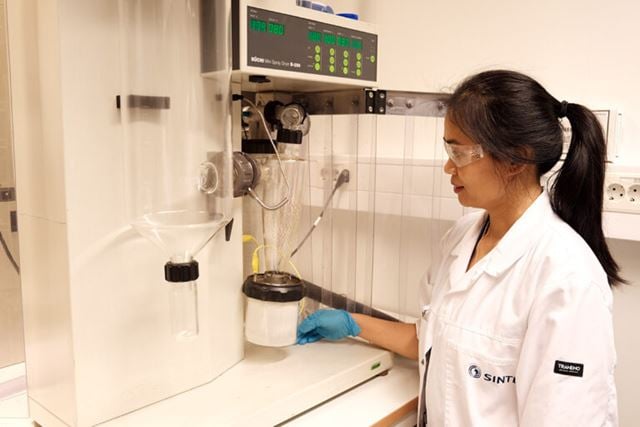
Researcher Le Thuy Truong works with microencapsulation of ingredients and additives using spray drying. Photo: SINTEF
“We found that a solution of emulsifier in water caused severe damage to the intestinal cells and dissolved the cell layer, and in some cases even killed the intestinal cells. Where oil was present, we didn’t see any damage.
The researchers then studied the effect of emulsifiers on a mixture of good and bad intestinal bacteria. They added a selection of emulsifiers, both with water and with oil present, and looked at how the composition of intestinal bacteria changed over time.
“We found that a solution of emulsifier in water caused severe damage to the intestinal cells and dissolved the cell layer, and in some cases even killed the intestinal cells.”
“We found that the experiments were very similar to experiments with intestinal cells: the impact was minimal if oil was present.”
However, more research needs to be done on whether emulsifiers are unhealthy or not.
“Our results indicate that we should be aware of the possible harmful effects of emulsifiers, but more studies need to be done with an even larger sample.”
“Howeve, this study has also provided important information that we can use to find connections between food and various health challenges, such as intestinal inflammation, obesity and diabetes,” says Glomm.
Facts about the project:
Microbiota@SINTEF (2020-2024) was a strategic self-funded project in which SINTEF studied three selected focus areas within intestinal microbiota. They were: high throughput screening and advanced mass spectrometry-based analysis, development and implementation of model systems of the digestive system and intestine, and smart delivery of drugs, bioactive compounds and additives directly to the intestine.