Many parents of premature babies can identify with the surreal experience of holding their newborn baby, while the sound of the breathing machine drowns out their voice.
For some newborns, this is the start of a long hospital stay where technology saves lives, but can also create new challenges.
Premature babies, those born before the 37th week of pregnancy, are particularly vulnerable to sensory impressions. Loud noises, bright lights and pain can negatively affect brain development.
The unique thing about this project is that it’s not just about research, but about immediate impact. By sharing knowledge with the manufacturers of medical equipment, hospital management, doctors and nurses, support measures can quickly benefit patients and their families.
“The incubator exposes these children to sound levels that exceed recommended limits. One of the biggest sources of noise is the respiratory support equipment used to treat neonatal respiratory distress syndrome, which is a common complication in children born before 34 weeks,” says Simone Conta, a senior adviser at SINTEF.
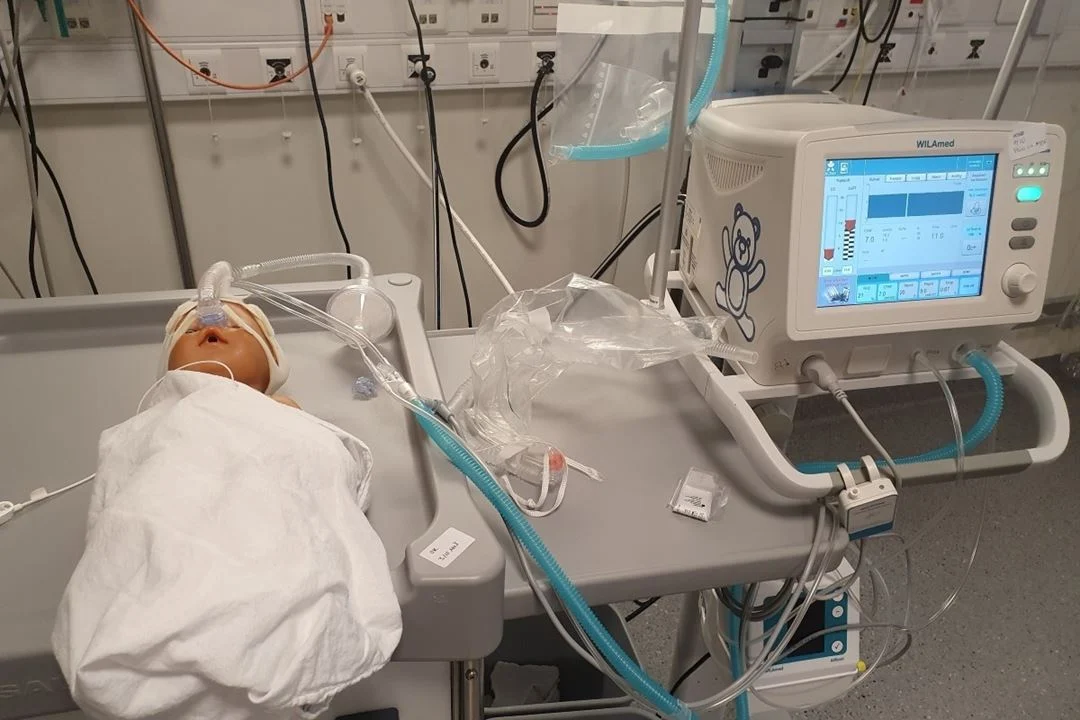
Simulation of CPAP treatment during initial trials at St. Olav Hospital. Photo: Simone Conta
The noise from respiratory support is not only unpleasant, but can have serious consequences. Long-term exposure to high sound levels can lead to hearing loss and disrupted brain development.
“Untreated hearing loss can in turn affect speech, language and cognitive and social development – which can naturally have a major impact on the child’s quality of life.”
The incubator exposes these children to sound levels that exceed recommended limits.
An interdisciplinary project with great ambitions
The Norwegian Prematurity Association, in collaboration with SINTEF, Rikshospitalet and St. Olavs Hospital, has started an interdisciplinary project with support from the DAM Foundation.
The goal is clear: to reduce noise exposure for premature children who need respiratory support.
This is what the researchers will do:
- Document the current situation by mapping respiratory support equipment and measuring their sound properties.
- Develop a demonstration model that can be used in dialogue with manufacturers to improve the equipment.
- Disseminate knowledge to healthcare professionals, manufacturers and decision-makers to ensure better practice and informed choices.
By focusing on non-invasive respiratory support, which is often used continuously over several weeks, the researchers hope to identify and implement measures that can significantly reduce the sound level.
Short path from research to practice
“We are well aware that neonatal intensive care units are very noisy for premature babies. So reducing the noise where possible will be of great help. Our aim is for the knowledge from this project to lead to real improvements in neonatal care,” says Hege A. Nordhus, CEO of Prematurforeningen, the Norwegian Premature Birth Association.
Small adjustments in equipment, settings and routines can make a big difference.
Guiding healthcare professionals and giving them the tools they need can improve the living conditions of premature babies and reduce the risk of injury during long stays in the neonatal intensive care unit.
“The unique thing about this project is that it’s not just about research, but about immediate effect. By sharing knowledge with the manufacturers of technical medical equipment, hospital management, doctors and nurses, support measures can quickly benefit patients and their families,” says Conta.
In a world where technology saves lives, we must also question how it affects the most vulnerable among us. This project is an important step towards creating a safer and more gentle environment for premature babies – where vital respiratory support does not come with a high sound cost.
Link to the project website (in Norwegian): Lydtrykknivå i kuvøsen ved bruk av pustestøtte (Sound pressure level in incubators when using respiratory support)