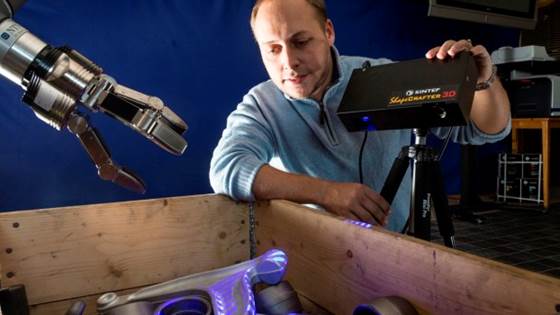
Eagle-eyed robots
The robots of the future must be able to adapt to changes in their surroundings. Some of them will be in close contact with people. At the very least they must be able to see properly – in three dimensions, just like us.
The robots of the future must be able to adapt to changes in their surroundings. Some of them will be in close contact with people. At the very least they must be able to see properly – in three dimensions, just like us.

SINTEF has, under contract for the Norwegian Agency for Public Sector Management and eGovernment (Difi), carried out a needs assessment within public sector administration looking into support for activities linked to information security.
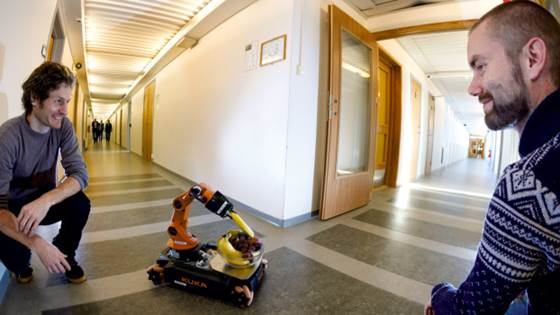
People can easily find their way around a room or in the outdoors – but a robot has no idea.
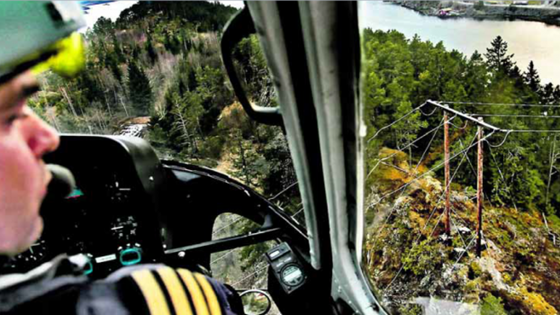
A Norwegian, satellite-based system aims to ensure that helicopters and light aircraft are prevented from colliding with power lines and other obstacles.

International IT researchers have limited contact with the industry, and tend to stay in their offices, working on concepts and studies. Norwegian researchers work closely with companies – and win awards
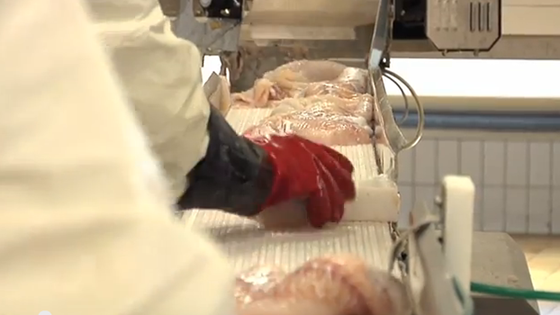
A newly developed white fish filleting machine could give this Norwegian industry a much-needed boost.
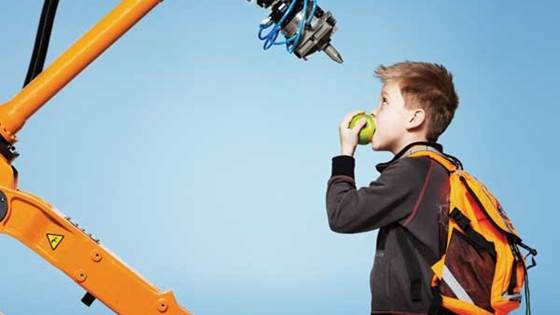
The next generation of industrial robots is just around the corner. They will be able to see, remember and make their own decisions.
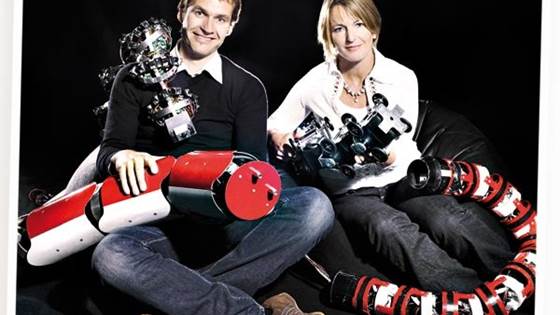
Their brains are still no more advanced than that of a one-year-old, but scientists want robots to be as smart as teenagers – at least.
Oil company data security is inadequate, and production systems are at risk of attack by hackers, viruses and worms.