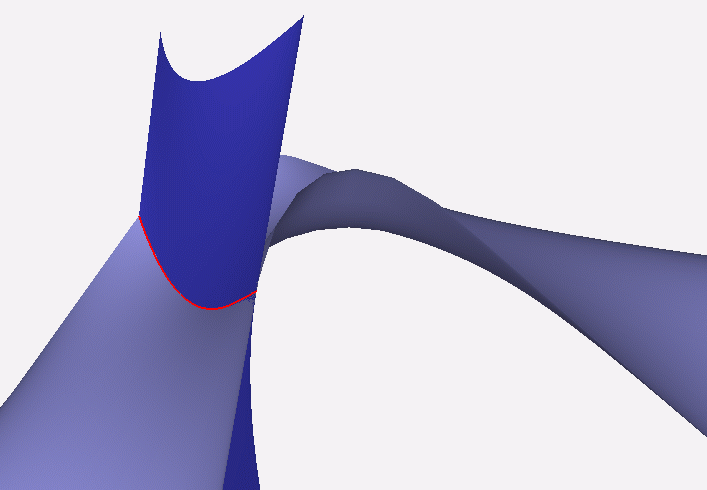
Intersections where the surfaces are parallel close to the intersection curve arise in many situations:
In general, designed objects often have smooth transitions between surface regions. So when designing the object by CAD, the surfaces composing the outer and the inner shells have to be represented in a CAD-model with many smooth transitions between adjacent faces (surface elements).
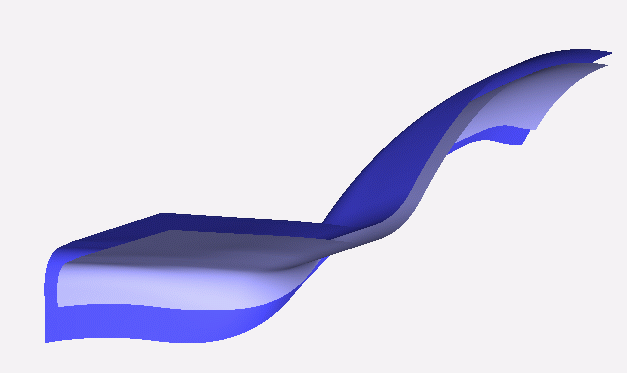
The example to the left shows two parallel surfaces that do not intersect. For such surfaces, traditional recursive algorithms will use a lot of time before deciding that no intersection exists. A triangulation base method might produce false intersections. A lattice evaluation method will be fairly fast and decide that no intersection can be found. However, lattice evaluation might always miss out intersections.
Published August 17, 2005
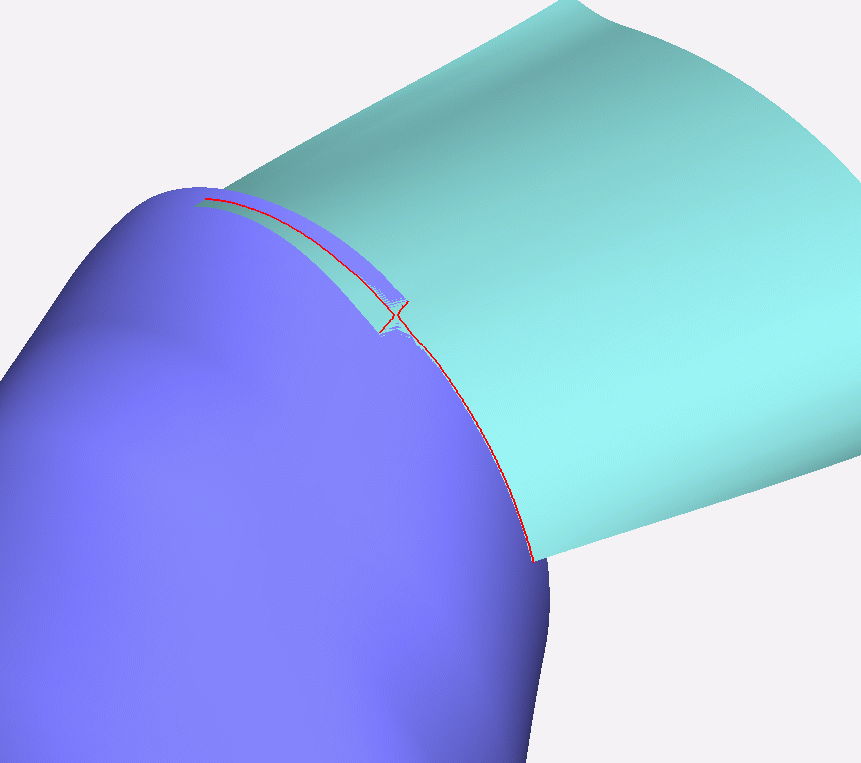
The correct intersection is the red curve. The triangulation supplied for the visualization shows a different "visual" intersection topology. An example showing that a triangulation based approach will provide incorrect results in near singular intersections.
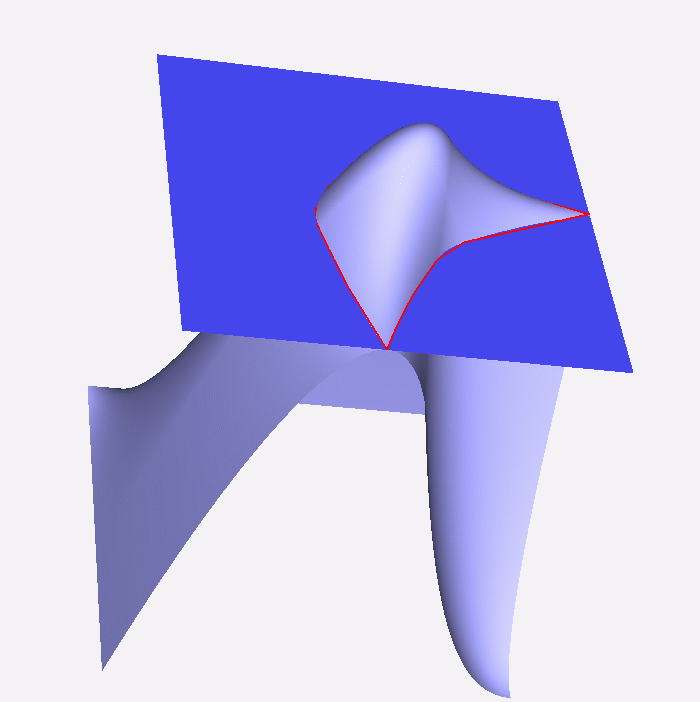
Most of the intersection curve is transversal. However, there are two singular points on the intersection curve.