GeoScale - Direct Reservoir Simulation on Geocellular Models
|
Streamline Methods
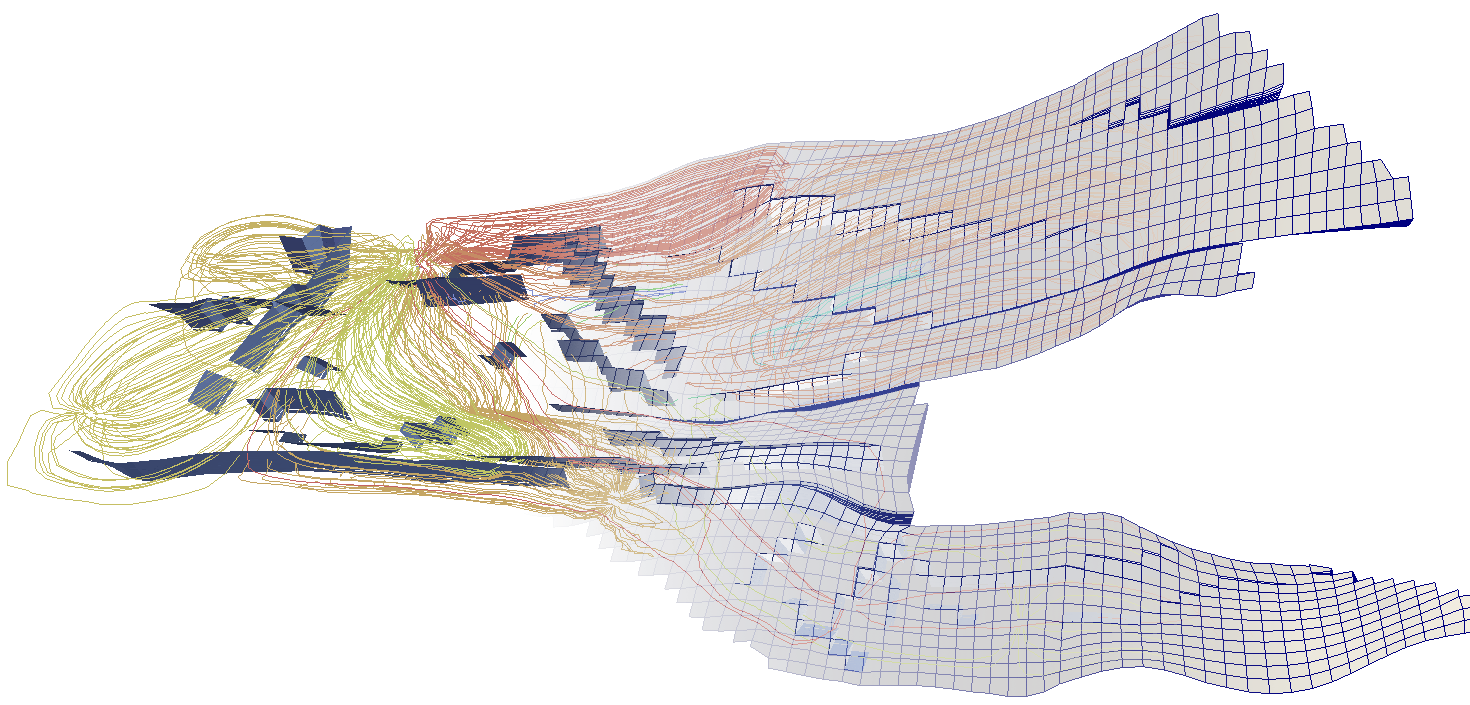
Explicit methods for fast, accurate solution of advection dominated transport equations.
|
|||

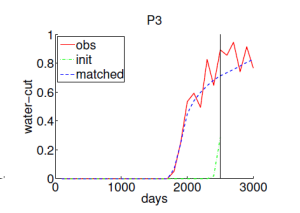 History matching using 2500 days of production data. The last 500 days are predicted based on the history match.
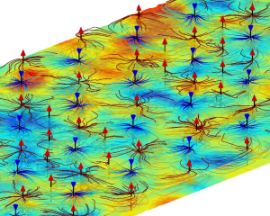 History matching 2475 days of water-cut data from the 69 producers, each operating with a constant rate fulfilling the total voidage rate induced by 32 water injectors. The modell contains 1 048 576 active cells and a satisfactory history match was obtained within 17 minutes on a standard PC. Key technologies:travel-time inversion and multiscale pressure solver.